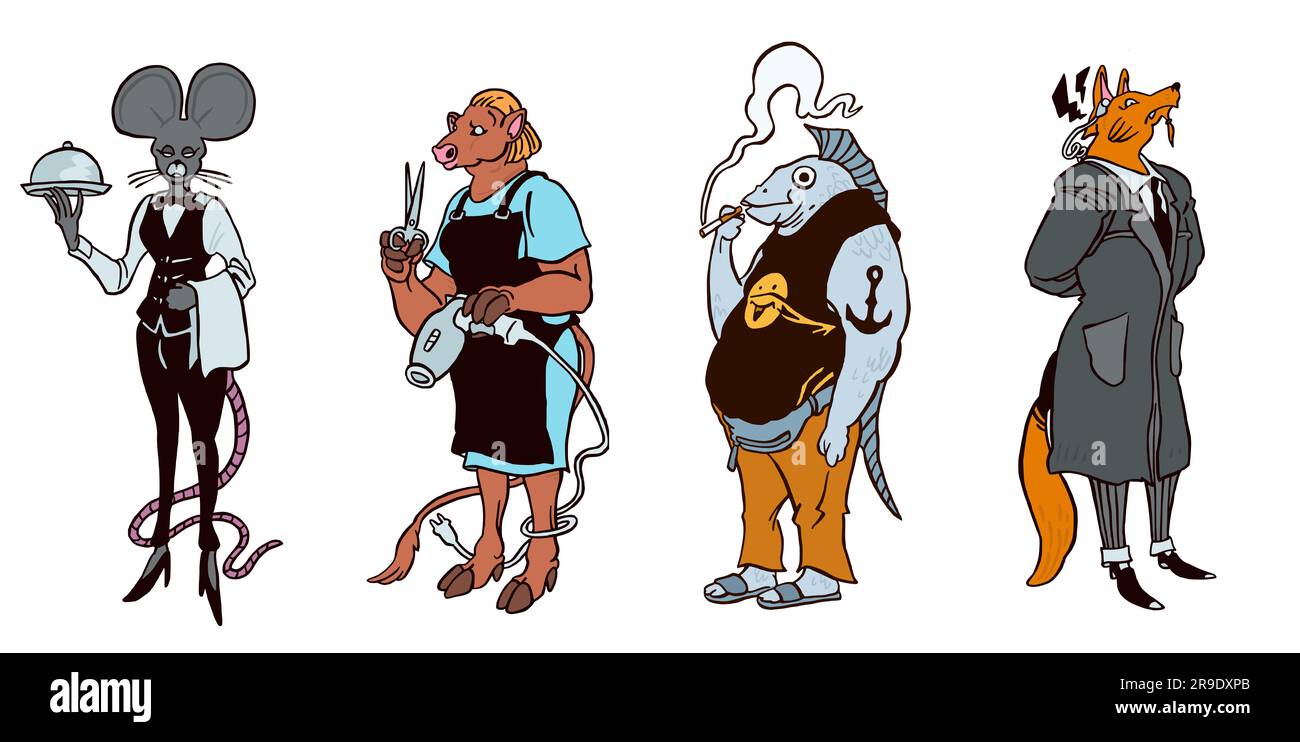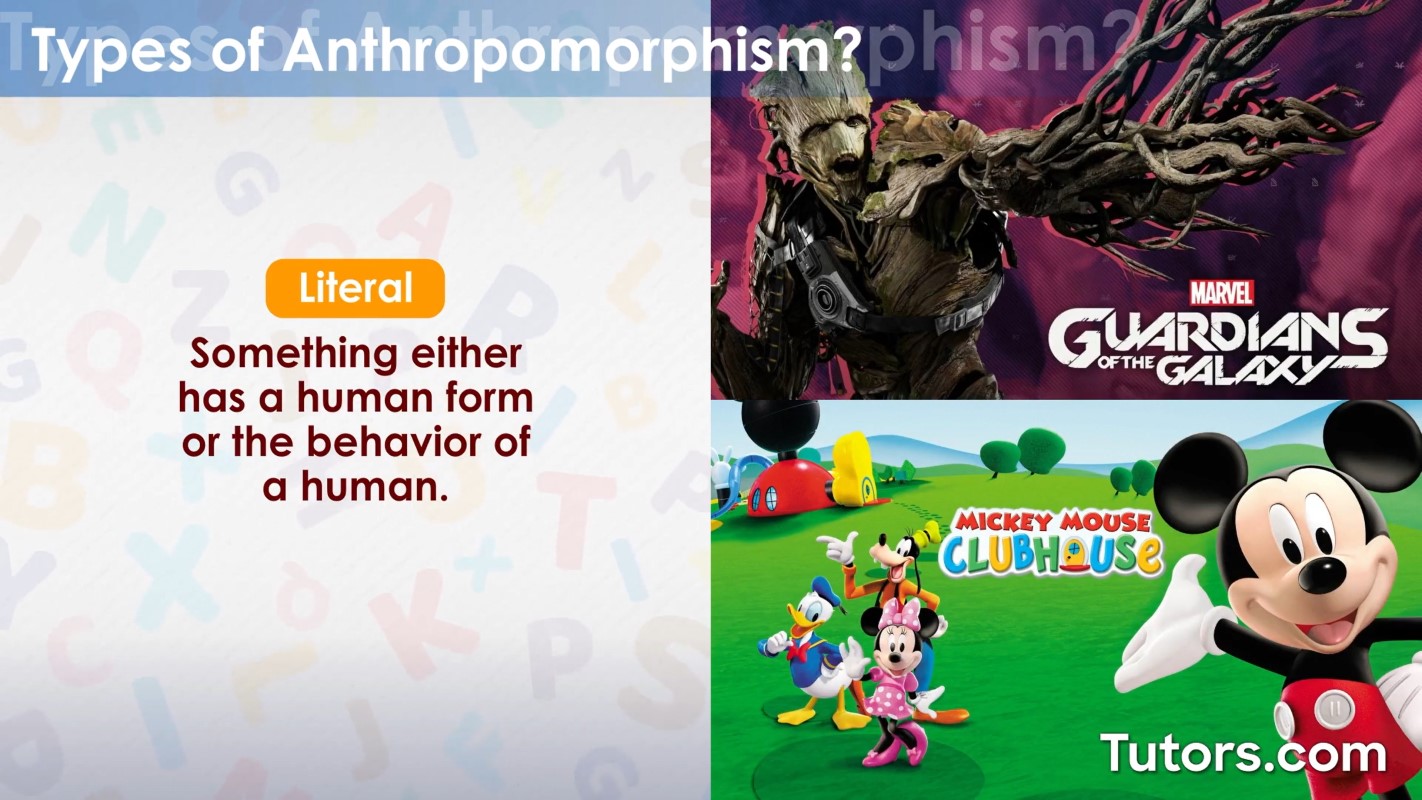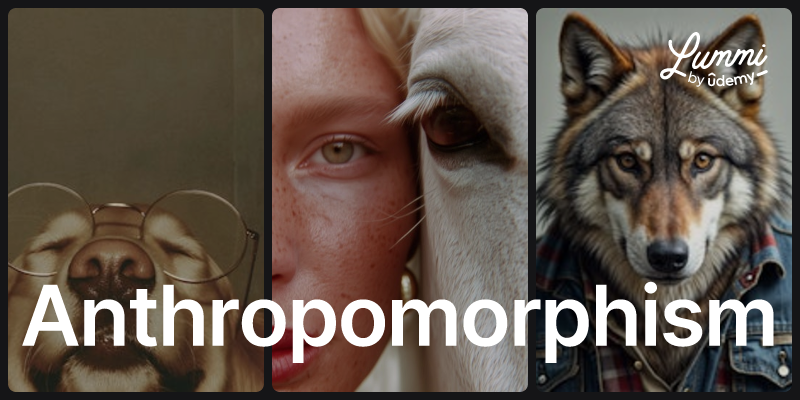
From the first flicker of consciousness that whispered to early humans that the rustling reeds were whispering back, to the modern child who insists their teddy bear is alive, anthropomorphism—the attribution of human traits to non-human entities—has been an indelible thread woven into the fabric of human cognition. Nowhere is this phenomenon more consequential than in the realm of evolutionary biology, where it has not only shaped our understanding of nature but also revealed profound insights into the mechanisms of natural selection itself. This narrative explores how anthropomorphism has influenced evolutionary thought, from the missteps of early theorists to the sophisticated frameworks of contemporary science, and why our tendency to see ourselves in the natural world continues to captivate and complicate our pursuit of biological truth.
The Genesis of Misinterpretation: Early Evolutionary Thought and the Human Shadow
In the nascent stages of evolutionary theory, anthropomorphism was not merely a cognitive quirk—it was a foundational error. The 19th-century naturalists, in their earnest attempts to decode the mysteries of life, often projected human intentions onto the natural world. Jean-Baptiste Lamarck’s theory of inheritance of acquired characteristics, for instance, relied heavily on the notion that organisms *wanted* to evolve, as if driven by an internal teleological force akin to human ambition. This human-centric lens led to a profound misreading of adaptation, where traits were seen as purposeful responses to environmental demands rather than the result of differential reproductive success.
The ramifications of this anthropomorphic bias extended beyond Lamarckism. Even Charles Darwin, in his early writings, occasionally succumbed to the allure of purposeful language, describing natural selection as if it were an active agent rather than a blind, mechanistic process. The phrase “survival of the fittest” itself, coined by Herbert Spencer, carries an implicit human judgment, as if “fitness” were a moral virtue rather than a statistical outcome. These early missteps underscore a critical truth: our fascination with anthropomorphism is not merely a cultural artifact but a cognitive default, one that evolution itself may have hardwired into our brains as a survival tool.

The Cognitive Scaffold: Why We See Ourselves in the Natural World
Anthropomorphism is not a flaw in human reasoning but a testament to the brain’s remarkable pattern-recognition capabilities. Evolutionary psychologists posit that our tendency to attribute agency to non-human entities stems from a survival advantage: early humans who perceived predators in rustling bushes or voices in the wind were more likely to survive than those who did not. This “hyperactive agency detection device” (HADD) is a cognitive shortcut, a heuristic that errs on the side of caution by assuming intent where there may be none. In the context of evolutionary biology, this bias has left an indelible mark on how we interpret animal behavior, ecological interactions, and even the origins of life.
Consider the case of animal communication. When a vervet monkey emits a specific alarm call for leopards, we instinctively interpret it as a “word” with semantic content, as if the monkey is uttering a linguistic warning. Yet the call is far more likely a genetically encoded reflex, devoid of conscious intention. Similarly, the courtship dances of birds-of-paradise are often described in terms of “aesthetic preference” or “artistic expression,” as if the birds are engaging in a human-like pursuit of beauty. These anthropomorphic descriptions, while poetically resonant, risk obscuring the underlying mechanisms of sexual selection, which are governed by genetic and environmental pressures rather than conscious choice.
The cognitive scaffold of anthropomorphism also extends to our understanding of plant behavior. The Venus flytrap’s rapid closure upon sensing prey is frequently framed as a “decision” or “action,” as if the plant is exercising agency. Yet this is a misnomer; the movement is a turgor-driven response, a hydraulic reaction to mechanical stimulation. The language we use to describe such phenomena is not merely descriptive—it is interpretive, and it shapes the questions we ask. When we anthropomorphize, we risk conflating correlation with causation, mistaking the *effect* for the *intent*.
The Methodological Paradox: Anthropomorphism as a Tool and a Trap
Despite its pitfalls, anthropomorphism has not been entirely banished from evolutionary biology. In fact, it has evolved into a methodological paradox—a double-edged scalpel that can both illuminate and obscure. On one hand, anthropomorphic framing can serve as a heuristic, a way to generate hypotheses about animal behavior that might otherwise remain untested. For example, the study of “animal personalities” in primates or corvids often begins with the assumption that these creatures experience emotions akin to human joy, fear, or curiosity. This framework has led to groundbreaking research on social learning, empathy, and even moral behavior in non-human animals.
On the other hand, the same anthropomorphic lens can lead to the anthropocentric fallacy, where human experiences are uncritically projected onto other species. The infamous case of Clever Hans, the horse that appeared to perform arithmetic, serves as a cautionary tale. The horse’s “abilities” were later revealed to be a result of subtle, unintentional cues from his trainer—yet the initial interpretation was rooted in the assumption that Hans possessed human-like cognitive faculties. This example highlights the dangers of unchecked anthropomorphism: it can lead to erroneous conclusions, wasted resources, and, perhaps most critically, a distorted understanding of the natural world.
To mitigate these risks, evolutionary biologists have developed rigorous frameworks for studying animal behavior, such as the Tinbergen’s four questions, which distinguish between proximate (mechanistic) and ultimate (evolutionary) causes of behavior. Yet even within these frameworks, anthropomorphic language persists. Terms like “strategy,” “deception,” or “cooperation” are ubiquitous in behavioral ecology, often borrowed from game theory and human social interactions. The challenge, then, is not to eliminate anthropomorphism entirely but to wield it with precision, recognizing its utility while remaining vigilant against its seductive distortions.
The Aesthetic Allure: Why Anthropomorphism Endures in Scientific Narrative
Beyond its cognitive and methodological dimensions, anthropomorphism endures in evolutionary biology because it satisfies a deeper human need—the desire for narrative coherence. Science, at its core, is a story we tell ourselves about the universe, and stories require protagonists, motives, and conflicts. When we describe the evolution of the peacock’s tail as a “struggle for beauty” or the arms race between predator and prey as a “game of cat and mouse,” we are not merely using metaphors; we are crafting a narrative that resonates with our own experiences of competition, desire, and survival.
This aesthetic allure is not trivial. It shapes how scientific ideas are communicated, both to the public and within the scientific community. The concept of “evolutionary arms races,” for instance, has become a cultural touchstone, appearing in everything from documentary narrations to video game lore. Yet this narrative power comes at a cost. When we frame evolution as a grand drama with clear heroes and villains, we risk oversimplifying the messy, contingent nature of natural selection. The reality is far more nuanced: traits evolve not because they are “good” or “beautiful” in an absolute sense, but because they confer a reproductive advantage in a specific ecological context.
The persistence of anthropomorphism in scientific discourse also reflects a broader cultural phenomenon—the blurring of boundaries between humans and the natural world. In an era of climate change and mass extinction, our relationship with nature is increasingly one of guilt, responsibility, and even grief. Anthropomorphism allows us to bridge the gap between the human and the non-human, to see ourselves in the plight of the polar bear or the resilience of the tardigrade. It is a way to make the abstract tangible, the distant proximate. Yet this emotional resonance can also obscure the hard truths of evolutionary biology, where survival is not a moral judgment but a statistical inevitability.
The Future of Anthropomorphism: Toward a More Nuanced Synthesis
As evolutionary biology continues to advance, the role of anthropomorphism is likely to evolve as well. Advances in fields like neuroethology and artificial life are providing new tools to study animal cognition without resorting to human-centric frameworks. For instance, the discovery of mirror neurons in primates has led to more sophisticated models of empathy and imitation, while simulations of artificial evolution are helping to disentangle the genetic and environmental factors that shape behavior. These developments suggest a future where anthropomorphism is not discarded but refined—a tool that is used sparingly, with clear caveats and rigorous testing.
Yet the allure of anthropomorphism is unlikely to fade entirely. It is, after all, a reflection of our own humanity, a testament to our capacity for empathy, imagination, and wonder. The challenge for evolutionary biologists is not to eliminate this bias but to harness it responsibly, to use it as a bridge between the human and the non-human without allowing it to distort our understanding of the natural world. In this sense, anthropomorphism is not merely a relic of our cognitive past but a dynamic force in the ongoing dialogue between science and culture.
The next time you watch a documentary and hear the narrator describe a lioness as “patient” or a spider as “cunning,” remember that these words are not just descriptive—they are interpretive. They are a reminder that science, like all human endeavors, is shaped by the stories we tell ourselves. And perhaps, in that reminder, lies the deepest lesson of all: that the line between observer and observed is not as sharp as we once believed.