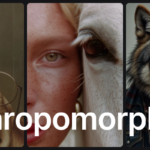
Anthropomorphism—the attribution of human traits, emotions, or intentions to non-human entities—has long been a captivating phenomenon. Within the realm of board games, this practice manifests in characters, pieces, narratives, and mechanics that imbue inanimate objects with a semblance of life and personality. Observers often note the prevalence of anthropomorphic design choices and wonder about their efficacy and resonance. Does anthropomorphism merely serve as a whimsical aesthetic, or does it tap into deeper cognitive and emotional impulses that enrich gameplay experiences? Exploring this question requires delving into the psychological allure, thematic utility, and functional roles that anthropomorphism assumes in board games.
The Intrinsic Appeal of Anthropomorphic Characters
Humans possess an innate predilection to perceive human-like qualities in their surroundings. This tendency, known as pareidolia, extends beyond mere visual patterns to encompass emotional and intentional projection. Board game designers harness this disposition by crafting characters, tokens, and avatars that bear human characteristics or animate qualities. Such elements evoke empathy, curiosity, and engagement from players. For instance, a game featuring animal figures with expressive faces and recognizable gestures invites players to mentally ascribe motivations and feelings, enriching their connection to the gameplay narrative.
Moreover, anthropomorphic design satisfies a cognitive craving for relatability. Abstract components can often feel cold and mechanical, whereas anthropomorphic elements humanize the inanimate, fostering emotional investment. This affinity can translate to heightened motivation to strategize and immerse oneself, as players subconsciously treat these pieces as extensions of living agents rather than mere objects. Consequently, these designs amplify the game’s memorability and emotional resonance.

Anthropomorphism as Narrative Catalyst
Beyond aesthetic allure, anthropomorphism operates as a potent narrative mechanism. Board games often encapsulate microcosms of conflict, cooperation, and storytelling. By endowing non-human entities with human attributes, creators craft accessible storylines and thematic frameworks. This anthropocentric lens makes intricate or abstract themes more digestible, channeling players’ imagination through familiar emotional landscapes.
For example, a game centered on colonies of ants imbued with differing morals and objectives leverages anthropomorphism to explore social dynamics and ethical dilemmas without the need for complex exposition. Players naturally project human social constructs onto these entities, enabling rich storytelling despite the underlying insect framework. This narrative facilitation enhances not only cognitive engagement but also fosters a shared language among players, deepening social interaction.
Psychological Underpinnings of Anthropomorphic Engagement
The fascination with anthropomorphism in games is undergirded by a suite of psychological phenomena. Foremost among these is the human brain’s penchant for theory of mind—the capability to attribute mental states to others. When confronted with anthropomorphic game elements, players instinctively interpret intentions and emotions, enriching social cognition even in the absence of real opponents. This mentalization fosters a dynamic interplay between the player and the game, transforming the experience from static interaction to a nuanced psychological encounter.
Additionally, anthropomorphism can mitigate feelings of randomness and arbitrariness. Games that incorporate luck, such as dice rolls or card draws, sometimes evoke frustration due to perceived chance events. However, when these elements are personified—as though the dice “decides” whimsically or the cards “plot” surprise—players may subconsciously attribute agency, thereby softening the blow of unpredictability with a narrative hue. This reframing can sustain engagement by presenting chance as an interactive, albeit unpredictable, character rather than a cold mechanic.
Functional Advantages in Game Design
From a design perspective, anthropomorphism performs several practical functions. It enhances clarity, facilitates learning, and aids memory retention. Human characteristics or familiar personas attached to game pieces and mechanics can serve as mnemonic anchors, enabling players to internalize rules and strategies more fluidly. For example, a piece embodying a “knight” with heraldic symbols and a backstory might be easier to comprehend and recall than an indistinct token with no context.
Moreover, anthropomorphic elements frequently serve as strategic signposts. By imbuing units or cards with personalities or roles that suggest their capabilities or alliances, designers convey essential gameplay information non-verbally. This semantic layering not only streamlines player decision-making but also enriches the thematic coherence of the game world. The player’s immersion, in turn, bolsters sustained interest and repeated play.
Potential Pitfalls and Overuse
While anthropomorphism offers compelling benefits, its indiscriminate application can detract from a game’s efficacy. Overly sentimental or cloying anthropomorphic elements may alienate players seeking more abstract or mechanical depth. Furthermore, excessive reliance on anthropomorphism risks oversimplifying complex mechanics or pigeonholing player interpretation, limiting imaginative flexibility.
In addition, cultural contexts influence anthropomorphic reception. What appears endearing or intuitive in one culture may seem obscure or even unsettling in another. Designers must therefore exercise judicious calibration to ensure that anthropomorphic motifs enhance rather than hinder cross-cultural accessibility and comprehension.
The Enduring Fascination: Why Anthropomorphism Persists
Anthropomorphism in board games constitutes more than a stylistic flourish; it represents an enduring bridge between human cognition and play. Its persistent use underscores a universal human yearning for connection—even with the artificial. By animating the inanimate, games echo ancient rituals and storytelling traditions wherein objects and animals are imbued with spirit and agency, providing a shared symbolic language transcending generations.
This fascination also reflects a deeper epistemological function: anthropomorphism enables humans to render complex systems intelligible and emotionally resonant. Board games, as microcosms of strategy, chance, and interaction, benefit from this mechanism, making abstract concepts approachable and meaningful. Ultimately, anthropomorphism is not merely decoration—it is an essential interface between player and game, illuminating the profound human desire to find life and meaning in all things.