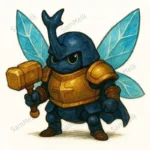
In the quiet corners of a child’s imagination, a bear wears a chef’s hat, stirring a pot of honey soup. A river murmurs secrets to the reeds along its banks, and a mountain stands as a silent sentinel, watching over the valley below. These are not mere flights of fancy—they are the quiet workings of anthropomorphism, a cognitive bridge that allows humans to perceive the world through a lens of shared experience. But beyond the whimsy of storytelling lies a profound tool: anthropomorphism has emerged as an unexpected ally in the fight to preserve the natural world. By endowing animals, plants, and even inanimate landscapes with human-like qualities, conservationists are forging emotional connections that transcend statistics and spark action.
The Allure of the Humanized Wild: Why We See Ourselves in Nature
Anthropomorphism is not a modern invention—it is woven into the fabric of human cognition. From ancient cave paintings depicting animals with human postures to Aesop’s fables, we have long projected our emotions, intentions, and narratives onto the non-human world. This tendency is not merely a literary device; it is a survival mechanism. Psychologists suggest that our brains are wired to detect agency and intention, even where none exists. A rustling in the bushes becomes a predator; a shadowy figure in the distance, a potential threat. This hyperactive pattern recognition extends to the natural world, where we instinctively imbue animals with personalities, motives, and even moral compasses.
Yet anthropomorphism is more than a quirk of perception—it is a mirror. When we see a wise old owl perched on a branch, we are not just projecting; we are reflecting our own values, fears, and aspirations onto the wild. The owl becomes a symbol of knowledge, the fox a trickster, the wolf a villain or a guardian depending on the tale. This duality—seeing the world as it is while also seeing ourselves in it—creates a paradox that conservationists have learned to exploit. By framing environmental issues through the lens of relatable, almost human stories, they transform abstract threats like habitat loss or climate change into urgent, personal dramas.
From Empathy to Action: The Psychological Alchemy of Anthropomorphism
Empathy is the currency of conservation, and anthropomorphism is its mint. Studies in neuroscience reveal that when we perceive human-like traits in non-human entities, the same neural circuits that process social interactions light up. The brain, it seems, does not distinguish sharply between a human face and the face of a panda—both elicit a response in the anterior insula, a region associated with emotional processing. This neurological blurring of boundaries is the foundation of what researchers call the “identifiable victim effect.” A single, named animal in peril—a sea turtle with a plastic straw lodged in its nostril, a panda cub orphaned by deforestation—triggers outrage and donations far more effectively than a graph of declining species populations.
Conservation campaigns have harnessed this power with remarkable precision. The World Wildlife Fund’s iconic panda logo is not just a brand; it is a psychological anchor. The panda’s round face, gentle demeanor, and striking black-and-white markings make it an ideal anthropomorphic ambassador. Its human-like eyes and expressive posture invite connection, turning an endangered species into a relatable figure. Similarly, the “dramatic chipmunk” meme, which anthropomorphizes a rodent into a cinematic hero, demonstrates how humor and personification can make environmental issues go viral. These strategies work because they bypass the cold calculus of data and instead engage the heart, where decisions are often made.
Yet the relationship between anthropomorphism and empathy is not without its complexities. Overly simplistic or cartoonish representations can infantilize nature, reducing complex ecosystems to two-dimensional characters in a morality play. A forest reduced to a “wise old tree” may evoke tenderness, but it risks obscuring the intricate web of relationships that sustain it. The challenge for conservationists is to strike a balance—using anthropomorphism to spark interest without sacrificing the nuance of ecological reality.
The Double-Edged Sword: Risks and Rewards of Humanizing Nature
Anthropomorphism is a tool, and like any tool, its effectiveness depends on how it is wielded. On one hand, it can galvanize public support for conservation efforts by making the abstract tangible. The “lonely polar bear” trope, for instance, has become shorthand for the existential threat of melting Arctic ice. The image of a solitary bear adrift on a shrinking ice floe is heart-wrenching precisely because it mirrors human loneliness—a feeling we recognize instantly. This emotional resonance has translated into policy changes, donations, and grassroots movements that might otherwise struggle to gain traction.
On the other hand, anthropomorphism can distort our understanding of nature. When we imbue animals with human motivations, we risk anthropocentrism—the belief that humans are the central, most important figures in the universe. A lion that “hunts for sport” or an elephant that “mourns its dead” are narratives that serve human emotional needs more than ecological truths. This can lead to misguided conservation priorities, such as prioritizing charismatic megafauna over less “relatable” species like insects or fungi. Moreover, anthropomorphism can foster a sense of false intimacy with nature, where we assume we understand an animal’s needs based on our own experiences rather than scientific evidence.
To mitigate these risks, conservationists often pair anthropomorphic storytelling with rigorous scientific education. The key is to use personification as a gateway, not a destination. A documentary about a “brave” sea turtle navigating a polluted ocean might capture attention, but it should also include data on plastic ingestion rates and policy solutions. This dual approach ensures that the emotional connection forged by anthropomorphism is channeled into informed action rather than fleeting sentiment.
Case Studies: Anthropomorphism in Action
One of the most successful examples of anthropomorphism in conservation is the story of “Sudan,” the last male northern white rhino. Sudan was not just a rhino; he was a symbol of a dying species, a living relic of a world on the brink. His caretakers described him with almost parental affection, and his story—shared across global media—became a rallying cry for rhino conservation. Though Sudan’s death marked the functional extinction of his subspecies, his legacy lives on in the funding and research dedicated to saving his relatives. His humanized narrative turned a conservation crisis into a cultural moment.
Another compelling case is the “Plight of the Bees,” a campaign that personifies bees as industrious, almost comical workers. By framing bees as tiny, overworked employees in the global food system, the campaign makes their decline relatable to urban audiences who may never encounter a hive. The anthropomorphic lens transforms an ecological issue into a workplace drama, complete with villains (pesticides, habitat destruction) and heroes (conservationists, sustainable farmers). This narrative structure resonates in a world where people are increasingly disconnected from nature but deeply engaged with stories of labor, justice, and resilience.
Even landscapes are not immune to anthropomorphism. The “Save the Amazon” movement often depicts the rainforest as a living, breathing entity—an ancient, wise being under siege. This framing taps into humanity’s fear of losing a primordial home, a fear that transcends borders and cultures. By casting the Amazon as a victim of human greed, conservationists leverage a narrative as old as civilization itself: the struggle between civilization and wilderness. Yet this approach also risks oversimplifying the complex socio-political realities of deforestation, reminding us that anthropomorphism must be wielded with care.
The Future of Anthropomorphism in Conservation
As technology advances, so too does the potential for anthropomorphism to shape conservation efforts. Virtual reality (VR) experiences, for example, allow users to “step into the paws” of an endangered animal, seeing the world through its eyes. These immersive narratives can create empathy on an unprecedented scale, making the consequences of environmental destruction viscerally real. Similarly, artificial intelligence is being used to generate lifelike animations of extinct species, breathing new life into lost ecosystems and sparking curiosity about the past.
Yet the future of anthropomorphism in conservation is not without ethical dilemmas. As we blur the lines between human and non-human, we must ask: Where do we draw the line? Is it ethical to use personification to manipulate emotions, even for a good cause? These questions are particularly pertinent in an era where misinformation spreads as quickly as empathy. The challenge will be to use anthropomorphism not as a crutch for lazy storytelling, but as a bridge between human emotion and ecological reality.
Ultimately, anthropomorphism is a testament to the power of narrative in shaping our relationship with the natural world. It reminds us that conservation is not just about saving species—it is about saving the stories we tell about them. By humanizing nature, we do not diminish its wildness; we acknowledge our own place within it. And in a world where the line between human and non-human is increasingly porous, that acknowledgment may be the most important conservation effort of all.