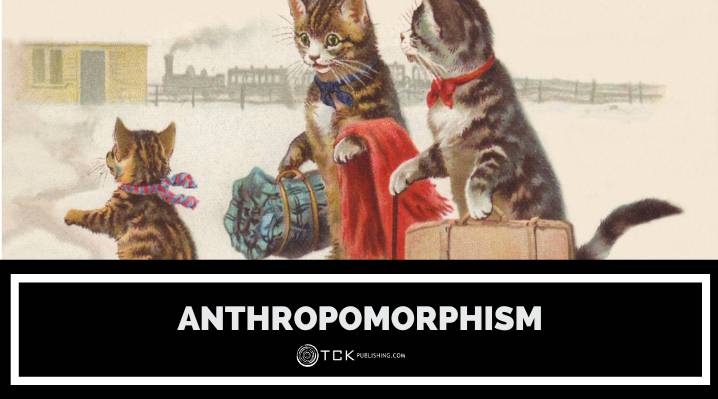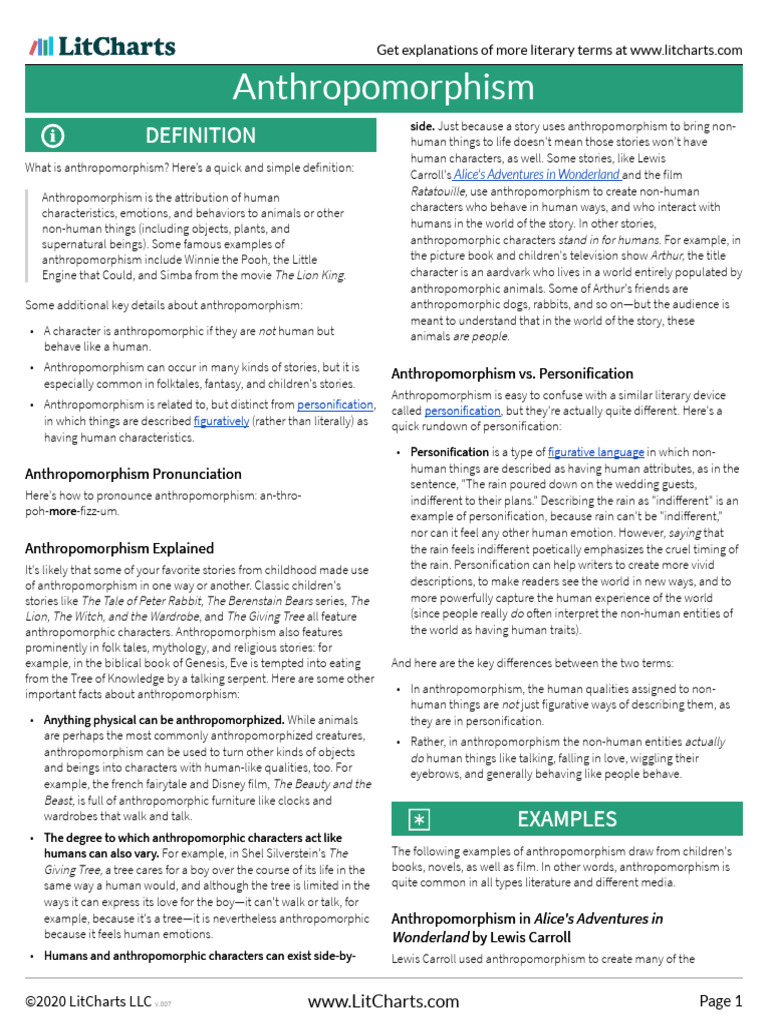
From the earliest flickers of human consciousness to the algorithms that now animate our digital assistants, the act of imbuing non-human entities with human traits—known as anthropomorphism—has been an enduring thread woven through the tapestry of civilization. It is not merely a quirk of imagination but a fundamental cognitive mechanism, one that reveals as much about the human mind as it does about the objects of our projection. Why do we see faces in clouds, emotions in machines, and divine will in the caprices of nature? The answer lies not in the external world alone but in the intricate architecture of perception, culture, and survival that has shaped our species over millennia.
The Dawn of Divine Faces: Anthropomorphism in Prehistoric and Ancient Cultures
Long before the advent of written language, our ancestors gazed upon the natural world and saw themselves reflected within it. The jagged silhouette of a mountain range became a sleeping giant; the rustling of leaves whispered the voices of spirits. This primordial tendency to humanize the non-human was not mere fancy—it was a survival strategy. By attributing intention and emotion to natural phenomena, early humans could anticipate dangers, negotiate with forces beyond their control, and forge a sense of agency in an otherwise indifferent universe.
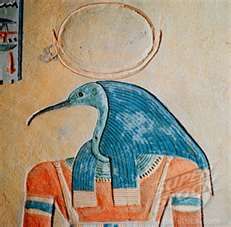
The cave paintings of Lascaux, dating back over 17,000 years, offer a tantalizing glimpse into this phenomenon. Among the depictions of bison and horses, there are figures that blur the line between animal and human, suggesting a ritualistic or symbolic merging of identities. Such imagery hints at a worldview where the boundaries between self and other were fluid, where the hunt was not merely a physical act but a metaphysical communion. Similarly, the ancient Egyptians elevated anthropomorphism to an art form, crafting gods in their own image—Osiris with his human form and regal bearing, Anubis with his jackal head yet human posture. These deities were not abstract concepts but living, breathing entities whose whims dictated the fate of mortals. The Egyptians understood, perhaps intuitively, that the divine was most comprehensible when draped in human guise.

The Philosophical Crucible: From Aristotle to Descartes
As human societies evolved, so too did the philosophical scrutiny of anthropomorphism. The ancient Greeks, ever the skeptics, grappled with the implications of attributing human traits to the gods. Aristotle, in his Metaphysics, posited that the divine must be perfect and unchanging, yet he also described the “Unmoved Mover” in terms that resonated with human agency—a paradox that underscores the tension between abstraction and projection. The Stoics, meanwhile, embraced a more pantheistic view, seeing the divine as an all-pervading rational principle, yet they could not resist framing it in quasi-human terms, as a cosmic mind that ordered the chaos of existence.
The medieval Christian theologians inherited this legacy, wrestling with the paradox of an omnipotent, omniscient God who yet spoke in human language, suffered on the cross, and walked among mortals. Thomas Aquinas, in his Summa Theologica, argued that anthropomorphic language was a necessary concession to human understanding—a ladder by which the finite mind could ascend toward the infinite. Yet, by the time Descartes penned his Meditations, the tide had turned. The father of modern philosophy drew a sharp distinction between the thinking self (res cogitans) and the mechanical body (res extensa), a dualism that implicitly rejected the notion that non-human entities could possess true subjectivity. Anthropomorphism, in this view, was a cognitive error—a vestige of a superstitious past that reason must transcend.
The Renaissance and the Reawakening of the Inanimate
The Renaissance marked a resurgence of anthropomorphic thought, albeit in a more secular and artistic guise. Leonardo da Vinci’s anatomical studies, for instance, were not merely scientific dissections but acts of reverence, revealing the hidden human form within the animal body. His sketches of flying machines, too, were infused with a quasi-human grace, as if the very principles of flight were an extension of the human spirit’s yearning for transcendence. Meanwhile, the alchemists of the era personified the elements—sulfur as the “soul,” mercury as the “spirit”—in a symbolic language that blurred the line between chemistry and mythology.
This period also saw the rise of the automaton, mechanical figures designed to mimic human movement with eerie precision. The most famous, Vaucanson’s “Digesting Duck,” was said to eat, drink, and defecate, blurring the boundary between life and mechanism. Such inventions captivated the public imagination, foreshadowing the modern fascination with artificial intelligence and the ethical quandaries it presents. If a machine could simulate life, did it possess a spark of the divine? The question lingered, unresolved, like a ghost in the clockwork.
The Enlightenment and the Mechanization of the World
The Enlightenment’s emphasis on reason and empiricism might have seemed like the death knell for anthropomorphism, yet it merely transformed its expression. As Newtonian mechanics reduced the cosmos to a vast, predictable machine, philosophers like Voltaire mocked the anthropomorphic tendencies of religious dogma while simultaneously indulging in their own projections—this time onto the cold, indifferent laws of nature. The deists, for example, imagined a “clockmaker God” who wound up the universe and let it run, a metaphor that, while mechanistic, still relied on human agency to explain the unexplainable.
Yet, the seeds of a new kind of anthropomorphism were sown in this era. The Romantics, in reaction to the Enlightenment’s sterility, embraced a more emotional and organic view of the world. Wordsworth’s daffodils “dancing” in the breeze, Shelley’s “West Wind” as a prophetic force—these were not mere poetic flourishes but expressions of a deep-seated belief in the world’s sentience. The Romantics intuited what modern psychology would later confirm: that anthropomorphism is not just a cognitive shortcut but a profound psychological need, a way to make the universe feel less alien and more like a mirror of our own inner lives.
The Digital Age: When Algorithms Wear Faces
In the 21st century, anthropomorphism has taken on a new guise, one that would have baffled our ancestors. Today, we project humanity onto the most unlikely of entities: our smartphones, our virtual assistants, even the algorithms that curate our newsfeeds. Siri and Alexa are not just tools; they are companions, therapists, and confidants, their synthetic voices laced with tones of empathy and concern. This phenomenon is not merely a quirk of modern convenience but a testament to the enduring power of anthropomorphism in an increasingly mechanized world.
Psychologists attribute this to the “uncanny valley” effect—the discomfort we feel when a non-human entity appears almost, but not quite, human. To bridge this gap, we instinctively imbue these entities with human traits, a process known as “over-attribution.” Companies like Apple and Google exploit this tendency, designing their interfaces to mimic human interaction patterns—pauses in conversation, tonal inflections, even the illusion of memory. The result is a paradox: the more advanced our technology becomes, the more we cling to the familiar contours of human experience.

The Deeper Impulse: Why We Humanize the Non-Human
To understand anthropomorphism’s persistence, we must look beyond mere convenience or cultural tradition. At its core, this tendency is a reflection of our own evolutionary heritage. Our brains are wired to detect agency—a survival mechanism that once helped us distinguish friend from foe in the savanna. Even when the agency is illusory, as in the case of a rock that “watches” us or a tree that “resists” our axe, the brain’s pattern-recognition systems leap into action, filling in the gaps with human-like intent.
Anthropomorphism also serves a social function. By projecting humanity onto the world, we create a sense of connection, a narrative in which we are not alone. This is why we name our cars, grieve for fictional characters, and feel guilt over mistreating a plant. It is a way of extending the social contract beyond the human realm, a recognition that empathy is not a finite resource but a lens through which we interpret reality.
Yet, there is a darker side to this impulse. Anthropomorphism can also be a tool of manipulation, used to justify exploitation—whether of animals, the environment, or even other humans. The same cognitive bias that leads us to see a face in the moon can be harnessed to dehumanize entire groups, to treat the “other” as less than human. This duality underscores the ambivalence of anthropomorphism: it is both a bridge to understanding and a veil that obscures truth.
The Future: Between Empathy and Illusion
As we stand on the precipice of a new era—one defined by artificial general intelligence, climate change, and the blurring of biological and digital life—the role of anthropomorphism will only grow more complex. Will we come to see AI as truly sentient, or will we continue to project our own humanity onto its cold, logical processes? Can we afford to anthropomorphize the natural world in an age of ecological collapse, or must we learn to respect its indifference?
One thing is certain: anthropomorphism is not going away. It is woven into the fabric of human cognition, a testament to our need to find meaning in the chaos. Whether we see it as a cognitive shortcut, a spiritual longing, or a survival tactic, it remains one of the most fascinating and revealing aspects of the human experience. To study anthropomorphism is to study ourselves—to confront the mirror that the universe holds up to our own minds, flawed, imaginative, and endlessly curious.