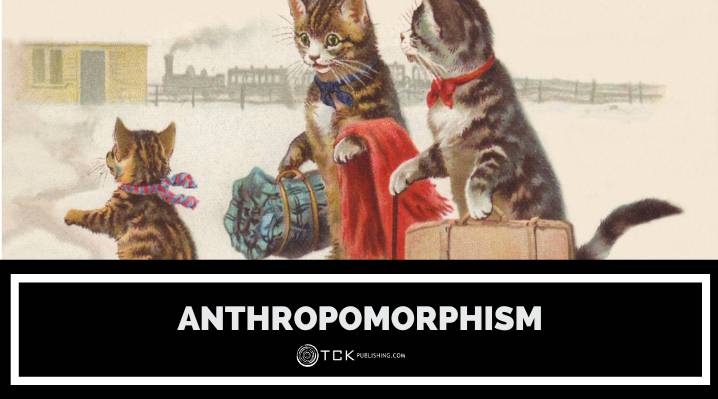
From the earliest flickers of human consciousness to the digital age’s pixelated avatars, anthropomorphism—the ascription of human traits to non-human entities—has been an enduring thread woven into the fabric of culture. It is not merely a literary device or artistic flourish but a fundamental cognitive bridge, allowing humanity to navigate the vast, often incomprehensible expanse of the natural world. This impulse to humanize the inanimate and animate the abstract has shaped mythologies, art, language, and even our understanding of intelligence itself. To trace its history is to journey through the labyrinth of human imagination, where gods wear animal skins, rivers weep, and machines dream.
The Dawn of Deification: Gods in Animal Guise
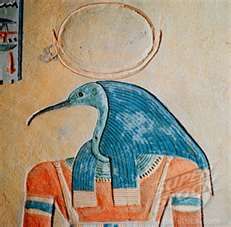
Long before the first written word, in the hushed whispers of prehistory, anthropomorphism took its most sacred form: the fusion of human and animal in the divine. The ancient Egyptians, with their pantheon of hybrid deities, exemplified this synergy. Bastet, the feline goddess of home and fertility, embodied both the nurturing grace of a mother and the predatory cunning of a lioness. Her counterpart, Anubis, the jackal-headed guide of the dead, stood as a liminal figure between the living and the afterlife, his canine features evoking both loyalty and the untamed wild. These deities were not mere allegories; they were living metaphors, their animal forms distilling complex human emotions and cosmic forces into tangible, worshippable entities.
Across the Mediterranean, the Greeks wove anthropomorphism into the very sinew of their mythology. Zeus, the thunderous sovereign, could shapeshift into a swan to seduce Leda or a golden shower to impregnate Danaë. Athena, the owl-eyed strategist, was both a warrior and a bird of wisdom. These transformations were not whimsical; they were narrative devices that rendered the divine relatable. By cloaking gods in animal skins or celestial bodies, early cultures transformed the ineffable into the familiar, allowing mortals to commune with forces beyond their comprehension.
Fables and the Moralizing Beast: Anthropomorphism as Pedagogy
As civilizations coalesced, so too did the role of anthropomorphism in storytelling. Aesop’s fables, those miniature moral theatres, elevated animals to the status of teachers. The cunning fox outwits the vain crow; the industrious ant prepares for winter while the carefree grasshopper perishes. These tales were not about animals per se but about human folly, ambition, and virtue, refracted through the prism of the animal kingdom. The fox was not a fox; he was the embodiment of deceit, the ant a paragon of diligence. This tradition endured, spawning centuries of beastly allegories—from Chaucer’s *The Nun’s Priest’s Tale* to La Fontaine’s witty satires.
Yet anthropomorphism in fables was more than moralizing. It was a rebellion against the rigid hierarchies of medieval society. A lowly peasant could identify with Reynard the Fox, a trickster who outsmarted kings and clergy alike. The animal world became a leveling ground, where the weak could triumph over the strong through wit rather than brute force. This subversive potential made fables a tool of both control and liberation, a paradox that continues to resonate in modern satire and political cartoons.
The Renaissance and the Humanization of Nature
The Renaissance marked a turning point, where anthropomorphism evolved from a religious and moral tool into an artistic and scientific one. Leonardo da Vinci’s sketches of flying machines were not merely mechanical fantasies; they were the dreams of a mind that saw birds as engineers of the sky. His *Vitruvian Man*, though human, was a celebration of the divine proportion, a testament to the belief that nature itself was a grand, human-like design. Meanwhile, artists like Albrecht Dürer painted hares and rhinoceroses with such lifelike detail that they seemed to gaze back at the viewer, their eyes holding secrets of the natural world.
This era also saw the rise of the *pathetic fallacy*—the attribution of human emotions to nature. A storm did not merely rage; it *howled* in fury. A brook did not flow; it *danced* with joy. Poets like Shakespeare and Wordsworth wielded this device to blur the line between the human and the non-human, suggesting that the cosmos itself was a sentient, responsive entity. The Romantics, in particular, saw nature as a mirror of the soul, where mountains sighed and rivers whispered. This was not mere personification; it was a profound reimagining of the world as a living, breathing counterpart to humanity.
Industrialization and the Rise of the Mechanical Doppelgänger
The 19th century brought a new kind of anthropomorphism: the humanization of machines. As steam engines hissed and looms clattered, people began to see their creations as extensions of themselves. Charles Babbage’s *Difference Engine*, an early mechanical calculator, was often described as a “thinking machine,” a term that would later evolve into the modern concept of artificial intelligence. Meanwhile, in literature, Mary Shelley’s *Frankenstein* posed a chilling question: what if the thing we create turns around and demands to be recognized as human? The monster was not a monster by nature but by rejection, his humanity forged in the fires of abandonment.
This mechanical anthropomorphism reached its zenith in the 20th century with the advent of robots and AI. From R.U.R.’s Rossum’s Universal Robots to *Star Trek*’s Data, the trope of the artificial human became a mirror held up to society’s anxieties about identity, control, and what it means to be alive. Even today, voice assistants like Siri and Alexa are designed with human-like names and personalities, blurring the line between tool and companion. The machine, once a cold, unfeeling artifact, now wears the mask of humanity, forcing us to confront our own reflections in the steel and silicon.
Anthropomorphism in the Digital Age: Avatars and Virtual Empathy
The 21st century has ushered in a new frontier for anthropomorphism: the digital realm. Video games, social media, and virtual reality have transformed the way we interact with non-human entities. NPCs (non-player characters) in games like *The Legend of Zelda* or *Final Fantasy* are no longer mere obstacles or quest-givers; they are fully realized characters with backstories, emotions, and arcs. Players do not just *use* these avatars; they *empathize* with them, their victories and losses becoming personal triumphs and tragedies.
Social media has taken this further, with emojis and memes serving as modern-day hieroglyphs that convey complex emotions in a single image. A crying-laughing emoji is not just a symbol; it is a shorthand for shared human experience, a digital anthropomorphism that transcends language barriers. Even brands have embraced this trend, giving human personalities to inanimate products—think of the M&M’s spokescandies or the Geico gecko, each a playful nod to the age-old habit of seeing ourselves in the world around us.
Yet this digital anthropomorphism is not without its shadows. The rise of deepfake technology and AI-generated content raises unsettling questions: when a synthetic voice mimics a loved one’s tone, or a chatbot simulates empathy, where does the illusion end and the reality begin? The line between human and machine, once a philosophical debate, is now a tangible, ethical dilemma.
The Enduring Allure: Why We Humanize the World
Anthropomorphism persists because it is, at its core, an act of survival. By projecting our emotions, intentions, and fears onto the world, we render it less alien, more manageable. A thunderstorm becomes a god’s wrath; a river, a nurturing mother; a robot, a potential friend. This impulse is not a flaw but a feature of human cognition—a way to navigate a complex universe by seeing ourselves in its patterns.
It is also a testament to our creativity. From cave paintings to CGI blockbusters, anthropomorphism has been the engine of art, literature, and innovation. It allows us to explore the boundaries of identity, to ask what it means to be human by playing with what it means to be *not* human. In a world increasingly dominated by technology and data, this habit may be more vital than ever. If we are to coexist with AI, to understand the non-human world, or even to grapple with our own mortality, anthropomorphism offers a language—a way to talk, to dream, and to imagine beyond the limits of our flesh.
So the next time you see a cartoon bear selling honey, or a voice assistant apologize for a misunderstanding, remember: you are not just engaging with a tool. You are participating in an ancient ritual, one that has shaped civilizations, sparked revolutions, and whispered secrets to the stars. Anthropomorphism is not just a trick of the mind; it is the very pulse of human culture, beating in time with our need to belong—to something, to someone, to the vast, mysterious world we call home.