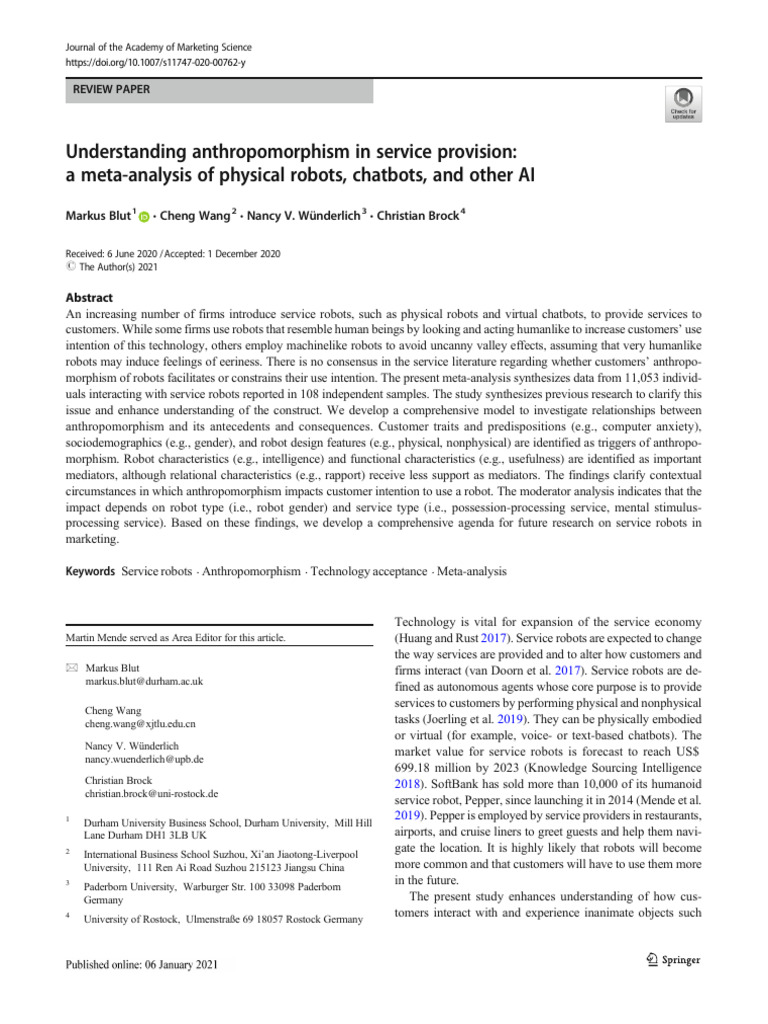
The financial markets, often perceived as cold, calculated ecosystems driven by data and logic, conceal a fascinating layer fueled by human psychology. Among the myriad cognitive phenomena influencing investor behavior, anthropomorphism—a psychological tendency to attribute human traits, emotions, or intentions to non-human entities—stands as a compelling lens through which to reinterpret market dynamics. This subtle, often subconscious act colors how market participants perceive stocks, indices, and economic trends, promising a profound shift in perspective that challenges the presumed objectivity of financial analysis.
Anthropomorphism: Bridging Human Cognition and Market Perception
At its core, anthropomorphism is a cognitive shortcut that helps humans make sense of complex, ambiguous, or unpredictable phenomena by projecting familiar human characteristics onto them. In the labyrinthine environment of financial markets, where information overload and uncertainty abound, investors instinctively seek relatable narratives to place their bets. Stocks become “hungry” for gains or “fearful” of decline; markets are “confident” or “nervous,” as if these entities possess minds of their own. This personification is not merely figurative speech but a deep psychological mechanism shaping expectation and decision-making.
By humanizing abstract financial instruments, anthropomorphism constructs an accessible emotional framework, transforming impersonal graphs and numbers into stories imbued with intention and volition. This narrative construction allows investors—both institutional and retail—to navigate uncertainty with richer, albeit sometimes distorted, interpretative tools.
The Cognitive Foundations Underpinning Anthropomorphic Tendencies
Anthropomorphism taps into primal cognitive processes evolved for social understanding. The human brain excels at detecting patterns and attributing agency—often favoring false positives as a survival mechanism. This hyperactive agency detection system predisposes individuals to perceive purpose and meaning where none objectively exists.
In the context of financial markets, this cognitive bias manifests as attributing intentional behavior to market movements or individual securities. When a stock surges unexpectedly, it is not just market forces at play but a “bullish spirit” invigorating the asset. Conversely, a sudden crash might be seen as the stock “punishing” reckless investors. Such narratives offer psychological comfort, creating a semblance of control over inherently chaotic systems.
Moreover, anthropomorphism intersects with emotional contagion, amplifying group sentiment as traders align their internal states to the perceived mood of the market. This collective anthropomorphic mindset can catalyze herd behavior, exacerbating volatility and reinforcing feedback loops of optimism or pessimism.
The Role of Anthropomorphism in Market Narratives and Storytelling
Financial markets thrive on stories. Media coverage, analyst reports, and investor discourse often employ anthropomorphic metaphors as a lingua franca to elucidate complex economic realities. Headlines announce that the “market woke up jittery today” or describe the “resilience” of a stock as though it were a living being.
These narrative devices are not benign. They shape perceptions, frame expectations, and influence behavior in profound ways. Investors assimilate these anthropomorphic stories, which crystallize ambiguous information into digestible scenarios, guiding investment decisions and risk assessments.
This storytelling is further entrenched by financial personalities—traders, commentators, and CEOs—who consciously or unconsciously reinforce anthropomorphic portrayals. A charismatic CEO “leading” a company to greatness or a “beleaguered” enterprise struggling against adversity encapsulate the market’s intimate relationship with humanized imagery.
Anthropomorphism as a Double-Edged Sword in Investor Psychology
While anthropomorphism can facilitate comprehension and emotional connection, it can also engender cognitive distortions. Investors may develop misplaced optimism or pessimism, acting on perceived intentions or moods of the market rather than objective fundamentals. This can inflate bubbles or exacerbate crashes, as emotional contagion overrides rational analysis.
For example, the “narrative fallacy”—the propensity to create cohesive stories post hoc—often intertwines with anthropomorphic constructs, giving rise to hindsight biases and overconfidence. Investors may attribute “failings” or “virtues” to companies that are essentially the product of broader economic forces, leading to suboptimal portfolio decisions.
Furthermore, anthropomorphism can mask structural risks and diminish vigilance. When investors see markets as “friendly” or “hostile,” they may under- or overestimate potential dangers, skewing risk management and asset allocation strategies.
Practical Implications: Navigating Financial Markets with Anthropomorphic Awareness
Recognizing the pervasive influence of anthropomorphism offers a tactical advantage. Investors who become attuned to their own anthropomorphic biases can develop more nuanced analytical frameworks, discerning between compelling narratives and detached data.
Such metacognitive awareness encourages a balanced approach—acknowledging the human element in market psychology without succumbing to its pitfalls. By critically evaluating the stories they tell themselves, investors can temper emotional decision-making and cultivate resilience against market hype or despair.
Moreover, financial educators and advisors benefit from understanding anthropomorphism’s psychological hold. By framing market concepts with appropriate metaphors—neither overly humanizing nor coldly abstract—they can enhance client comprehension while mitigating cognitive distortions.
Emerging Research and Future Directions in Behavioral Finance
Recent academic inquiry delves into the nuanced roles anthropomorphism plays in financial behavior. Experimental studies explore how anthropomorphic cues—such as corporate mascots, logos, or language in earnings calls—influence investor trust and engagement.
Technology platforms employing AI-generated narratives or animated interfaces wield anthropomorphism as a deliberate tool to humanize user experience, raising intriguing ethical and practical considerations. The boundary between useful engagement and emotional manipulation becomes increasingly blurred.
As markets evolve with digital transformation and social media amplification, understanding anthropomorphism’s psychological impact will be essential for regulators, firms, and individual investors aiming to foster fair, transparent, and stable financial ecosystems.
Embracing anthropomorphism as a vital, albeit invisible, force facilitating our relationship with financial markets invites a paradigm shift. No longer can markets be regarded as faceless algorithms and impersonal forces alone. They are intimately tied to the complex, imaginative ways humans perceive and interact with uncertainty—where the lines between human and market blur, unlocking richer insights into the art and science of investing.