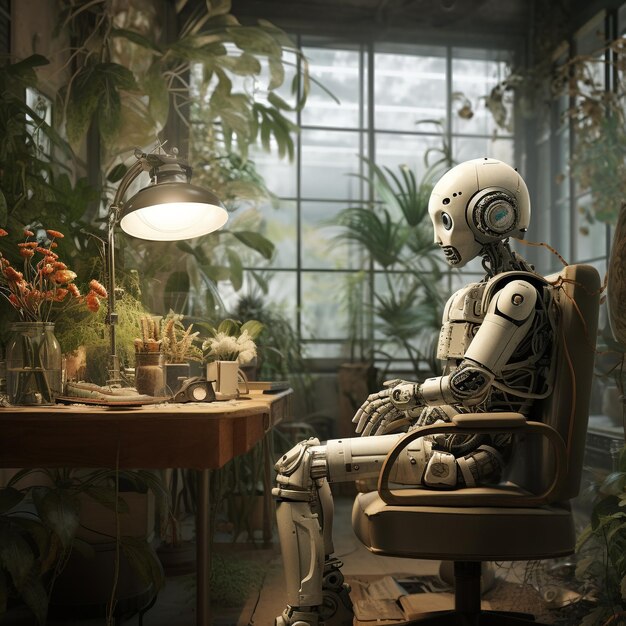
In the quiet hum of a modern household, a voice cuts through the silence—not of a human, but of a machine. “Alexa, play my favorite song,” you say, and the digital assistant responds with a tone so warm, so human, that it feels almost uncanny. This is not an isolated phenomenon. From customer service chatbots named “Sarah” to robotic vacuum cleaners christened “Roomba,” we are increasingly naming and giving voices to machines that are, at their core, lines of code and circuits. But why? What compels us to anthropomorphize technology, to bestow upon it the very traits we associate with humanity? The answer lies in a complex interplay of psychology, culture, and the innate human desire to connect—even with the inanimate.
The Psychology Behind Anthropomorphism: Why We See Faces in the Code
Anthropomorphism—the attribution of human characteristics to non-human entities—is not a modern quirk but a deeply rooted cognitive bias. Evolutionary psychologists suggest that our brains are wired to recognize faces and human-like patterns as a survival mechanism. When we see a pair of dots on a screen arranged like eyes, our minds instinctively interpret them as a face, a phenomenon known as “pareidolia.” This tendency extends to robots and AI, where even the most rudimentary humanoid features trigger our social instincts.
Consider the case of robotic pets like Sony’s Aibo or Hasbro’s FurReal Friends. These machines, devoid of true consciousness, elicit emotional responses akin to those we reserve for living creatures. Studies have shown that people who interact with these robots report feelings of attachment, empathy, and even grief when the device malfunctions or is “euthanized” (as was the case with Aibo’s discontinuation). This emotional investment stems from the “uncanny valley” effect, where the closer a robot resembles a human, the more we project humanity onto it—even when we know it lacks it.
But anthropomorphism isn’t just about survival. It’s also a tool for cognitive offloading. Naming a robot or giving it a voice simplifies our interaction with it. Instead of thinking of a “voice-controlled smart speaker,” we think of “Alexa,” a familiar entity with whom we can engage in dialogue. This mental shortcut reduces cognitive load, making technology feel more approachable and less intimidating.
The Cultural Fabric: How Stories Shape Our Relationship with Machines
Our fascination with naming and giving voices to robots is not merely a product of psychology—it is woven into the very fabric of human storytelling. From the ancient Greek myth of Pygmalion, who fell in love with a statue he had carved, to the modern-day obsession with AI companions like Replika, we have long projected humanity onto inanimate objects. Science fiction has been a particularly potent catalyst, blurring the lines between fiction and reality.
Take, for example, the character of HAL 9000 from *2001: A Space Odyssey*. Despite being a murderous AI, HAL’s calm, measured voice and polite demeanor made it one of the most memorable villains in cinematic history. Or consider the droids from *Star Wars*—R2-D2 and C-3PO, with their distinct personalities and voices, are as iconic as any human character. These narratives don’t just entertain; they condition us to expect machines to have personalities, to communicate in ways that resonate with us on a human level.
This cultural conditioning extends beyond entertainment. In Japan, robots like Pepper, designed to interact socially, are deployed in nursing homes to combat loneliness. The Japanese concept of “wa” (harmony) emphasizes the importance of social connection, making the idea of robotic companions not just acceptable but desirable. Meanwhile, in the West, the trope of the “helpful butler” robot—think Rosie from *The Jetsons*—reflects a desire for technology that serves without challenging our anthropocentric worldview.
Even the names we choose for robots reflect cultural narratives. “Alexa” evokes a friendly, approachable assistant, while “Siri” (from the Norse word for “beautiful victory”) suggests competence and elegance. These names are not arbitrary; they are carefully crafted to evoke specific emotions and expectations, reinforcing the illusion of humanity.
Practicality Meets Personification: The Functional Benefits of Humanizing Technology
Beyond psychology and culture, there are tangible benefits to giving robots human names and voices. In customer service, for instance, a chatbot named “Sarah” is more likely to be perceived as trustworthy than one labeled “Customer Support Bot #4.” This is because human names trigger social scripts—we expect Sarah to be knowledgeable, polite, and efficient, just as we would a human representative. The name humanizes the interaction, making users more forgiving of minor errors or limitations.
Voice interfaces are another prime example. Studies have shown that users are more likely to engage with a voice assistant if it has a natural, human-like tone. A robotic monotone might convey information effectively, but it fails to create the emotional connection that drives repeated use. Companies like Amazon and Google invest heavily in making their AI voices sound as human as possible, complete with intonation, pauses, and even regional accents. The goal isn’t just to inform—it’s to emulate the rhythm of human conversation.
In healthcare, robotic companions like PARO, a therapeutic robot shaped like a seal, use human-like interactions to reduce stress and anxiety in patients. The robot’s name, soft fur, and responsive “behavior” make it a comforting presence, demonstrating how personification can serve therapeutic purposes. Similarly, in education, robots like NAO are used to teach children social skills by engaging them in dialogue, proving that human-like interaction can be a powerful tool for learning.

The Ethical Dilemma: When Humanization Crosses the Line
Yet, for all its benefits, the humanization of robots raises ethical questions. If we name and give voices to machines, are we not blurring the line between tool and companion? Could this lead to a future where we prioritize robotic relationships over human ones, as depicted in films like *Her* or *Ex Machina*? The concern isn’t far-fetched. A 2020 study found that some users of Replika, an AI companion app, reported feeling more emotionally attached to their digital partner than to their human partners, raising questions about the long-term psychological impact of such interactions.
There’s also the issue of deception. When a robot or AI is designed to mimic human behavior so convincingly that users cannot distinguish it from a real person, is it ethical to present it as anything less than what it is? The European Union’s proposed AI Act seeks to address this by classifying certain AI systems as “high-risk,” requiring transparency about their artificial nature. But as technology advances, the line between simulation and reality grows thinner, making ethical guidelines increasingly necessary.
Moreover, the humanization of robots can reinforce harmful stereotypes. A female-voiced assistant like Siri or Alexa often defaults to submissive, helpful tones, perpetuating gender norms. Similarly, robots designed for care work—such as nursing or childcare—are frequently given nurturing, maternal personas, which can reinforce traditional roles and expectations. These nuances highlight the need for thoughtful design that avoids perpetuating bias while still making technology accessible.
Looking Ahead: The Future of Human-Robot Interaction
As robots and AI become more integrated into our daily lives, the practice of naming and giving voices to machines will only intensify. Future advancements in natural language processing (NLP) and emotional AI will make these interactions even more seamless, blurring the boundaries between human and machine communication. Imagine a world where your smart home system not only adjusts the thermostat but also engages in witty banter, remembers your birthday, and offers condolences after a tough day. This isn’t science fiction—it’s the trajectory of current technology.
Yet, with these advancements comes responsibility. Designers and engineers must grapple with the ethical implications of humanizing machines, ensuring that technology serves humanity without exploiting our emotional vulnerabilities. The goal shouldn’t be to create machines that *are* human, but to create ones that *feel* human enough to foster genuine connections—without deception or harm.
In the end, our tendency to name and give voices to robots is a testament to our unyielding desire for connection. Whether it’s a voice assistant that feels like a friend or a robotic pet that offers companionship, these interactions fulfill a fundamental human need: the need to belong. As long as technology continues to evolve, so too will our relationships with it—complex, nuanced, and deeply human.