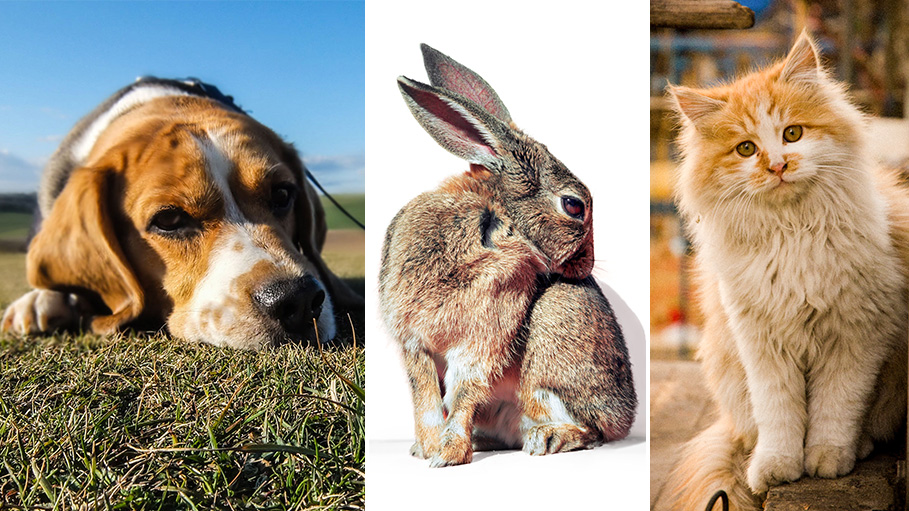
There exists a peculiar alchemy in the human mind—one that transmutes the raw, instinctual behaviors of animals into the gold of emotion. We see a dog’s tail wagging and call it joy. A cat’s purring becomes contentment. A crow’s cawing is interpreted as frustration. But why do we, as a species, insist on draping the animal kingdom in the same emotional tapestry that adorns our own lives? The answer lies not in the cold calculus of biology alone, but in the warm, often unexamined corners of human psychology, culture, and even our evolutionary past.
The Mirror of Anthropomorphism: When Animals Wear Our Faces
Anthropomorphism—the attribution of human traits, emotions, or intentions to non-human entities—is not merely a quirk of language or a child’s fancy. It is a cognitive shortcut, a way for our brains to make sense of the unfamiliar by framing it in the familiar. When a gorilla gently touches a fallen comrade, we call it empathy. When a dolphin leaps from the water in a display of acrobatics, we dub it exuberance. These labels are not objective truths; they are projections, born from our deep-seated need to see ourselves reflected in the world around us.
This tendency is not without its evolutionary advantages. By interpreting animal behavior through the lens of human emotion, early humans could predict threats, forge alliances, or even nurture cooperative bonds with other species. A growling wolf was not just a predator; it was a being capable of malice. A playful otter was not merely an aquatic creature; it was a companion in mirth. In this way, anthropomorphism may have been a survival mechanism, a way to navigate a world where the line between human and animal was far blurrier than it is today.
The Emotional Spectrum: Beyond the Binary of Pain and Pleasure
Yet anthropomorphism is not a one-way street. It is a dialogue, a constant negotiation between observation and interpretation. Consider the octopus, a creature whose intelligence rivals that of many mammals. When an octopus changes color in response to a change in its environment, we might call it fear—or curiosity. When a crow drops a nut onto a road to let passing cars crack it open, we might marvel at its ingenuity. These behaviors are not emotions in themselves, but they are the raw material from which we sculpt our emotional narratives.
This spectrum of interpretation is not arbitrary. It is shaped by culture, by personal experience, and by the stories we tell. In some traditions, animals are seen as divine messengers, their emotions a reflection of cosmic harmony. In others, they are mere automatons, their actions dictated by instinct alone. Yet even in the most reductionist views, there lingers a nagging question: If animals do not feel, why do their behaviors so often resemble our own emotional expressions?
Perhaps the answer lies in the shared biology of emotion. The amygdala, the hippocampus, the neurotransmitters that flood our brains in moments of joy or sorrow—these structures are not unique to humans. They are ancient, conserved across species, a testament to the deep evolutionary roots of feeling. When a rat freezes in fear at the scent of a predator, it is not performing a script; it is experiencing something akin to terror. The difference is not in the emotion itself, but in the complexity of its expression.
The Ethical Implications: A Moral Compass Pointing Toward Kinship
The act of attributing emotions to animals is not merely an intellectual exercise. It carries profound ethical weight. If a pig squeals in distress when separated from its young, is that not a sign of maternal love? If an elephant stands vigil over the bones of its deceased kin, is that not grief? These questions force us to confront the ways in which we interact with the animal world. Do we have the right to confine a being capable of suffering? To slaughter it for our sustenance? To dissect it in the name of science?
This moral reckoning has led to seismic shifts in human behavior. The animal rights movement, the rise of veganism, the bans on certain forms of animal testing—all of these are rooted in the growing recognition that animals are not mere objects, but subjects of their own lives. They feel. They suffer. They love. And if we are to live in a world where cruelty is not the default, we must first acknowledge that their emotions are not so different from our own.
Yet this acknowledgment is not without its paradoxes. We lavish affection on our pets while consuming the flesh of others. We mourn the death of a beloved dog but turn a blind eye to the suffering of factory-farmed chickens. The cognitive dissonance is glaring, but it is also a starting point. Once we accept that animals possess emotions, the next question becomes inevitable: How do we reconcile our actions with this new understanding?
The Science of Sentience: Peering Into the Animal Mind
Modern science has begun to peel back the layers of this mystery, revealing a world of emotional complexity that was once dismissed as anthropomorphic fancy. Studies on mirror neurons—cells that fire both when an animal acts and when it observes the same action in another—suggest that empathy is not a uniquely human trait. Elephants have been observed comforting distressed herd members. Rats will free trapped companions, even at personal cost. Crows hold grudges and form social hierarchies. These are not the behaviors of automatons, but of beings capable of deep emotional engagement.
Neuroscience, too, has lent credence to the idea that animals experience emotions in ways that parallel our own. The same neural pathways that light up in a human brain during moments of joy or pain are activated in other mammals. Even in birds, whose brains are structured differently from ours, we see evidence of emotional memory and decision-making influenced by past experiences. This is not to say that a dog’s joy is identical to a human’s, but it is to say that the spectrum of emotion is not a human monopoly.
The implications of this research are profound. If animals feel, then our treatment of them must be governed by more than convenience or tradition. It must be governed by empathy—a word that, ironically, derives from the Greek *empatheia*, meaning “in feeling.” To empathize with an animal is to recognize that its emotions are not lesser versions of ours, but valid in their own right.
The Future of Our Relationship: A New Covenant With the Animal World
We stand at a crossroads. The old narrative—that animals are mere resources, devoid of inner lives—is crumbling under the weight of evidence and ethical scrutiny. In its place, a new story is emerging, one in which animals are not just subjects of our curiosity, but participants in a shared emotional landscape. This shift is not about projecting human emotions onto animals, but about recognizing the emotions that already exist within them.
What might this future look like? It could mean rethinking our agricultural systems to prioritize animal welfare. It could mean expanding the legal protections afforded to non-human beings. It could mean, in some cases, stepping back entirely, allowing animals to exist on their own terms rather than bending their lives to our needs. It could even mean, for those who are open to it, a deeper connection with the natural world—a recognition that we are not separate from it, but a part of its vast, emotional tapestry.
The journey ahead is not without its challenges. There will be resistance from those who cling to old ways of thinking. There will be debates about where to draw the line—do insects feel? What about fish? The answers are not always clear, but the questions themselves are a sign of progress. We are no longer content to assume. We are beginning to ask.
And perhaps that is the most important shift of all. Not the attribution of emotions to animals, but the willingness to ask whether they feel at all. In that question lies the seed of a new relationship—one built on curiosity, respect, and a shared recognition of the emotional lives that bind us all.