In the microscopic realm where life teeters on the precipice of existence, viruses and bacteria are not merely inert particles or simple organisms—they are entities that have long captivated the human imagination. We anthropomorphize them, endowing them with motives, personalities, and even malice, as if they were characters in a grand, invisible narrative. This tendency to ascribe human traits to non-human entities is not merely whimsical; it is a psychological and cultural phenomenon deeply rooted in our need to make sense of the incomprehensible. Why do we see viruses as cunning invaders and bacteria as wily adversaries? The answer lies in the intersection of biology, psychology, and the stories we tell ourselves to navigate a world that often feels beyond our control.
The Allure of the Personified Enemy
At the heart of our fascination with viruses and bacteria is the human propensity to personify the unseen. When a pathogen spreads like wildfire through a population, we describe it as “sneaky,” “relentless,” or “deceptive”—as if it were a cunning strategist rather than a collection of proteins and genetic material. This linguistic anthropomorphism is not accidental; it reflects our brain’s innate tendency to attribute agency to phenomena that defy easy explanation. By framing viruses and bacteria as adversaries with intentions, we transform them from abstract threats into tangible foes, making them easier to confront in our collective imagination.
Consider the language we use: a virus “hijacks” cells, bacteria “invade” tissues, and infections “strike” with precision. These metaphors are not just rhetorical flourishes—they are cognitive shortcuts that help us grapple with the otherwise alien nature of microbial life. In doing so, we create a narrative where these entities are not just passive agents of disease but active participants in a cosmic struggle. This personification serves a psychological purpose: it allows us to externalize fear, to personify the faceless, and to imbue the natural world with a sense of order and intent.
The Narrative of the Invisible War
Our obsession with anthropomorphizing microbes is also a product of the stories we tell about survival and conflict. From ancient myths to modern blockbusters, humanity has always been drawn to tales of battle—whether against gods, monsters, or microscopic foes. Viruses and bacteria, in this context, become the perfect antagonists: they are ubiquitous yet invisible, relentless yet adaptable, and their “attacks” are as unpredictable as they are devastating. This narrative framework transforms the abstract threat of disease into a dramatic struggle, complete with heroes (our immune systems) and villains (the pathogens themselves).
This storytelling impulse is not merely entertainment; it is a way to process the chaos of existence. When a pandemic ravages a population, we seek meaning in the suffering, and what better way than to frame it as a clash between good and evil? The personification of viruses and bacteria allows us to impose a moral order on the otherwise indifferent workings of nature. In this way, our anthropomorphism is less about the microbes themselves and more about our own need to find coherence in a world where randomness often reigns supreme.
The Mirror of Human Fears
What makes our anthropomorphism of viruses and bacteria so compelling is that it reflects our deepest fears—fears of invasion, loss of control, and the fragility of life. Bacteria, for instance, are often depicted as opportunistic scavengers, lurking in the shadows, ready to exploit any weakness. This mirrors our societal anxieties about contamination, decay, and the erosion of boundaries between self and other. Similarly, viruses are frequently framed as stealthy infiltrators, slipping past our defenses with cunning precision—a metaphor for the ways in which unseen threats can upend our lives in an instant.
This mirroring effect is not coincidental. Our fascination with microbes is, in part, a reflection of our own vulnerabilities. We fear what we cannot see, what we cannot control, and what threatens to undermine the very foundations of our existence. By anthropomorphizing these entities, we externalize these fears, giving them form and face. In doing so, we transform the abstract into the concrete, the unknown into the known—a psychological strategy that helps us cope with the uncertainties of life.
The Evolutionary Roots of Personification
Anthropomorphism is not a modern invention; it is an ancient cognitive tool that has evolved alongside human consciousness. Our ancestors, who lived in a world teeming with unseen dangers, relied on personification to make sense of the natural world. A rustling in the bushes was not just the wind—it was a predator with intent. A sudden illness was not just bad luck—it was the work of a malevolent spirit. This tendency to see agency in the inanimate is hardwired into our brains, a survival mechanism that helped our ancestors anticipate and respond to threats.
Today, this evolutionary legacy manifests in our relationship with microbes. We still rely on personification to navigate the invisible threats of the modern world, from antibiotic-resistant bacteria to emerging viral pandemics. Our brains, wired to detect patterns and assign agency, cannot help but see viruses and bacteria as active participants in a grand, if unintentional, drama. This is not a flaw in our thinking; it is a testament to the adaptability of the human mind, which has always sought to impose order on the chaos of existence.
The Artistic and Cultural Legacy of Microbial Personification
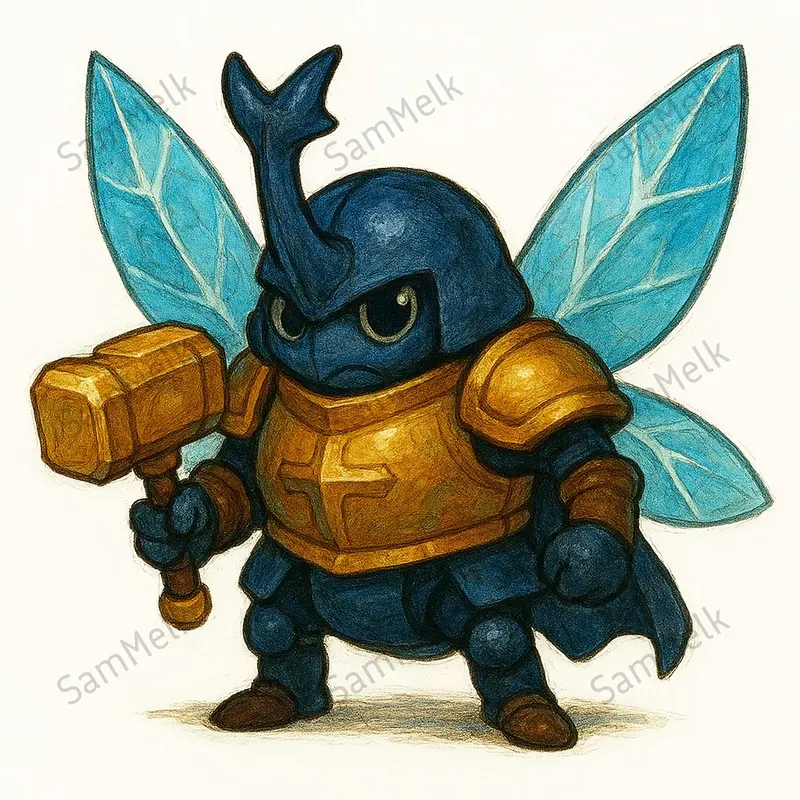
The anthropomorphism of viruses and bacteria extends beyond science and medicine—it permeates art, literature, and popular culture. From the monstrous viruses of science fiction to the personified bacteria in children’s cartoons, these entities are often depicted as characters with personalities, motives, and even emotions. This artistic tradition serves a dual purpose: it entertains us, and it helps us process our fears. By giving microbes a face and a voice, we make them less terrifying, more relatable, and ultimately, more manageable.
Consider the iconic imagery of viruses as spiky, alien invaders or bacteria as squirming, malevolent creatures. These visual metaphors are not just artistic choices; they are psychological tools that help us confront the unknown. They allow us to laugh at our fears, to personify our anxieties, and to find beauty in the otherwise unsettling world of the microscopic. In this way, our anthropomorphism of microbes is not just a quirk of human psychology—it is a testament to our creativity, our resilience, and our unending quest to find meaning in the world around us.

The diversity of microbial forms—from the helical coils of bacteria to the geometric symmetry of viruses—serves as a visual reminder of the alien yet strangely familiar world we have anthropomorphized. Each shape, each structure, becomes a character in the grand narrative of life and disease, inviting us to see ourselves not just as observers of this microscopic realm, but as participants in its endless drama.