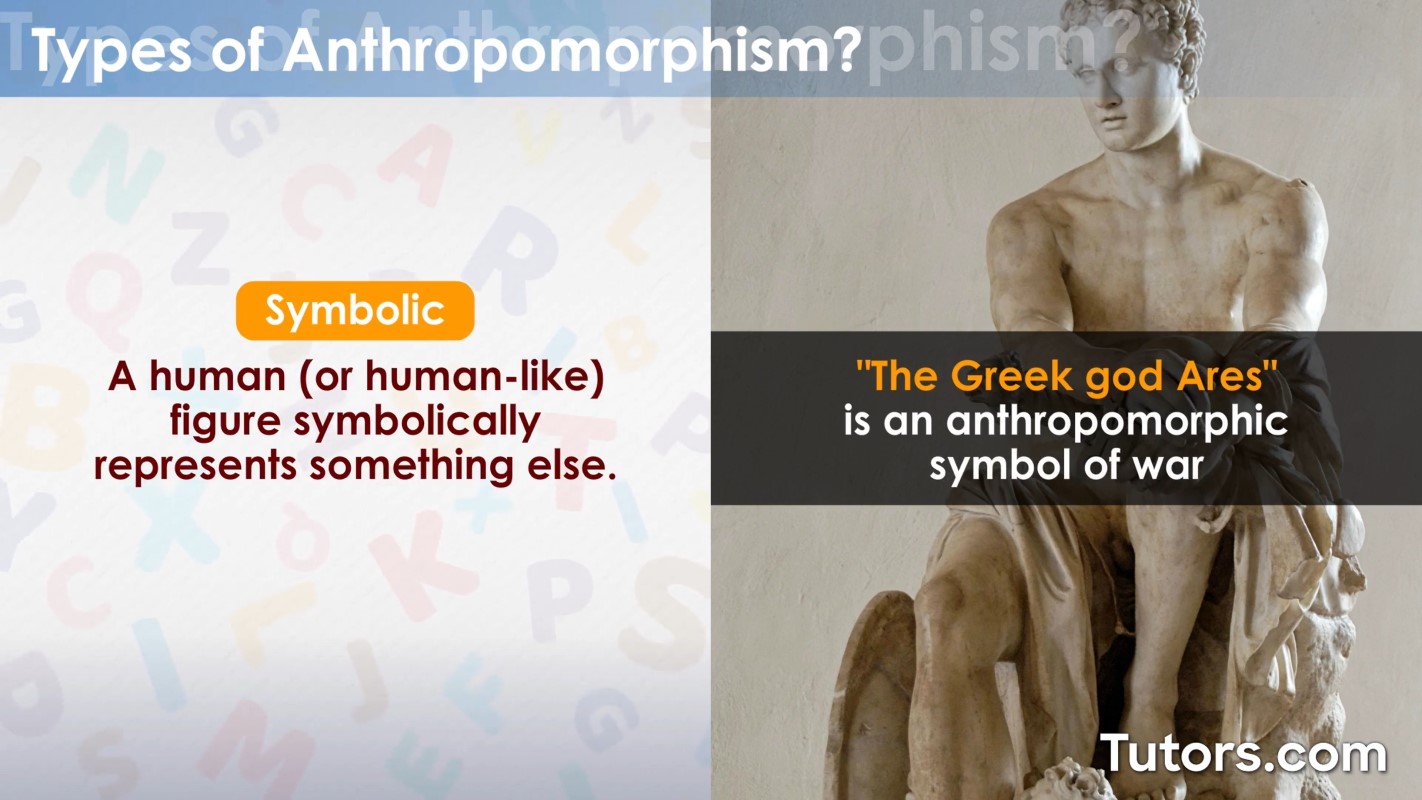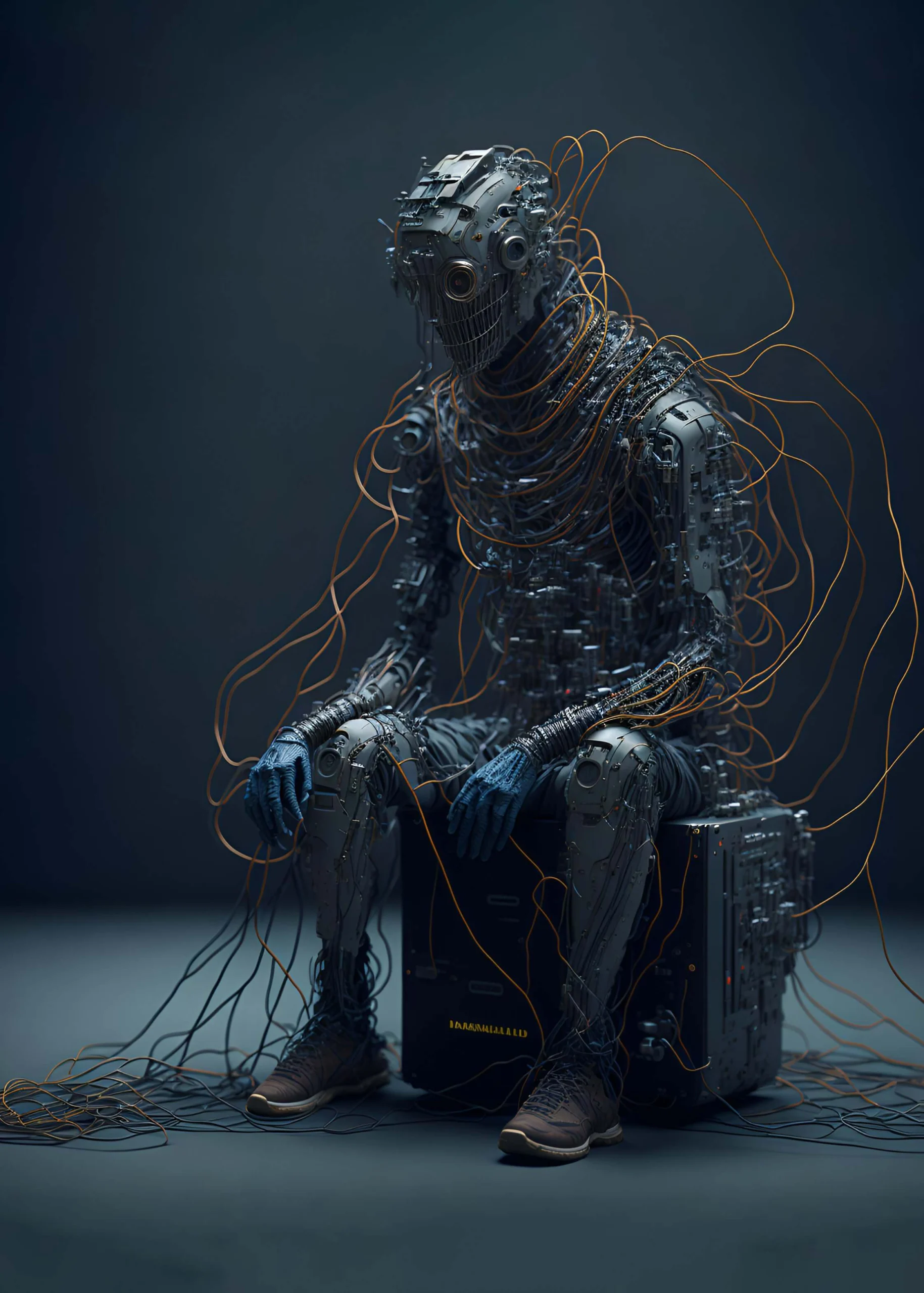
In the grand theater of scientific inquiry, anthropomorphism—the act of attributing human traits to non-human entities—often takes center stage as a controversial protagonist. While poets and storytellers have long embraced this narrative device to breathe life into the inanimate, many scientists recoil from its embrace, treating it as a seductive siren whose song lures reason into treacherous waters. But why does this intellectual aversion persist? Why do some of the brightest minds in science view anthropomorphism not as a bridge to understanding, but as a bridge too far? The answer lies not in a single chasm of logic, but in a labyrinth of methodological, philosophical, and historical concerns that have shaped the very foundations of scientific thought.
The Ghost in the Machine: The Peril of False Analogy
At the heart of scientific skepticism toward anthropomorphism lies the specter of false analogy—a cognitive mirage that distorts perception by projecting human experiences onto the non-human world. When a scientist observes a chimpanzee “smiling” or a robot “hesitating,” the mind instinctively reaches for familiar human frameworks to interpret these behaviors. Yet, this instinct is a double-edged sword. While it may offer fleeting clarity, it risks obscuring the raw, unfiltered reality of the observed phenomenon. The danger is not merely one of misinterpretation; it is the erosion of objectivity itself. Science demands precision, and anthropomorphism, in its most seductive form, trades precision for poetic convenience. It is as if a cartographer, seeking to map an uncharted territory, begins to draw coastlines based on the shapes of clouds rather than the contours of the land.
Consider the case of artificial intelligence. When we describe a machine as “learning” or “deciding,” we invoke human cognitive processes that are laden with subjective experience. Yet, these machines operate on algorithms—cold, deterministic sequences that bear no resemblance to the messy, emotional tapestry of human thought. The anthropomorphic lens, in this context, is not just misleading; it is a form of intellectual dishonesty, a subtle betrayal of the very principles that underpin scientific rigor.
The Unyielding Bastion of Objectivity
Science, at its core, is a fortress built upon the unassailable principle of objectivity. Every hypothesis, every experiment, every conclusion must withstand the scrutiny of empirical evidence, untarnished by the biases of the observer. Anthropomorphism, however, is a Trojan horse that smuggle subjectivity into this bastion. When a researcher attributes “anger” to a storm or “purpose” to a river, they are not merely describing nature—they are imbuing it with human emotions and intentions, thereby contaminating the purity of observation. This is not an abstract concern; it has tangible consequences. In the 19th century, the anthropomorphic interpretation of animal behavior led to erroneous conclusions about the “moral” lives of creatures, delaying the development of ethology as a rigorous discipline. The lesson is clear: anthropomorphism is not a harmless indulgence; it is a cognitive virus that can infect the very data it seeks to illuminate.
The pursuit of objectivity is not a sterile ideal but a necessity. It is the difference between a theory that explains the universe as it is and one that explains it as we wish it to be. When scientists reject anthropomorphism, they are not rejecting creativity or imagination; they are safeguarding the integrity of their work. They are ensuring that the map they draw of reality is not distorted by the contours of their own minds.
The Labyrinth of Intentionality: Why Purpose is a Human Fiction
Anthropomorphism thrives on the illusion of intentionality—the idea that non-human entities act with purpose, as if the universe itself were a grand narrative written by a cosmic author. Yet, science has long dismantled this comforting fiction. From the mechanistic philosophy of Descartes to the Darwinian revolution, the natural world has been revealed as a tapestry of cause and effect, devoid of teleology. When a scientist ascribes “intent” to a hurricane or “strategy” to a bacterium, they are not uncovering hidden truths; they are projecting human narratives onto a cosmos that operates with indifferent efficiency. The hurricane does not “rage”; it is a complex interplay of pressure systems and temperature gradients. The bacterium does not “plan”; it responds to environmental stimuli through the blind, unfeeling mechanisms of evolution.
This rejection of intentionality is not a denial of agency in the biological sense. It is a recognition that agency, when stripped of anthropomorphic baggage, is a far more nuanced and subtle phenomenon. The dance of a honeybee, the migration of a monarch butterfly, the bioluminescence of a deep-sea creature—these are not acts of will in the human sense. They are the elegant outputs of evolutionary algorithms, refined over millennia by the relentless sieve of natural selection. To interpret them through the lens of human intention is to mistake the map for the territory, the shadow for the substance.
The Ghost of Vitalism: When Life Becomes a Puppet Show
Anthropomorphism is the modern-day heir to vitalism—the long-discredited belief that living organisms are animated by a mysterious, non-physical force. In the 18th and 19th centuries, vitalists argued that the spark of life could not be reduced to mere chemistry, that there was something ineffable, something almost divine, that set living things apart from the inanimate. Today, anthropomorphism serves a similar role, albeit in a more subtle guise. When we describe a cell as “deciding” to divide or a tree as “choosing” to grow toward the light, we are invoking a vitalistic impulse—a belief that life is governed by forces beyond the reach of mechanistic explanation.
The rejection of anthropomorphism, then, is also a rejection of vitalism in its modern form. It is a commitment to the idea that life, no matter how complex or wondrous, is ultimately explicable through the laws of physics and chemistry. This is not to diminish the awe-inspiring nature of existence; it is to recognize that awe and explanation are not mutually exclusive. The flight of a bird is no less miraculous when we understand the aerodynamics of its wings. The human brain is no less extraordinary when we unravel the electrochemical symphony of its neurons. Anthropomorphism, in this context, is a form of intellectual laziness—a refusal to grapple with the profound beauty of a universe that needs no human emotions to be meaningful.
The Ethical Quagmire: When Empathy Clouds Judgment
Beyond the methodological and philosophical objections, there lies a more insidious concern: the ethical quagmire of anthropomorphism. When scientists attribute human-like emotions or intentions to animals, plants, or even machines, they risk anthropocentric bias—a distortion of judgment that places human experiences at the center of all understanding. This bias is not merely academic; it has real-world consequences. In conservation biology, for example, the anthropomorphic portrayal of endangered species as “victims” or “heroes” can lead to misplaced priorities, where charismatic megafauna receive disproportionate attention while less “relatable” organisms are neglected. Similarly, in the field of artificial intelligence, the tendency to describe machines as “thinking” or “feeling” can obscure the ethical responsibilities of their creators, blurring the line between tool and entity.
The ethical stakes are even higher when anthropomorphism intersects with human psychology. Studies have shown that people are more likely to empathize with entities that exhibit human-like traits, even when those traits are entirely fabricated. This phenomenon, known as the “Eliza effect,” can lead to misplaced moral concern—for instance, attributing suffering to a robot that lacks consciousness, or projecting human suffering onto an ecosystem that operates on entirely different principles. Science, as a discipline, must remain vigilant against such distortions, lest it become complicit in the propagation of myths rather than the pursuit of truth.
The Unseen Cost: Lost Opportunities for Discovery
Finally, the rejection of anthropomorphism is not merely a defensive stance against error; it is an offensive strategy for discovery. By refusing to project human traits onto the non-human world, scientists open themselves to the possibility of seeing reality in ways that are truly alien to human experience. The history of science is replete with examples of breakthroughs that emerged from the rejection of anthropomorphic thinking. From the discovery of bacterial flagella to the unraveling of quantum entanglement, the most profound insights have often come from embracing the strangeness of the universe rather than trying to shoehorn it into familiar human frameworks.
Consider the field of ethology, where the rejection of anthropomorphism led to revolutionary insights into animal behavior. By observing animals without the distorting lens of human intention, researchers uncovered the complex social structures of primates, the navigational prowess of birds, and the communication systems of cetaceans. These discoveries were only possible because scientists were willing to set aside their preconceptions and see the world through the eyes of the non-human. Anthropomorphism, in this context, is not just a methodological flaw; it is a missed opportunity—a self-imposed blindfold that obscures the vast, uncharted territories of the natural world.