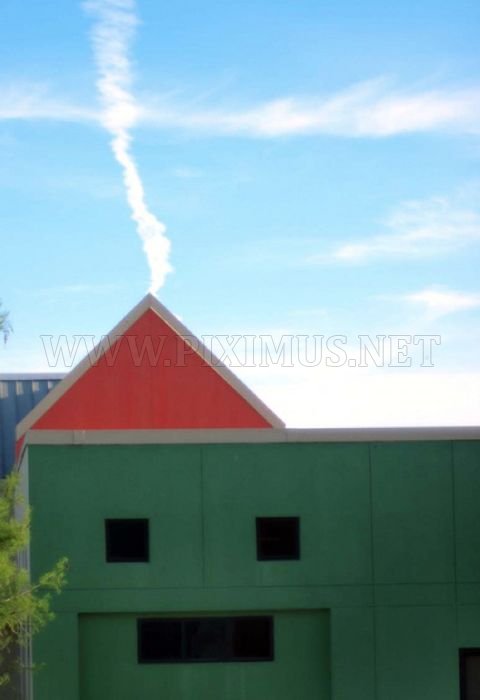
Have you ever walked down a city street and paused mid-step, struck by an uncanny resemblance—a building that seems to grin at you with windows for eyes, or a structure that looms like a slumbering beast with jagged rooftops for ears? The phenomenon of buildings that mimic faces or animals is more than mere architectural coincidence; it’s a testament to human psychology, cultural symbolism, and the playful ingenuity of design. But why do these structures emerge, and what challenges do they pose to our perception of the built environment?
The Psychology of Pareidolia: When Concrete Becomes a Face
At the heart of this architectural quirk lies pareidolia, the brain’s tendency to impose familiar patterns onto ambiguous stimuli. When we encounter a building with symmetrical windows, a protruding entrance, and a roofline that resembles a forehead, our minds leap to the most primal of recognitions: a face. This isn’t just a modern trick—ancient civilizations, from the Egyptians to the Mayans, wove pareidolia into their monumental designs, embedding gods and guardians into stone. Today, architects and artists exploit this cognitive shortcut, crafting structures that trigger an instant, visceral reaction. The challenge? Balancing intentional design with the risk of veering into the uncanny valley, where the resemblance becomes unsettling rather than whimsical.

Cultural Symbolism: When Buildings Wear Animal Skins
Beyond faces, some structures adopt the forms of animals, each carrying layers of cultural meaning. In Chinese architecture, the *Fu Dog*—a mythical lion-like creature—often guards temple entrances, its fierce visage warding off evil. Meanwhile, the *Casa Batlló* in Barcelona, with its undulating balconies and skeletal columns, evokes the spine of a dragon, a nod to the legend of Saint George slaying the beast. These animalistic designs aren’t arbitrary; they’re visual metaphors, embedding stories and values into the very bones of a city. Yet, the challenge here is cultural translation—what resonates in one society may bewilder or offend in another, turning a playful design into a source of controversy.

The Architect’s Dilemma: Intent vs. Interpretation
For architects, the line between inspiration and misinterpretation is razor-thin. Consider the *Dancing House* in Prague, its twisting forms evoking a pair of dancers—an intentional homage to Fred Astaire and Ginger Rogers. Yet, visitors often describe it as a “drunken giant” or a “tangled mess,” proving that design intent doesn’t always align with public perception. The challenge? Communicating the narrative behind such structures without relying on labels or guides. How do you ensure that a building’s playful facade isn’t dismissed as mere whimsy, but appreciated as a deliberate artistic statement? The answer lies in the interplay between form, context, and the viewer’s own cultural lens.
Materials and Illusion: The Alchemy of Shape and Substance
The magic of these buildings often hinges on the materials used. Concrete can be sculpted into smooth, facial curves, while glass and steel can create reflective surfaces that distort and amplify the illusion. The *Selfridges Building* in Birmingham, UK, with its undulating blue facade, mimics the scales of a fish, its shimmering surface playing tricks on the eye. Yet, materials also impose constraints—what works in a temperate climate may fail in a humid one, where rust and decay could erode the illusion over time. The challenge? Selecting materials that not only serve the structural and aesthetic goals but also withstand the test of time without betraying the original intent.

Urban Playgrounds: The Role of Whimsy in Cityscapes
In an era where cities are often criticized for their uniformity—glass towers stacked like Lego blocks—buildings that defy expectation serve as vital antidotes to monotony. They invite curiosity, spark joy, and even become landmarks. The *Crooked House* in Sopot, Poland, with its leaning, fairy-tale aesthetic, draws tourists like moths to a flame. Yet, the challenge of integrating such structures into urban planning is real. How do you balance individuality with cohesion? How do you prevent a city from descending into a theme park of architectural oddities? The answer may lie in zoning laws that encourage creativity while maintaining a sense of place.
The Future of Architectural Illusion: AI and Beyond
As technology advances, the possibilities for playful architecture expand. Artificial intelligence can now generate designs based on pareidolia, producing buildings that evolve in real-time to mimic faces or animals. Imagine a skyscraper whose facade subtly shifts with the sun’s angle, its windows rearranging to form a new expression each hour. Yet, this raises ethical questions: Is such a building a marvel of innovation, or a gimmick that distracts from more pressing urban needs? The challenge for future architects will be to harness these tools without losing sight of the human experience—creating structures that enchant without overwhelming, that surprise without alienating.

Conclusion: The Delight and Dilemma of Architectural Pareidolia
Buildings that look like faces or animals are more than visual curiosities—they are conversations between past and present, between artist and audience, between intention and interpretation. They challenge us to see the world differently, to find beauty in the unexpected, and to question the boundaries of form and function. Yet, they also remind us of the delicate balance required to create such magic: a balance between playfulness and purpose, between innovation and integration. As cities continue to grow and evolve, these whimsical structures will remain vital, not just as landmarks, but as testaments to the enduring human desire to see ourselves—and our creations—in the world around us.