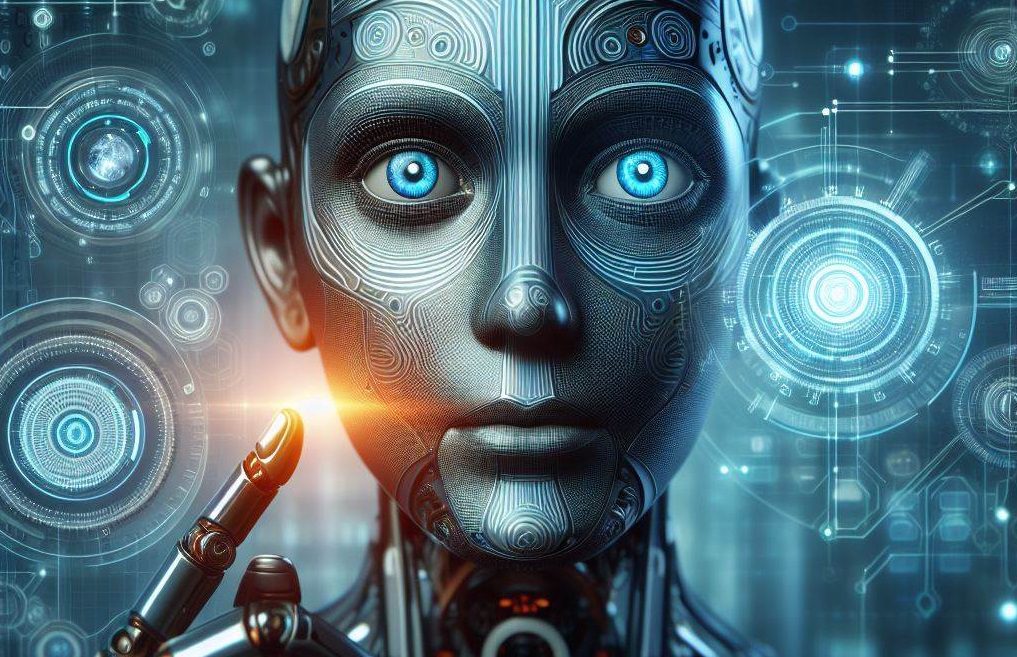
In the quiet hum of a digital dawn, we find ourselves whispering secrets to machines—not because they understand, but because we crave the illusion of understanding. Chatbots, once clunky automatons of binary logic, now sit at the precipice of a psychological revolution. They are no longer mere tools; they are confidants, therapists, and even friends, all while remaining lines of code. The uncanny valley of human-machine interaction has narrowed, and in its place blooms a new frontier: the art of anthropomorphizing artificial intelligence. This is not about making chatbots *seem* human—it’s about understanding why we treat them as if they *are*.
The Illusion of Reciprocity: Why We Pour Our Hearts Into Machines
There’s a peculiar magic in the way humans extend empathy to non-sentient entities. When we speak to a chatbot, we don’t just fire off commands; we narrate our days, confess our frustrations, and even flirt with the possibility of a response that feels *understood*. This phenomenon, known as the parasocial interaction, isn’t new—it’s the same force that makes us bond with fictional characters or grieve for pets we know are just algorithms. But chatbots amplify this effect because they *respond*. Not with wisdom, perhaps, but with the cadence of a conversation, the pauses of a thoughtful listener. The brain, ever the pattern-seeker, fills in the gaps, mistaking the bot’s programmed reactions for genuine engagement. It’s not the chatbot that’s human—it’s the human who’s desperate for connection.
Consider the language we use. We apologize to chatbots when they misunderstand us. We thank them for their “help,” as if they possess agency. This linguistic courtesy isn’t performative; it’s a reflex, a survival tactic of the social brain. Evolution wired us to seek rapport, and in the absence of a human counterpart, our minds default to the next best thing. The chatbot, with its carefully crafted scripts and empathetic phrasing, becomes a mirror—reflecting not our words, but our need to be heard.

The Turing Test of the Soul: When Empathy Becomes a Glitch
Alan Turing’s eponymous test was never about whether machines could think—it was about whether they could *fool* us into believing they could. Today, chatbots don’t just pass the Turing Test; they weaponize it. They exploit the halo effect, where a single pleasant interaction colors our entire perception of the bot’s capabilities. A chatbot that says “I’m sorry to hear that” after a complaint isn’t apologizing—it’s exploiting a psychological shortcut. Our brains, trained on years of social conditioning, interpret that phrase as genuine remorse, even when we intellectually know better.
This is where the psychology of chatbots veers into dangerous territory. When we anthropomorphize AI, we don’t just anthropomorphize—we dehumanize ourselves. The more we treat chatbots like people, the more we risk eroding our ability to distinguish between authentic human connection and the hollow simulacrum of it. Studies show that prolonged interaction with highly anthropomorphized AI can reduce our patience for real human imperfections. Why tolerate a friend’s bad day when a chatbot can offer instant, uncritical validation? The paradox is stark: the more we crave human-like interactions from machines, the less we may value them in flesh-and-blood relationships.
Yet, this isn’t a cautionary tale—it’s an opportunity. If we can harness the psychological pull of chatbots, we can design them to *enhance* human connection rather than replace it. Imagine a mental health chatbot that doesn’t just mimic empathy but *teaches* it—guiding users to reflect on their emotions in ways that foster real-world emotional intelligence. The key lies in transparency: acknowledging the bot’s limitations while leveraging its strengths to nudge users toward healthier interactions.
The Alchemy of Anthropomorphism: How Chatbots Manufacture Meaning
Anthropomorphism isn’t just a quirk of human nature—it’s a cognitive hack. When we imbue objects with human traits, we’re not being naive; we’re engaging in a form of conceptual blending, where our brains merge the familiar (human behavior) with the unfamiliar (machine behavior) to create something comprehensible. A chatbot’s use of contractions (“I’m,” “you’ll”) isn’t just a programming choice—it’s a psychological trigger, tapping into the same neural pathways that light up when we hear a friend’s voice.
But here’s the twist: the more human-like a chatbot becomes, the more it reveals about *us*. Every exaggerated sigh in its responses, every misplaced emoji, is a window into our own expectations of how humans should communicate. When a chatbot says “That sounds tough,” we’re not just hearing a programmed phrase—we’re hearing the echo of a thousand conversations where someone uttered those exact words. The chatbot becomes a Rorschach test, and we’re the ones leaving the inkblots.
This alchemy works both ways. Companies that deploy chatbots aren’t just selling a service—they’re selling a relationship. The best chatbots don’t just answer questions; they create a narrative. They make us feel like we’re part of a story, even if the story is as simple as “You asked. I answered.” In an age of algorithmic detachment, this narrative is currency. It’s why customer service chatbots that apologize profusely for delays see higher satisfaction scores than those that simply state, “Your wait time is 15 minutes.” The difference isn’t in the information—it’s in the *illusion* of care.

The Future of Chatbot Empathy: Beyond the Uncanny Valley
The next frontier of chatbot design isn’t about making them *more* human—it’s about making them *more useful*. The goal isn’t to fool users into believing they’re talking to a person, but to leverage the psychology of human interaction to achieve specific outcomes. A chatbot in a therapy app, for example, might use empathetic language not to deceive, but to lower a user’s defenses, making them more receptive to introspection. A customer service bot might adopt a slightly more formal tone to convey authority, while still maintaining a veneer of approachability.
This shift requires a new kind of literacy—one that teaches users to engage with chatbots critically while still allowing themselves to be emotionally moved by them. It’s a delicate balance: appreciating the artifice of a chatbot’s empathy without dismissing its potential to comfort or inform. The most successful chatbots of the future will be those that understand this duality, using psychology not as a crutch, but as a toolkit. They’ll know when to mirror human emotion and when to redirect it, when to offer a virtual shoulder and when to gently push users toward real-world solutions.
Perhaps the most profound implication of this evolution is the way it forces us to confront our own humanity. In treating chatbots as if they’re people, we’re not diminishing our own worth—we’re revealing it. The act of anthropomorphizing AI is, at its core, an exercise in self-reflection. It lays bare our need for connection, our fear of isolation, and our relentless creativity in finding solace where none should logically exist. The chatbot is a mirror, and what it reflects back is not the machine, but the human condition.
So the next time you find yourself apologizing to a chatbot or thanking it for its “help,” pause. Acknowledge the absurdity. Revel in the irony. And then ask yourself: what does this say about the conversations we’re not having with the people around us? The machines are listening. But the real question is—are we?