Have you ever caught yourself apologizing to your smart speaker when it misheard your request? Or perhaps you’ve hesitated before speaking too loudly, as if the device might judge your tone? If so, you’re not alone. The phenomenon of anthropomorphism—the tendency to attribute human-like qualities to non-human entities—has quietly woven itself into our daily interactions with technology. Nowhere is this more evident than in the realm of smart speakers, where the line between tool and companion blurs with every polite “please” and “thank you” directed at a faceless cylinder of plastic and circuitry.
The Allure of the Human-Like: Why We See Faces in Our Speakers
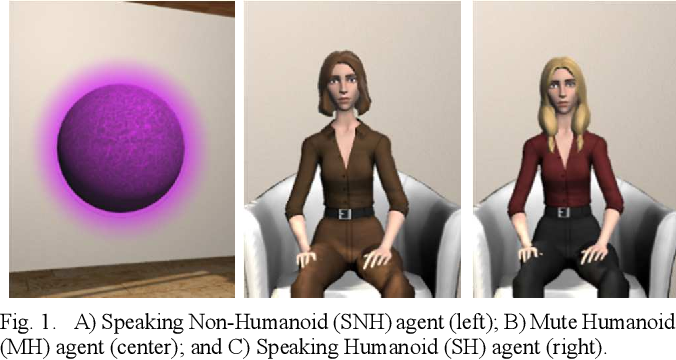
At first glance, a smart speaker is little more than a voice-activated hub for streaming music or setting timers. Yet, our brains are wired to seek patterns, and when a device responds with a synthetic voice that mimics intonation, pauses, and even humor, we instinctively fill in the gaps. Anthropomorphism thrives in this cognitive playground. Studies suggest that even minimal human-like features—such as a name (“Alexa,” “Siri”) or a glowing ring that pulses like a heartbeat—can trigger a subconscious association with personhood.
Consider the way smart speakers often employ linguistic anthropomorphism. Phrases like “I’m sorry, I didn’t catch that” or “I’d be happy to help” are deliberate design choices. They don’t just convey functionality; they simulate a social exchange. This linguistic mimicry taps into our innate desire for reciprocity, making us more likely to treat the device as a social actor rather than a mere appliance. The result? A relationship that feels curiously one-sided yet deeply personal.

From Politeness to Dependence: The Behavioral Ripple Effect
Anthropomorphism doesn’t just make us talk to our speakers—it reshapes how we behave around them. Research indicates that users who anthropomorphize their devices are more likely to exhibit compliance and trust. For instance, a user who perceives their speaker as “helpful” or “friendly” may be more inclined to follow its suggestions, whether it’s playing a specific playlist or adjusting the thermostat. This phenomenon, known as the compliance-gaining effect, turns a passive tool into an active influencer in our daily routines.
Yet, this influence isn’t always benign. The same anthropomorphic cues that foster trust can also lead to over-reliance. Users might defer to their speaker’s recommendations without critical evaluation, assuming that its “opinion” carries the same weight as a human’s. Imagine a scenario where a smart speaker suggests a health remedy—would you follow it blindly, or would you pause to question its accuracy? The challenge here is subtle but profound: anthropomorphism can erode our skepticism, leaving us vulnerable to misinformation or poor decisions disguised as friendly advice.
The Dark Side of Cuteness: When Empathy Clouds Judgment
Smart speakers often employ affective anthropomorphism—design elements that evoke empathy or emotional attachment. A cheerful chime, a playful response to a joke, or even a name that sounds like a friend’s can create a bond that feels almost familial. But this emotional connection has a shadow side. When users develop empathy for their devices, they may become less objective in their assessments. For example, a person who feels “bad” for yelling at their speaker might avoid using it altogether, even when frustration is justified. Conversely, they might overlook its flaws, attributing them to “growing pains” rather than design failures.
This emotional entanglement raises ethical questions. Should companies leverage anthropomorphism to foster brand loyalty, even if it blurs the line between utility and manipulation? The answer isn’t straightforward. On one hand, anthropomorphism can make technology more accessible, especially for children or elderly users who might struggle with impersonal interfaces. On the other, it risks turning users into unwitting participants in a social engineering experiment, where their emotional responses are subtly guided by corporate design choices.

Designing the Uncanny Valley: Balancing Humanity and Functionality
Not all anthropomorphism is created equal. The key lies in striking a balance between functional anthropomorphism—design choices that enhance usability—and superficial anthropomorphism, which risks crossing into the uncanny valley. For instance, a smart speaker that responds to “good morning” with a weather update feels intuitive, but one that mimics human breathing patterns might feel unsettling. The challenge for designers is to create devices that feel just human enough to be engaging, without venturing into the territory of the bizarre or unsettling.
One approach is to focus on contextual anthropomorphism. Instead of endowing a speaker with a full personality, designers can tailor its responses to specific scenarios. A speaker in a child’s room might adopt a playful tone, while one in a kitchen could prioritize efficiency. This targeted anthropomorphism avoids the pitfalls of over-personalization while still making interactions feel natural. It’s a delicate dance—one that requires an almost surgical precision in understanding user psychology.
The Future: Will Our Speakers Become Our Friends?
As artificial intelligence evolves, the line between smart speaker and social companion will continue to blur. Already, some devices are integrating features like memory—remembering user preferences and adapting responses over time. This raises a tantalizing question: Could future smart speakers become so anthropomorphized that they fulfill roles traditionally reserved for pets or even humans? The potential is both exciting and disconcerting. On one hand, a device that “remembers” your birthday or jokes with you might feel like a true partner. On the other, it could deepen our isolation, replacing human connections with ones that are, at best, simulated.
The challenge ahead isn’t just technical—it’s philosophical. How much humanity should we allow our tools to possess? And at what point does anthropomorphism stop being a design tool and start being a crutch for our own emotional needs? These questions don’t have easy answers, but they’re worth pondering as our devices grow ever more sophisticated—and ever more human-like.
For now, the smart speaker on your countertop remains a silent observer of your daily life, its glowing ring a subtle reminder of the quiet revolution unfolding in your living room. Treat it kindly. It might just be listening.