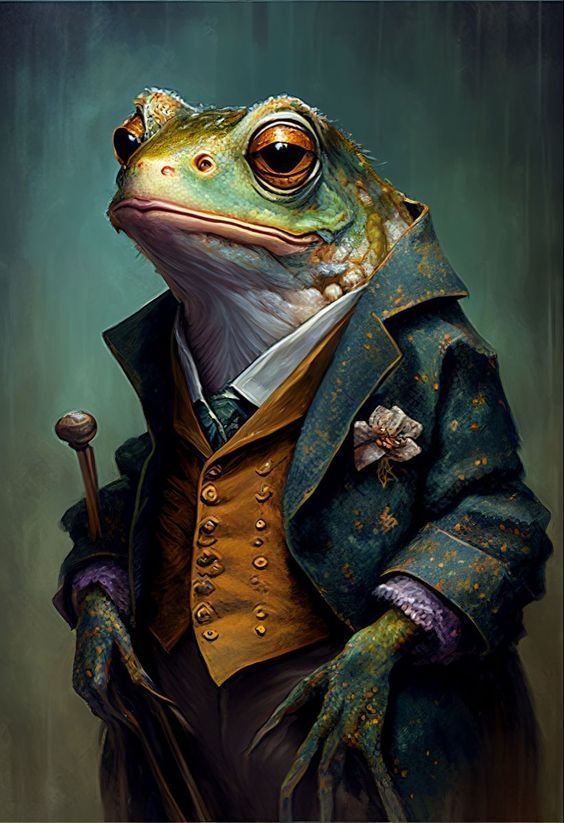
Anthropomorphism—the attribution of human traits, emotions, or intentions to non-human entities—permeates our understanding of the natural world, often shaping how we interpret animal behavior. From the loyal dog wagging its tail to the cunning fox outsmarting its prey, our narratives about animals are steeped in human-like motivations. Yet beneath this tendency lies a profound influence on scientific research, one that can both illuminate and obscure the true nature of animal cognition. The way researchers frame their studies, design experiments, and interpret data is subtly but inexorably colored by anthropomorphic tendencies, sometimes leading to breakthroughs, other times to misconceptions. This interplay between human intuition and empirical rigor raises critical questions: How does anthropomorphism skew our perception of animal behavior? What deeper fascinations does it reveal about our own psychology? And how can science navigate this delicate balance to uncover truths that lie beyond the human lens?
The Lure of the Human Mirror: Why We See Ourselves in Animals
At the heart of anthropomorphism is a cognitive shortcut—a heuristic that allows us to relate to the unfamiliar by mapping it onto the familiar. When a chimpanzee grooms its companion, we instinctively interpret it as an act of friendship or social bonding, mirroring our own human interactions. This tendency is not merely poetic; it is evolutionarily advantageous. By projecting human-like traits onto animals, we create a narrative framework that makes their behaviors comprehensible, even predictable. Yet this mirroring effect is a double-edged sword. It allows us to empathize with creatures vastly different from ourselves, but it also risks anthropocentric bias—a tendency to see what we expect to see rather than what is truly there.
The fascination with anthropomorphism extends beyond mere convenience. It taps into a deeper psychological need: the desire to bridge the chasm between human and non-human existence. When a crow uses a tool to extract food, we marvel at its ingenuity, framing it as a “clever trick” rather than a complex cognitive process. This narrative not only humanizes the animal but also elevates our own sense of intelligence, reinforcing the idea that the boundaries between species are more porous than we assume. Such projections are not arbitrary; they reflect an ancient human impulse to find kinship in the natural world, a survival mechanism that fosters both curiosity and connection.
Anthropomorphism in Experimental Design: The Hidden Bias
Researchers are not immune to the siren call of anthropomorphism, and its influence can seep into the very foundations of scientific inquiry. When designing experiments to study animal behavior, scientists often unconsciously embed human-like assumptions into their methodologies. For instance, a study examining “deceptive” behavior in primates might frame an animal’s actions as intentional manipulation, akin to human deceit, rather than a survival strategy honed by evolution. This framing can lead to experiments that test for human-like traits rather than the unique adaptations of the species in question.
The consequences of such bias are far-reaching. A classic example is the interpretation of facial expressions in dogs. When a dog “smiles,” researchers may interpret this as a sign of happiness, mirroring human expressions of joy. Yet the dog’s facial muscles may be contracting for entirely different reasons—perhaps to regulate body temperature or signal submission. By attributing human emotions to these expressions, researchers risk misclassifying behaviors and drawing flawed conclusions about canine cognition. This anthropocentric lens can distort the very data it seeks to illuminate, turning observations into projections and experiments into self-fulfilling prophecies.
The Double-Edged Sword: When Anthropomorphism Illuminates and Obscures
Not all anthropomorphic interpretations are detrimental. In some cases, they serve as a gateway to deeper scientific understanding. The study of animal emotions is a prime example. While it is tempting to dismiss a whale’s “song” as mere vocalization, researchers who approach it with anthropomorphic curiosity—asking whether it conveys joy, grief, or longing—have uncovered complex social structures and emotional depth in marine life. This approach, when tempered with rigorous methodology, can reveal behaviors that might otherwise be overlooked or dismissed as insignificant.
Yet the line between insight and illusion is perilously thin. Consider the case of Koko the gorilla, whose apparent mastery of sign language captivated the public and sparked debates about animal intelligence. While Koko’s abilities were undeniably impressive, the anthropomorphic framing of her communication as “language” akin to human speech led to both acclaim and skepticism. Critics argued that the experiments lacked controls for observer bias, and that the gorilla’s responses were more likely conditioned behaviors than true linguistic expression. This controversy underscores the risks of anthropomorphism: it can inspire groundbreaking hypotheses but also fuel misplaced assumptions that undermine scientific credibility.

Navigating the Anthropomorphic Labyrinth: Strategies for Objective Research
To mitigate the pitfalls of anthropomorphism, researchers employ a variety of strategies designed to strip away human bias and reveal the raw, unfiltered behaviors of animals. One such approach is the use of controlled experiments that test for species-specific traits rather than human-like ones. For example, instead of asking whether a rat “feels guilt” after stealing food, researchers might examine its stress responses or decision-making patterns in a food-related task. This shift in focus allows for a more objective assessment of behavior, free from the constraints of human projection.
Another critical tool is the comparative method, which examines behaviors across multiple species to identify patterns and evolutionary adaptations. By studying a behavior in its natural context and across different taxa, researchers can distinguish between anthropomorphic interpretations and genuine biological phenomena. For instance, the study of play behavior in mammals has revealed that certain patterns—such as role-reversal and self-handicapping—are widespread, suggesting they serve evolutionary functions beyond mere human-like “fun.” This comparative lens not only reduces anthropocentric bias but also highlights the diversity of animal cognition.
The integration of technology has also revolutionized the study of animal behavior, offering new ways to observe and analyze actions without the interference of human interpretation. High-resolution cameras, motion sensors, and even artificial intelligence can track behaviors with precision, providing data that is less susceptible to anthropomorphic distortion. For example, machine learning algorithms can detect subtle patterns in animal movements that might otherwise be overlooked or misinterpreted by human observers. These technological advancements serve as a reminder that the most objective research often emerges when we step back from our own narratives and let the data speak for itself.
The Deeper Fascination: What Anthropomorphism Reveals About Human Nature
Beyond its impact on scientific research, anthropomorphism offers a window into the human psyche—a reflection of our innate desire to find meaning in the natural world. The act of attributing human traits to animals is not just a cognitive shortcut; it is a testament to our capacity for empathy and imagination. When we see a “smiling” cat or a “guilty” dog, we are not merely projecting our own emotions onto them; we are engaging in a form of narrative co-creation, weaving stories that help us make sense of the unfamiliar.
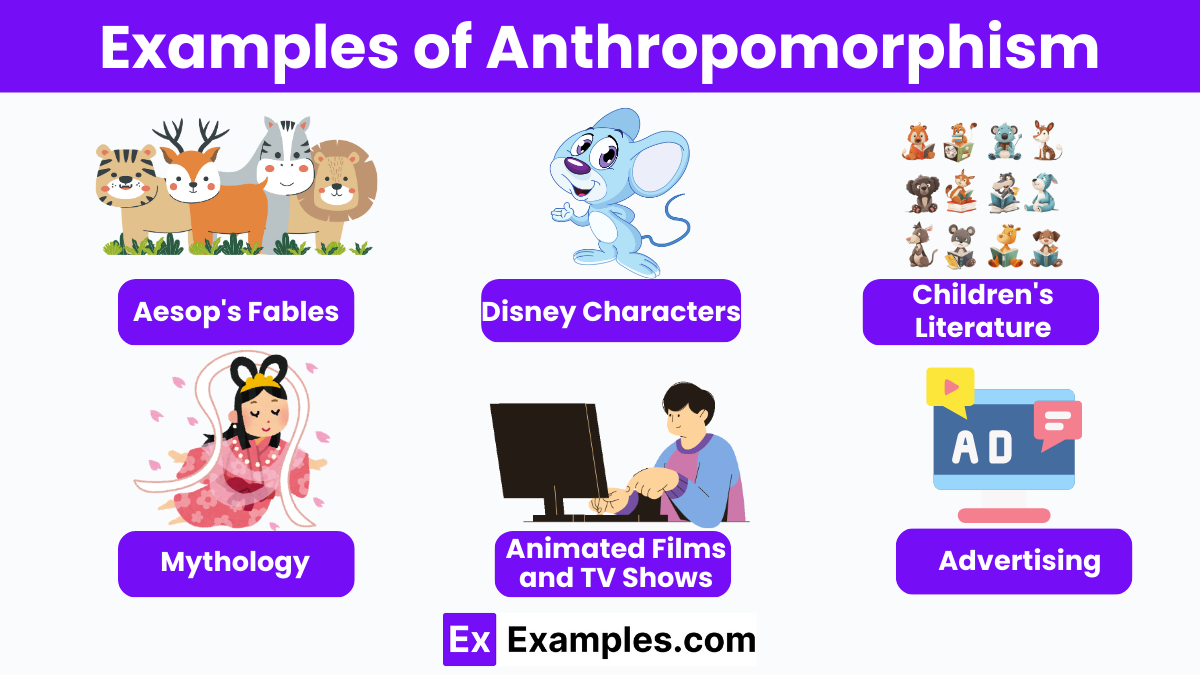
This fascination also speaks to a fundamental human need: the search for connection. In a world where technology often isolates us from the natural world, anthropomorphism allows us to bridge the gap between species, fostering a sense of kinship with creatures that might otherwise seem alien. It is no coincidence that anthropomorphic representations of animals are ubiquitous in literature, art, and media—from Aesop’s fables to Disney’s animated films. These narratives do more than entertain; they reinforce our belief in a shared emotional and cognitive landscape, one that transcends the boundaries of biology.
Yet this fascination is not without its shadows. The same impulse that drives us to anthropomorphize can also lead to exploitation—whether in the form of anthropocentric conservation efforts that prioritize charismatic species over ecological balance or in the commodification of animals as “little humans” in advertising and entertainment. Recognizing the dual nature of anthropomorphism—its power to illuminate and its potential to distort—is essential for both scientists and society at large. Only by acknowledging this bias can we hope to see animals not as mirrors of ourselves, but as beings with their own unique ways of being.