In the vast tapestry of language, where words weave intricate patterns of meaning, two luminous threads stand out with particular vibrancy: anthropomorphism and personification. These rhetorical devices, though often conflated in casual discourse, are not mere synonyms but distinct constellations of thought, each casting its own spell upon the reader’s imagination. To wield them with precision is to unlock doors to deeper narrative realms, where inanimate objects breathe, abstract ideas dance, and the boundaries between the human and the non-human blur into something wondrously ambiguous. This exploration ventures beyond the surface, peeling back layers to reveal the unique allure of each technique, their historical echoes, and their transformative power in storytelling.
The Essence of Personification: Breathing Life into the Inert
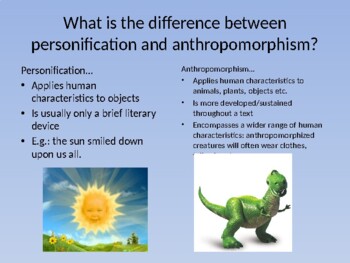
Personification is the alchemy of language that transmutes the lifeless into the animate, the abstract into the tangible. It is the art of endowing non-human entities—be they objects, natural phenomena, or even concepts—with human traits, emotions, or actions. When the wind whispers through the trees, it is not the breeze that speaks but our imagination that lends it a voice. When time steals away our youth, we anthropomorphize the abstract, personifying it as a thief in the night. This device thrives on metaphorical resonance, where the familiar human experience becomes a lens to perceive the unfamiliar.
Consider the line from Sylvia Plath’s The Bell Jar: “The silence drew off, baring the pebbles and shells and all the tatters of my mind.” Here, silence is not merely absence of sound but an entity that actively draws off, revealing the detritus of thought. The effect is haunting, as if the void itself possesses agency. Personification does not require the entity to be fully humanized; it need only borrow a fragment of humanity to bridge the gap between the known and the unknown. In poetry, this technique becomes a lantern in the dark, illuminating the hidden contours of emotion and experience.
The power of personification lies in its subtlety. It does not demand grand gestures but thrives in quiet intimacies. A clock might tick-tock with the urgency of a heartbeat, or a river might chatter over stones, its voice a murmur of ancient secrets. These small acts of animation invite the reader to see the world anew, to find kinship in the most unlikely of places. It is a reminder that even in stillness, there is motion; even in silence, there is voice.

Anthropomorphism: The Grand Illusion of Humanity in the Non-Human
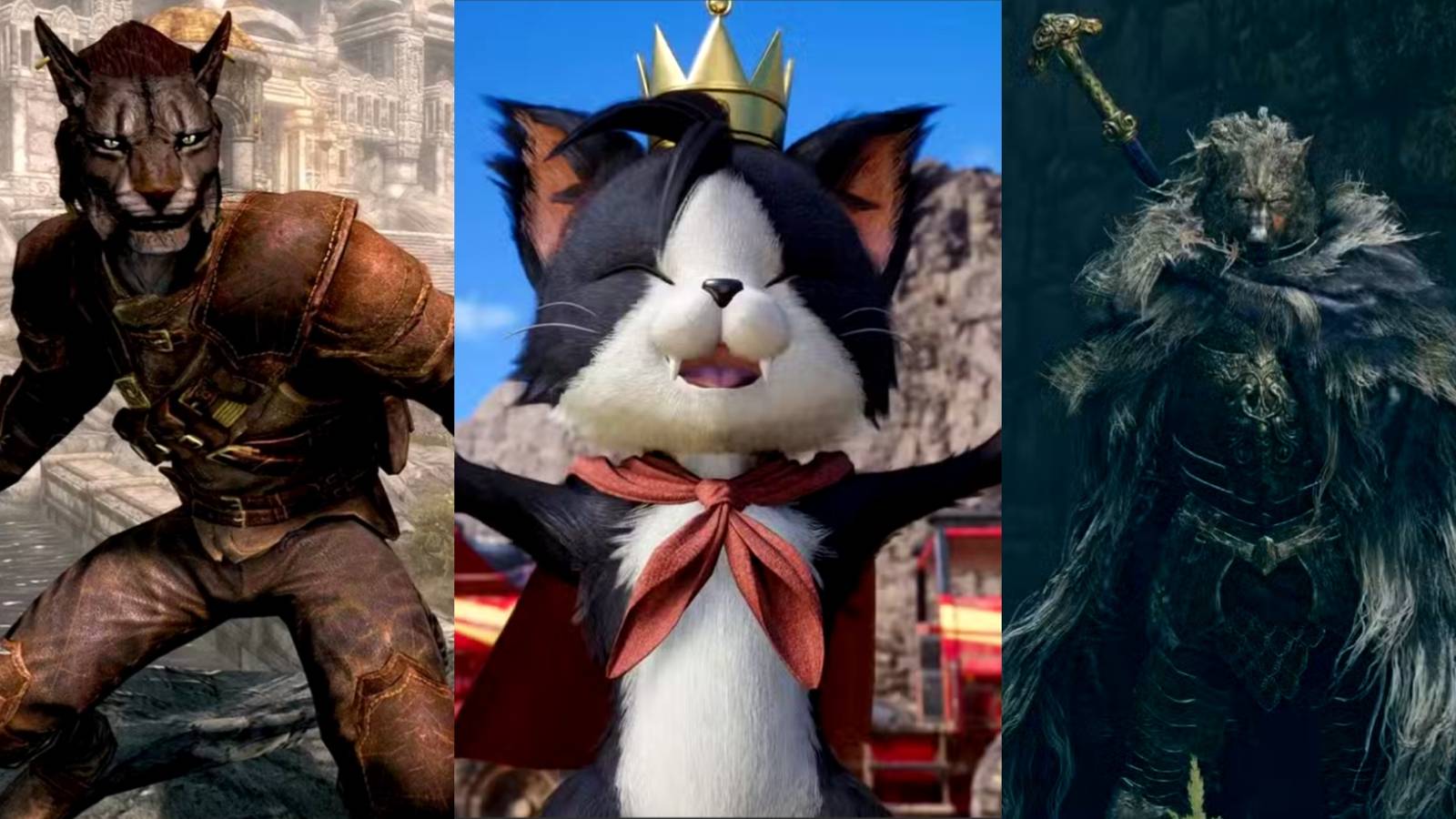
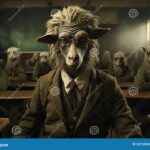
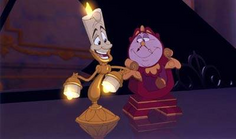
If personification is a whisper, anthropomorphism is a chorus. It is the grand illusion, the deliberate act of clothing non-human entities in human form, thought, and emotion. Where personification might say a storm rages, anthropomorphism would have the storm shout, its thunder a voice raised in fury, its lightning a clenched fist. This technique is not content with fleeting traits; it seeks to create beings that are, in essence, human—complete with personalities, motivations, and even flaws. From the chatty animals of Alice in Wonderland to the brooding gods of ancient myths, anthropomorphism has shaped the stories that haunt our collective imagination.
At its core, anthropomorphism is a bridge between the human and the divine, the familiar and the alien. It allows us to confront the incomprehensible by rendering it in human terms. The ancient Egyptians did not merely worship cats; they saw in them the embodiment of grace and mystery, deities walking among mortals. In modern times, we grant robots emotions, trees souls, and storms tempers, not because these entities are truly human, but because it is the only way we can begin to understand them. This device is not merely decorative; it is revelatory, exposing the contours of our own psyche through the lens of the other.
Yet anthropomorphism is a double-edged sword. While it can elevate the mundane to the mythic, it can also distort our perception of reality. When we ascribe human motives to a hurricane, we risk underestimating its power, reducing its devastation to a mere tantrum. When we project human emotions onto an AI, we may overlook the ethical complexities of its existence. The key lies in balance—using anthropomorphism to illuminate, not to obfuscate. When done well, it transforms the ordinary into the extraordinary, as when a child’s stuffed bear becomes a confidant, or a cartoon mouse becomes a symbol of resilience.
The appeal of anthropomorphism is primal. It taps into our innate tendency to see faces in the dark, to find patterns where none exist, to seek agency in the chaos of the universe. It is the reason we name our cars, grieve for fictional characters, and believe our pets understand every word we say. In this act of projection, we find not only companionship but also a mirror, reflecting back to us the complexities of our own humanity.
Personification vs. Anthropomorphism: A Delicate Dance of Metaphor
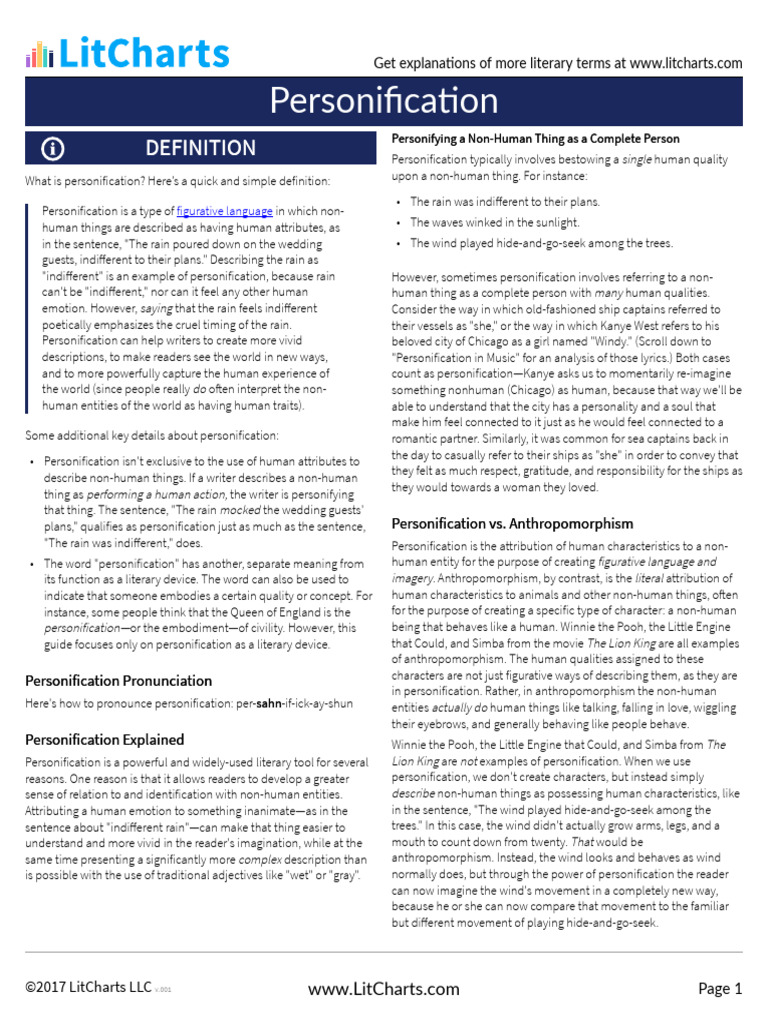
The line between personification and anthropomorphism is as thin as the edge of a razor, and crossing it requires a deft hand. Personification is the brushstroke that hints at life; anthropomorphism is the full portrait. One is a fleeting glimpse, the other a sustained gaze. To illustrate, imagine a painting: personification might be a single leaf trembling on a branch, its edges tinged with the blush of autumn, while anthropomorphism would be the entire tree bending its boughs to embrace the wind, its roots clutching the earth like clenched fists.
Consider the difference between these two sentences: “The stars winked at me from the night sky” (personification) and “The stars, those mischievous children of the cosmos, danced across the heavens” (anthropomorphism). In the first, the stars are momentarily humanized, their twinkling reduced to a fleeting gesture. In the second, they are fully realized characters, their behavior governed by whimsy and mischief. The former is a spark; the latter is a flame.
This distinction is not merely academic but deeply practical. In literature, personification can evoke a mood, while anthropomorphism can drive a plot. A novel might use personification to set a tone of melancholy—“The fog crept into the room, cold and clinging”—but rely on anthropomorphism to create a protagonist, as in The Wind in the Willows, where Mr. Toad is not just a vehicle for adventure but a fully realized, flawed, and endearing character. The choice between the two hinges on the depth of engagement the writer seeks from the reader.
Moreover, the two techniques often intersect. A writer might begin with personification to evoke an emotion—“The city exhaled in the heat”—before transitioning to anthropomorphism to personify the city itself, giving it a voice, a will, a story. This interplay creates a rich tapestry of meaning, where the boundaries between the human and the non-human blur into something transcendent.

The Historical Echoes: From Myth to Modernity
The roots of these devices stretch back to the earliest human civilizations, where the boundaries between the human and the divine were porous, and the world was alive with unseen forces. In ancient Greek mythology, the gods were not distant figures but active participants in human affairs, their emotions and foibles shaping the course of history. Zeus did not merely control the sky; he thundered across it, his rage a palpable force. This was anthropomorphism in its purest form, a reflection of humanity’s need to understand the cosmos through the lens of its own experience.
Personification, too, has ancient pedigree. The Greeks personified abstract concepts as deities—Nike as the goddess of victory, Thanatos as the embodiment of death. Even in the rigid structures of ancient Egyptian religion, the Nile was not just a river but a life-giving deity, its floods a blessing or a curse. These early examples reveal the dual purpose of these devices: to explain the unexplainable and to make the intangible tangible.
In the Renaissance, personification flourished in art and literature as a means of exploring the human condition. Allegorical figures like Justice, Time, and Death became recurring motifs, their forms and gestures conveying complex ideas in visual shorthand. Shakespeare’s plays are rife with personification, from the “canker’d war” that gnaws at peace to the “cruel hand of time” that withers beauty. Here, the devices were not mere ornamentation but essential tools for grappling with the ephemeral nature of existence.
Modern literature continues to wield these techniques with sophistication. In Gabriel García Márquez’s One Hundred Years of Solitude, the town of Macondo is personified as a living, breathing entity, its fate intertwined with the Buendía family. Meanwhile, in Kurt Vonnegut’s Slaughterhouse-Five, the alien Tralfamadorians are fully anthropomorphized, their non-linear perception of time a commentary on the absurdity of war. These examples demonstrate the enduring power of personification and anthropomorphism to illuminate the human experience, no matter how surreal or fantastical the setting.
The Unique Appeal: Why These Devices Resonate
The enduring allure of personification and anthropomorphism lies in their ability to transform the mundane into the magical. They are the linguistic equivalents of a magic trick, where the ordinary is made extraordinary through the sleight of hand of metaphor. In a world that often feels cold and mechanical, these devices invite us to see the world as alive, sentient, and responsive. They remind us that even in the most desolate landscapes, there is poetry to be found.
For writers, these techniques are indispensable tools for evoking emotion and creating vivid imagery. Personification can turn a simple description into a visceral experience—“The moon hung like a pale coin in the sky”—while anthropomorphism can breathe life into inanimate objects, making them characters in their own right. In advertising, these devices are equally potent. A brand might personify its product—a car that purrs with satisfaction, a detergent that smiles at a clean sink—to create an emotional connection with the consumer.
Beyond their practical applications, personification and anthropomorphism tap into something deeper: our innate desire for connection. In a universe that often feels indifferent, these devices allow us to project our humanity onto the world, to find companionship in the most unlikely of places. A child who talks to their teddy bear is not delusional; they are engaging in an ancient and universal act of anthropomorphism, seeking solace in the illusion of reciprocity. Similarly, a poet who writes of the ocean’s moods is not naive but profoundly perceptive, recognizing that the natural world is not a static backdrop but a dynamic participant in the human drama.
The unique appeal of these devices also lies in their ambiguity. They do not provide answers but open doors. When we personify a storm, we are not explaining its mechanics but exploring its emotional resonance. When we anthropomorphize a robot, we are not defining its capabilities but grappling with its potential to feel. In this way, personification and anthropomorphism become not just literary devices but philosophical inquiries, inviting us to question the nature of agency, emotion, and existence itself.
Mastering the Craft: Tips for Writers and Storytellers
To wield personification and anthropomorphism effectively, one must approach them with both precision and playfulness. The key is to strike a balance between subtlety and clarity, ensuring that the metaphor enhances rather than obscures the meaning. Overuse can lead to cliché—“the trees danced in the wind” is a tired trope—while underuse can render the prose flat and lifeless. The challenge lies in finding the sweet spot where the metaphor feels fresh, evocative, and necessary.
First, consider the context. Personification works best in lyrical or introspective passages, where the goal is to evoke mood or emotion. Anthropomorphism, on the other hand, thrives in narrative-driven contexts, where the goal is to create characters and drive plot. A novel might use personification in its descriptive passages—“The rain sighed against the windowpanes”—while reserving anthropomorphism for its central characters, as in The Lion, the Witch and the Wardrobe, where Mr. Tumnus is not just a faun but a fully realized individual with his own desires and flaws.
Second, avoid clichés. The natural world is a common victim of lazy personification—rivers that sing, winds that howl, storms that rage. To stand out, dig deeper. Instead of “the fire crackled,” try “the fire spat its secrets into the night.” Instead of “the clock ticked,” try “the clock’s hands gnawed at the minutes.” The goal is to surprise the reader, to make them see the familiar in a new light.
Third, use these devices sparingly. A single, well-placed metaphor can resonate far more deeply than a barrage of them. Let the reader’s imagination fill in the gaps. When Shakespeare writes of “the slings and arrows of outrageous fortune,” he does not need to explain further; the metaphor is vivid enough to stand on its own. Similarly, when a writer personifies a city as a living entity, the reader will intuitively understand the metaphor without the need for excessive explanation.
Finally, experiment. These devices are not rigid rules but tools to be bent and reshaped to fit the story’s needs. A writer might combine personification and anthropomorphism, as in The Little Prince, where the fox is both a fully realized character and a symbol of wisdom. Or they might subvert expectations, as in Animal Farm, where the animals are anthropomorphized to critique human society. The possibilities are endless, limited only by the writer’s imagination.
In the end, personification and anthropomorphism are more than mere rhetorical flourishes; they are windows into the human soul. They allow us to explore the boundaries of our own existence, to find kinship in the inanimate, and to confront the unknown by rendering it in familiar terms. In a world that often feels fragmented and disconnected, these devices remind us of the power of metaphor to bridge the gaps between the self and the other, the human and the divine, the known and the unknowable. To master them is to unlock a deeper, more resonant way of seeing the world—and to invite the reader along on that journey.