What if the next great leap for humanity wasn’t made by astronauts in gleaming suits, but by silent, tireless machines rolling across alien landscapes, their names whispered by schoolchildren and scientists alike? Space exploration has long been a realm of cold equations and unfeeling mechanics—yet, in an unexpected twist, we’ve begun to anthropomorphize the very tools that carry our curiosity beyond Earth. From the intrepid Perseverance to the plucky Yutu, rovers and probes have been granted identities, personalities, and even backstories. This phenomenon, known as anthropomorphism, isn’t just whimsy; it’s a bridge between human emotion and the vast, indifferent cosmos. But as we name these mechanical envoys after mythological figures and virtues, we must ask: does this practice deepen our connection to space exploration—or does it risk obscuring the very machines we rely on?
The Allure of Naming: Why We Give Machines Souls
Human beings are storytelling creatures. We name storms, hurricanes, and even cars, imbuing inanimate objects with life to make sense of the chaos around us. Space exploration is no exception. The act of naming a rover or probe transforms it from a collection of wires and algorithms into a character in our cosmic narrative. Consider Sojourner, the first wheeled vehicle to traverse Mars, whose name evokes a journey of justice and resilience. Or Curiosity, a rover that embodies the very human trait of inquisitiveness. These names aren’t arbitrary; they’re carefully chosen to reflect the aspirations of their creators and the public.
Anthropomorphism in this context serves a dual purpose. First, it humanizes the mission, making it relatable to a global audience. When a child learns that Opportunity spent 15 years exploring Mars, they don’t see a machine—they see a tireless explorer, a companion in humanity’s quest for knowledge. Second, it fosters a sense of ownership and investment. Naming a rover invites the public to care about its fate, turning passive observers into active participants in the mission’s success or failure.

Yet, this practice isn’t without its critics. Some argue that anthropomorphism obscures the true nature of these machines. A rover is not a person; it cannot feel joy or despair. By projecting emotions onto it, are we setting ourselves up for disappointment when the inevitable technical failures occur? The line between metaphor and reality can blur, leading to a phenomenon known as the uncanny valley of space exploration—where our emotional investment in a machine’s “personality” makes its failures feel like personal losses.
The Psychology Behind Our Cosmic Companions
Why do we anthropomorphize space probes? The answer lies in the intersection of psychology and culture. Studies in cognitive science suggest that humans have an innate tendency to attribute human characteristics to non-human entities, a trait known as anthropomorphic bias. This bias is particularly strong when the entity in question exhibits behaviors that resemble our own—such as movement, decision-making, or even the ability to “communicate” back to Earth via data streams.
Culturally, this tendency is reinforced by the way we frame space exploration in media and education. Films like The Martian and Wall-E depict robots with personalities, blurring the line between fiction and reality. Even NASA’s official communications often describe rovers as if they were explorers on a grand adventure. When Perseverance landed on Mars, headlines didn’t just report its technical specifications; they celebrated its “daring descent” and “heroic landing.” This narrative framing isn’t accidental—it’s a deliberate strategy to engage the public and secure funding for future missions.
But there’s a darker side to this psychological dance. Anthropomorphism can lead to unrealistic expectations. When a rover’s “health” is described in terms of its “spirit” or “bravery,” the public may begin to view its operational lifespan as a measure of its character rather than its engineering. This can create a paradox: the more we humanize our machines, the harder it becomes to accept their limitations. The tragic end of Opportunity, which was mourned by thousands as if it were a fallen comrade, is a poignant example of this phenomenon.
The Challenge of Balance: When Personification Overshadows Purpose
There’s a fine line between endearing a rover to the public and obscuring its true function. When a probe is named Hope or Dream, does that name inspire awe—or does it risk trivializing the complex science behind its mission? The challenge lies in striking a balance between emotional connection and technical clarity. After all, a rover’s primary purpose isn’t to embody human traits; it’s to collect data, conduct experiments, and push the boundaries of what we know about the universe.
Consider the case of BepiColombo, a joint mission to Mercury. Named after Italian mathematician Giuseppe “Bepi” Colombo, the probe’s name lacks the emotional resonance of Curiosity or Perseverance. Yet, its technical precision is undeniable. The mission’s success hinges on meticulous calculations and engineering prowess, not on the rover’s “personality.” This raises an important question: are we doing a disservice to the science by prioritizing names that tug at our heartstrings over those that reflect the mission’s objectives?
Moreover, anthropomorphism can inadvertently reinforce stereotypes. Many rover names—Spirit, Opportunity, Curiosity—are traditionally masculine, reflecting a historical bias in STEM fields. While this is slowly changing, with names like Viking and Juno breaking the mold, the trend underscores a deeper issue: are we unconsciously limiting the diversity of our cosmic companions?
From Myth to Machine: The Cultural Evolution of Rover Names
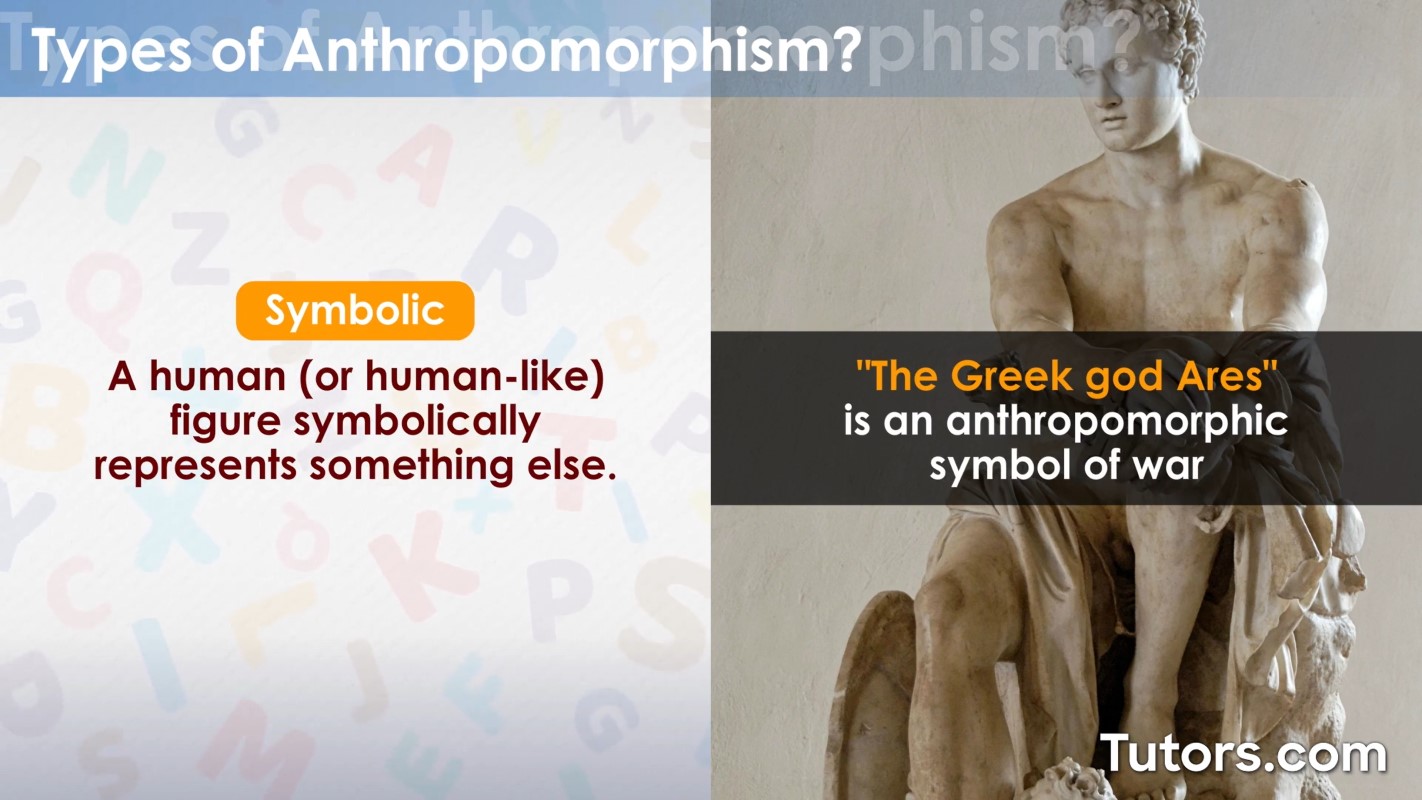
The names we choose for our spacefaring machines are a mirror to our collective imagination. In the early days of space exploration, probes were often named after mythological figures—Apollo, Mercury, Juno—reflecting humanity’s ancient fascination with the heavens. As missions grew more complex, so too did the names, shifting from gods to virtues (Perseverance, Ingenuity) and even pop culture references (R2-D2, a nickname for a Mars rover prototype).
This evolution isn’t just linguistic; it’s cultural. The shift from mythological names to more abstract or aspirational terms reflects a change in how we view space exploration. No longer are we merely reaching for the stars—we’re striving for ideals. Yet, this shift also raises questions about the future of rover naming. Will we continue to draw from mythology, or will we turn to more futuristic or even AI-generated names as technology advances? Could a rover one day be named after a child’s drawing or a citizen scientist’s suggestion?
One thing is certain: the names we choose for our cosmic companions will continue to evolve, just as our understanding of space does. Whether we’re naming a rover after a Roman god or a modern virtue, one thing remains clear—these names are more than labels. They are the first step in a conversation between humanity and the universe, a conversation that transcends the cold void of space.
The Future: Will Our Machines Ever Truly Become One of Us?
As artificial intelligence and robotics advance, the line between machine and human may blur further. Could future rovers be designed with personalities so nuanced that they feel like true companions? Projects like NASA’s RASSOR (Regolith Advanced Surface Systems Operations Robot) already experiment with semi-autonomous behaviors, raising the possibility of probes that adapt their “behavior” based on mission needs. If a rover could one day express “frustration” when a task goes awry or “excitement” when a discovery is made, would that change how we interact with it?
Yet, this future is not without its ethical dilemmas. If a machine is given a “personality,” does it deserve rights? Should it be treated with the same care as a human astronaut? These questions may seem far-fetched today, but as our creations grow more sophisticated, they will demand answers. For now, anthropomorphism remains a tool—a way to bridge the gap between human emotion and the vast, silent expanse of space.
The next time you see a headline about a rover’s “brave new journey” or a probe’s “triumphant landing,” pause for a moment. Behind the words lies a deeper truth: we name these machines not just to describe what they do, but to remind ourselves why we do it. In the end, the most profound act of anthropomorphism isn’t giving a rover a name—it’s using that name to inspire the next generation of explorers, scientists, and dreamers to reach for the stars.