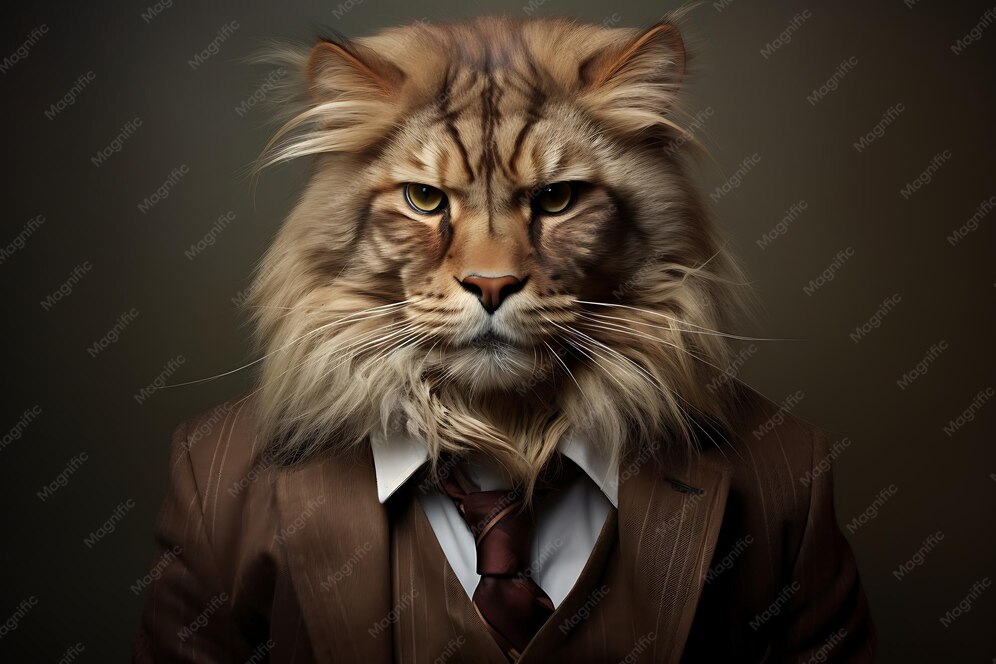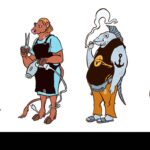
In the cacophony of modern marketing, where brands clamor for attention like street vendors in a crowded bazaar, one strategy stands apart—not for its volume, but for its whisper. Anthropomorphism in brand storytelling doesn’t shout; it *listens*. It transforms logos into characters, products into protagonists, and corporate values into moral fables. When a brand like M&M’s gives voice to its candy-coated characters or when the Michelin Man strides through decades of advertising lore, they do more than sell. They invite us into a world where empathy is the currency, and emotional resonance is the reward. This isn’t just marketing—it’s mythmaking, reimagined for the digital age.
The Alchemy of Giving Faces to Faceless Entities
Anthropomorphism is the ancient art of imbuing the inanimate with human traits—a practice as old as cave paintings and as contemporary as AI-generated avatars. When applied to branding, it transcends mere personification. It becomes a psychological bridge, allowing consumers to project their hopes, fears, and aspirations onto entities that would otherwise remain cold abstractions. Consider the evolution of the Pillsbury Doughboy: once a mere mascot, he became a cultural icon because he *moved*, *laughed*, and *reacted*—he lived. This metamorphosis from symbol to sentient being isn’t accidental; it’s a deliberate act of narrative alchemy, turning dough into a confidant.
Why does this work? Because humans are wired to anthropomorphize. Evolutionary psychologists posit that our brains are predisposed to see agency in the world around us—a survival mechanism that once helped us detect predators in the rustling leaves. Today, that instinct translates into an affinity for brands that “feel” like they understand us. When a brand anthropomorphizes, it doesn’t just communicate; it *converses*. It shifts from being a vendor to being a companion, from a transactional entity to a relational one.

The Emotional Alchemy: From Transactions to Transcendence
Emotional connections aren’t built on features or benefits alone; they’re forged in the crucible of shared stories. Anthropomorphism elevates branding from the realm of utility to the realm of meaning. Take the case of the GEICO Gecko: a lizard with a cockney accent isn’t just memorable—it’s *relatable*. He embodies the frustration of insurance shopping while disarming it with humor. His anthropomorphic traits—sass, wit, and a hint of mischief—make the brand feel less like a faceless corporation and more like a cheeky friend who’s got your back.
This emotional alchemy hinges on three key mechanisms: proximity, authenticity, and aspiration. Proximity dissolves the barrier between consumer and brand. Authenticity ensures the anthropomorphism feels earned, not forced. Aspiration lifts the interaction from the mundane to the mythic. When these elements converge, the brand doesn’t just occupy space in the consumer’s mind—it inhabits their emotional landscape. It becomes a character in their personal narrative, a silent partner in their life’s unfolding story.
The Narrative Scaffold: How Stories Give Brands Soul
Anthropomorphism without narrative is like a body without a skeleton—it may have form, but it lacks structure. The most compelling brand stories are those that treat anthropomorphized entities as protagonists in a larger saga. The Aflac Duck isn’t just a quacking mascot; he’s a symbol of resilience, a voice for the underdog, a character who navigates the absurdities of insurance claims with a mix of pathos and humor. His story arc—from novelty to necessity—mirrors the consumer’s own journey from skepticism to trust.
To craft such narratives, brands must embrace the principles of mythic storytelling. This means establishing a clear hero’s journey, where the brand’s anthropomorphized entity faces challenges, overcomes obstacles, and ultimately delivers a transformation. The obstacles aren’t just product-related; they’re emotional. They might be the fear of the unknown, the anxiety of making the wrong choice, or the longing for belonging. By framing these struggles within a narrative, the brand doesn’t just solve a problem—it becomes part of the solution to a deeper, more existential dilemma.
The Risks and Rewards of Breathing Life into Brands
Of course, anthropomorphism isn’t a silver bullet. Done poorly, it risks veering into uncanny valley territory, where the human-like traits feel unsettling rather than endearing. The line between charm and creepiness is perilously thin. Brands that fail to balance their anthropomorphic traits with authenticity often find themselves mocked rather than adored. Consider the ill-fated foray of some fast-food chains into overly humanized mascots—characters that felt more like dystopian experiments than beloved icons.
Yet, when executed with precision, the rewards are profound. Anthropomorphism can humanize even the most mundane products. It can turn a utility company into a guardian of home and hearth, or a financial service into a wise mentor guiding customers through the labyrinth of personal finance. The key lies in subtlety. The anthropomorphized entity shouldn’t feel like a puppet controlled by marketing strings; it should feel like a genuine participant in the consumer’s life, with its own agency, flaws, and quirks.
The Future: When AI Meets Anthropomorphism
As artificial intelligence continues to blur the lines between the digital and the human, the potential for anthropomorphism in branding grows exponentially. Imagine a world where your bank’s AI assistant isn’t just a voice on the phone but a fully realized character—a digital confidant with a personality as nuanced as your best friend. Brands like Replika and Character.AI are already experimenting with this frontier, creating AI entities that users form deep emotional bonds with. The implications for marketing are staggering: a brand could become not just a provider of goods or services, but a companion in the truest sense.
Yet, this future isn’t without its ethical quandaries. As brands gain the ability to create increasingly lifelike anthropomorphic entities, questions of manipulation and consent arise. Will consumers feel exploited if they form attachments to AI-driven brand characters? How can brands ensure that their anthropomorphism enhances rather than exploits the human need for connection? These are the challenges of tomorrow, but they’re also opportunities to redefine the very nature of consumer-brand relationships.
The Unseen Power of a Smile: Anthropomorphism in the Digital Age
In an era dominated by algorithms and data analytics, anthropomorphism offers something rare and invaluable: the power of a smile. It’s the difference between a cold, impersonal transaction and a warm, human interaction. When a brand like Duolingo turns its owl mascot into a meme-worthy, slightly exasperated language teacher, it doesn’t just teach Spanish—it makes learning feel like a shared adventure. The owl’s anthropomorphic traits—his frustration, his enthusiasm, his occasional sarcasm—make the brand feel alive in a way that static logos never could.
This is the true magic of anthropomorphism in brand storytelling: it transforms the abstract into the intimate. It takes the cold calculus of commerce and infuses it with the warmth of human connection. In doing so, it doesn’t just sell products; it sells belonging. It doesn’t just capture attention; it captures hearts. And in a world where consumers are increasingly skeptical of traditional advertising, that’s not just a strategy—it’s a revolution.