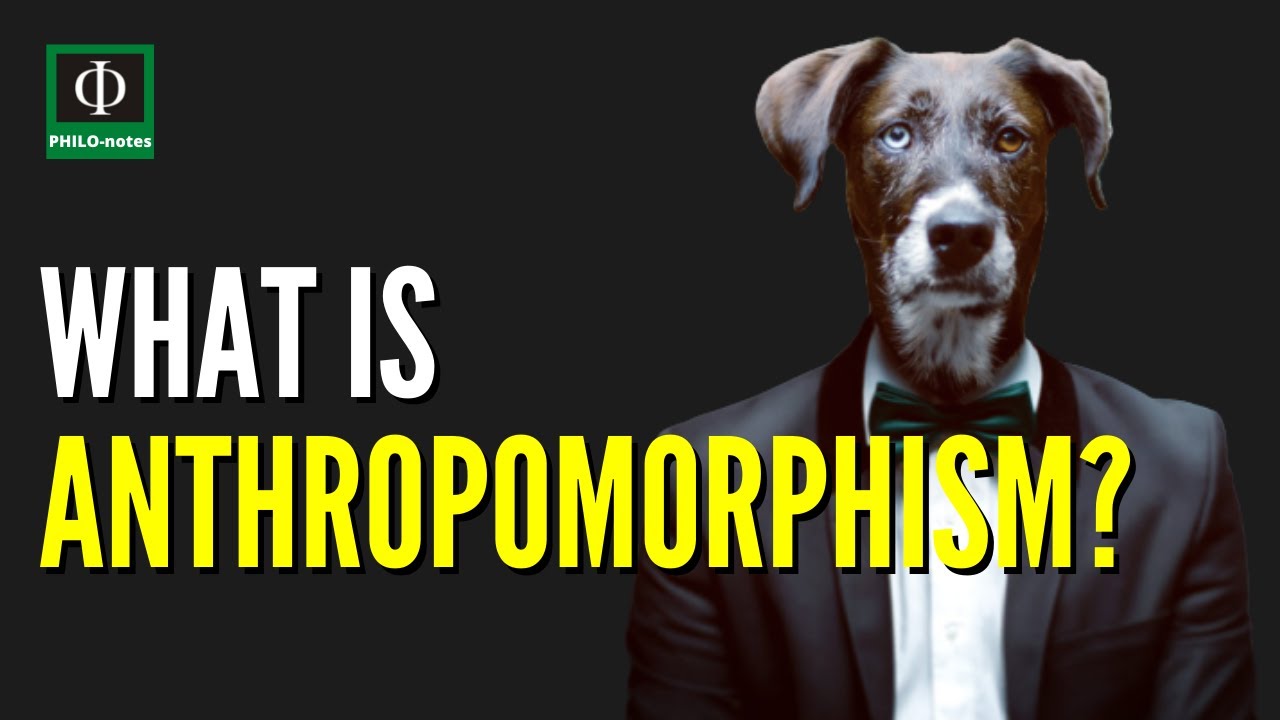
Have you ever caught yourself attributing human emotions to a storm raging outside your window, or conversely, projecting the stillness of a lake onto the face of a sleeping child? This subtle yet profound inclination to imbue the inanimate with lifelike qualities isn’t merely a quirk of poetic imagination—it’s a psychological phenomenon known as anthropomorphism. But why do some individuals find themselves anthropomorphizing more frequently than others? The answer lies not in a single factor but in a complex interplay of cognitive wiring, emotional landscapes, and lived experiences. As we peel back the layers of this intriguing behavior, prepare to discover how it shapes not just our perceptions of the world, but our very connections to it.
The Cognitive Lens: How Our Brains Are Wired for Connection
At the heart of anthropomorphism is the brain’s relentless quest for pattern recognition—a survival mechanism honed over millennia. Humans are, by nature, social creatures, and our minds are perpetually scanning the environment for cues that resemble human interaction. When we encounter an object or entity that vaguely resembles a face, or exhibits behaviors that mimic intentionality, our brains leap to fill in the gaps with human-like attributes. This phenomenon, known as the intentional stance, was first articulated by philosopher Daniel Dennett, who argued that we default to interpreting the world as if it were populated by agents driven by desires and beliefs.
Yet, not all minds are equally predisposed to this cognitive shortcut. Research in neuroscience suggests that individuals with higher levels of cognitive empathy—the ability to intuitively understand and share the feelings of others—are more likely to anthropomorphize. Their brains, wired for deep social engagement, find it effortless to extend that empathy to non-human entities. Conversely, those with a more analytical or detached cognitive style may resist this impulse, viewing anthropomorphism as a form of cognitive laziness. The key distinction lies in how the brain balances efficiency with emotional resonance. For the former, anthropomorphism isn’t a flaw; it’s a feature of a mind that thrives on connection.
The Emotional Spectrum: When Loneliness Fuels Imagination
Emotions are the invisible threads weaving through the tapestry of anthropomorphism, often pulling the strings of our imagination when we least expect it. Loneliness, in particular, acts as a potent catalyst. Studies have shown that people who feel socially isolated are more likely to attribute human-like qualities to pets, gadgets, or even weather patterns. This isn’t mere coincidence—it’s a psychological coping mechanism. When human connection feels elusive, the mind compensates by anthropomorphizing the world around it, creating surrogate companions in the form of inanimate objects or abstract forces.
But loneliness isn’t the only emotional driver. Fear, too, plays a role. Consider the way children (and, let’s be honest, many adults) personify the dark or the unknown. A shadow becomes a lurking figure; a creaking floorboard, a ghostly presence. This isn’t just superstition—it’s the brain’s way of making the unfamiliar feel familiar, of imposing order on chaos. Even positive emotions can fuel anthropomorphism. A deep sense of awe, for instance, might lead someone to describe a towering mountain as “majestic” or a river as “serene,” imbuing these natural phenomena with a human-like grandeur. Emotions, then, are the bridge between the self and the world, and anthropomorphism is the toll we pay to cross it.
The Cultural Tapestry: How Society Shapes Our Perceptions
If you’ve ever marveled at the way different cultures personify the same natural elements, you’ll understand that anthropomorphism isn’t a universal constant—it’s a cultural construct. In animistic traditions, such as those found in many Indigenous cultures, the belief that spirits inhabit objects and natural phenomena is not just accepted but celebrated. Rivers, trees, and mountains are not merely scenery; they are living entities with agency and emotions. This worldview fosters a deep, almost instinctive tendency to anthropomorphize, as the line between the human and the non-human blurs seamlessly.
Contrast this with Western scientific paradigms, where objectivity and detachment are prized. Here, anthropomorphism is often dismissed as a childish or irrational tendency, a relic of a pre-enlightenment worldview. Yet, even within this framework, anthropomorphism persists in subtle ways—think of how we describe a car as “purring” or a computer as “being stubborn.” The cultural lens, then, doesn’t just influence whether we anthropomorphize; it shapes how we do it, and what we’re willing to admit to doing. It’s a reminder that our perceptions are not just personal but profoundly communal, woven into the fabric of the societies we inhabit.
The Developmental Journey: From Childhood to Adulthood
Anthropomorphism isn’t a static trait—it evolves with us. In childhood, it’s as natural as breathing. A teddy bear isn’t just a toy; it’s a confidant. The moon isn’t a celestial body; it’s a silent observer. This tendency is so ingrained that developmental psychologists refer to it as a developmental default, a cognitive state in which children instinctively project human-like qualities onto their surroundings. As we grow, however, many of us learn to suppress this impulse, adopting a more “mature” detachment from the non-human world.
Yet, not everyone outgrows it entirely. Some adults retain a childlike wonder, finding solace in the idea that the world is alive with unseen presences. Others, however, may regress into anthropomorphism during times of stress or transition, as if the mind instinctively seeks comfort in the familiar. The key factor here is cognitive flexibility—the ability to toggle between anthropomorphic and non-anthropomorphic perspectives. Those who can navigate this spectrum with ease often report richer, more nuanced relationships with the world around them. For them, anthropomorphism isn’t a regression; it’s a tool for understanding complexity.
The Dark Side: When Anthropomorphism Distorts Reality
While anthropomorphism can be a source of comfort and creativity, it’s not without its pitfalls. When taken to an extreme, it can distort our perception of reality, leading to misplaced trust or irrational fears. Consider the phenomenon of technopathy—the belief that inanimate objects, like machines or gadgets, possess intentions or emotions. A person who anthropomorphizes their smartphone might blame it for “acting up” when it’s merely malfunctioning, or worse, they might delay seeking professional help for a broken device, convinced that it’s “angry” with them. This isn’t just harmless whimsy; it’s a cognitive trap that can have real-world consequences.
Similarly, anthropomorphism can fuel superstition and conspiracy theories. When people attribute human-like motives to abstract forces—whether it’s “the universe punishing them” or “the government watching them”—it can lead to a sense of powerlessness or paranoia. The line between anthropomorphism and anthropopathic thinking (the belief that non-human entities can cause harm) is a thin one, and crossing it can have profound implications for mental health and decision-making. Recognizing this dark side is crucial, not to stifle anthropomorphism entirely, but to harness its power responsibly.
The Rewarding Paradox: Why Anthropomorphism Enriches Our Lives
Despite its potential drawbacks, anthropomorphism remains one of humanity’s most rewarding cognitive quirks. It transforms the mundane into the magical. A coffee mug isn’t just a vessel for caffeine; it’s a companion that “holds” your warmth. A houseplant isn’t just a decorative element; it’s a living being that “thrives” under your care. This perspective doesn’t just make the world more interesting—it makes us more empathetic. When we anthropomorphize, we’re practicing a form of cognitive empathy, a skill that extends beyond human interactions to include our relationships with animals, nature, and even technology.
Moreover, anthropomorphism can be a gateway to creativity. Writers, artists, and designers often leverage this tendency to craft compelling narratives or products that resonate deeply with audiences. Think of how Pixar’s films give emotions to toys, or how car manufacturers design grilles that resemble smiling faces. These aren’t just aesthetic choices; they’re invitations to connect. By anthropomorphizing, we’re not just seeing the world differently—we’re engaging with it in a way that feels profoundly human.
A Final Reflection: The Choice to See Differently
So, why do some people anthropomorphize more than others? The answer is as multifaceted as the human experience itself. It’s about how our brains are wired, the emotions that drive us, the cultures that shape us, and the experiences that define us. Anthropomorphism isn’t a flaw to be corrected or a childish impulse to outgrow—it’s a lens through which we can view the world, one that offers both clarity and wonder.
Perhaps the most profound insight isn’t in understanding why we anthropomorphize, but in recognizing the choice it presents us. We can choose to see the world as a collection of objects, governed by cold, impersonal laws. Or we can choose to see it as a tapestry of living, breathing entities, each with its own story to tell. The latter doesn’t just change how we perceive the world—it changes how we belong to it. And in a time when so much of life feels disconnected and transactional, that might just be the most radical act of all.