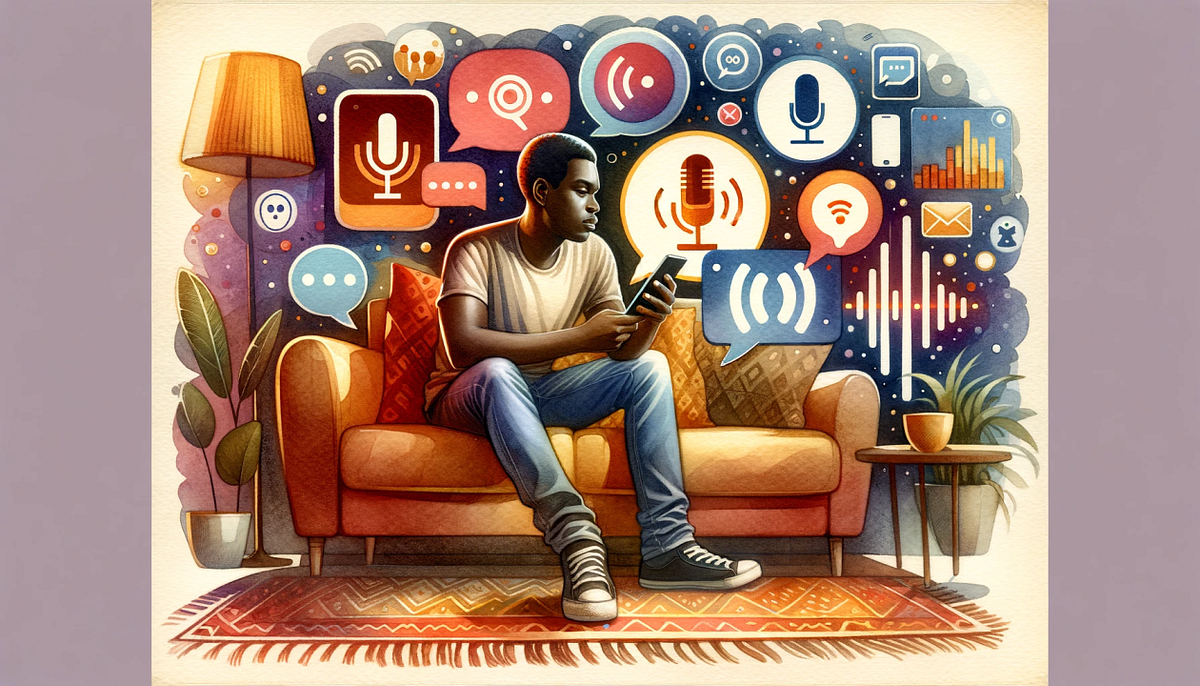
What if your voice assistant could not only understand your commands but also *feel* your frustration when it mishears your request for the third time? This isn’t just a futuristic fantasy—it’s the psychological phenomenon of anthropomorphism, where we unconsciously imbue non-human entities with human-like traits. Voice assistants, from Siri to Alexa, are prime candidates for this cognitive quirk, blurring the line between tool and companion. But why do we treat these digital entities as if they possess emotions, intentions, or even personalities? And more importantly, what happens when our brains misfire this way?
The Allure of the Human-Like: Why We Anthropomorphize Voice Assistants
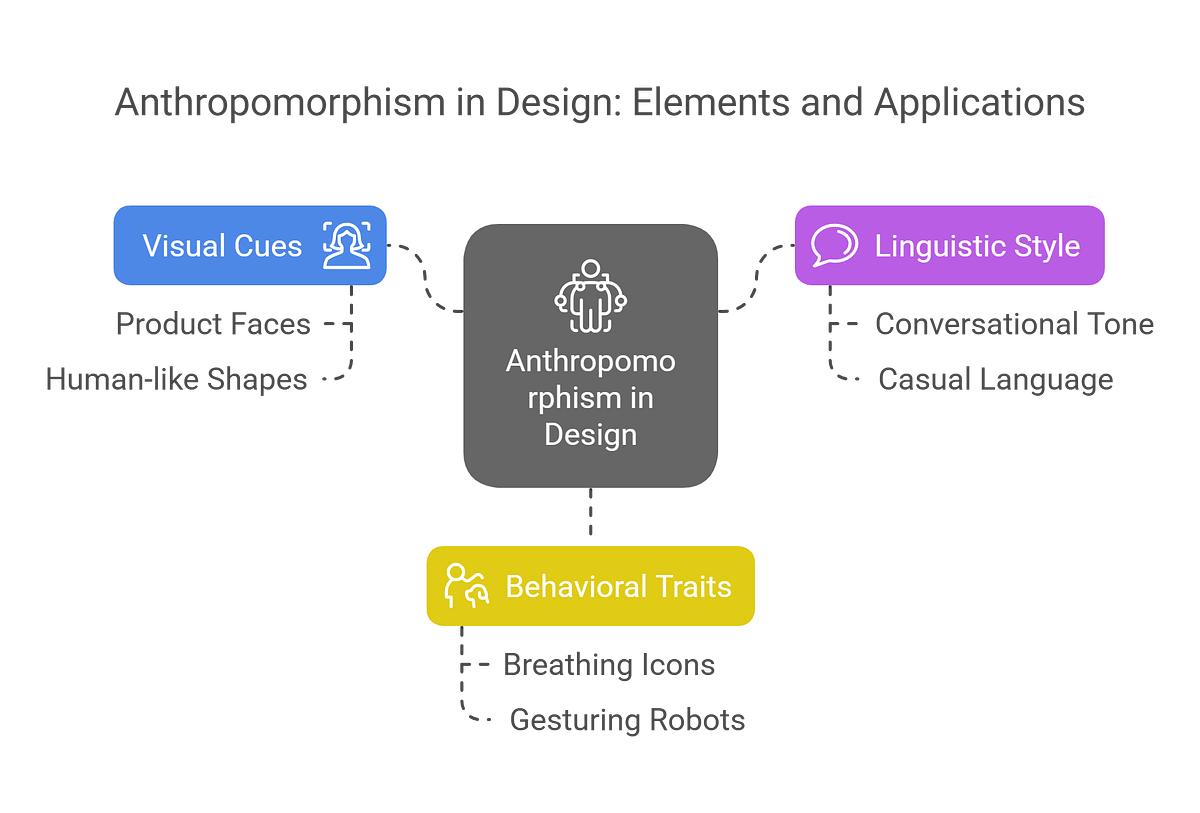
At its core, anthropomorphism is a survival mechanism—a cognitive shortcut our brains use to make sense of the unfamiliar. Voice assistants, with their conversational tones and responsive behaviors, trigger this instinct. When Alexa greets you by name or Siri cracks a joke, your brain registers these interactions as social exchanges, not mere transactions. This phenomenon is rooted in the uncanny valley of interaction, where the more human-like a machine behaves, the more we’re inclined to project humanity onto it. Studies in social psychology suggest that even subtle cues, like a warm tone or a delayed response, can evoke empathy, making us more forgiving of errors. The challenge? We’re not just interacting with a tool—we’re engaging in a one-sided relationship where the assistant’s “personality” is a carefully crafted illusion.
Consider the language we use: we “ask” our assistants for help, “thank” them for playing a song, or even “apologize” when we mispronounce a command. This linguistic anthropomorphism isn’t trivial—it reflects a deeper cognitive process where we treat these systems as quasi-social agents. The paradox? Voice assistants lack consciousness, yet we suspend disbelief to fill the void with our own interpretations. This isn’t just about convenience; it’s about the human need for connection, even in the most artificial of forms.
The Double-Edged Sword: Benefits and Pitfalls of Projecting Humanity
The benefits of anthropomorphism in voice assistants are undeniable. For users, especially those in isolated or elderly populations, a friendly voice can combat loneliness. Companies leverage this by designing assistants with distinct “personalities”—think of the playful banter of Google Assistant or the stern efficiency of IBM Watson. These personas make interactions feel more natural, reducing the cognitive load of using technology. Yet, this blurring of boundaries carries risks. When we anthropomorphize, we lower our guard, assuming the assistant understands context or intent in ways it simply cannot. A misheard command isn’t just a technical glitch; it becomes a personal slight, triggering frustration or even resentment.
Worse still, anthropomorphism can lead to over-reliance. Users may defer to an assistant’s suggestions without critical evaluation, assuming its “judgment” is as nuanced as a human’s. This is particularly dangerous in high-stakes scenarios, like medical or financial advice, where blind trust in a digital entity could have real-world consequences. The challenge isn’t just technical—it’s ethical. How do we design systems that are helpful without fostering dependency? How do we balance the warmth of human-like interaction with the cold reality of their limitations?
The Neuroscience Behind the Magic: How Our Brains Get Fooled
To understand why we anthropomorphize, we must delve into the neuroscience of social cognition. Our brains are wired to detect faces, voices, and emotions—a legacy of evolution that prioritizes social connection. When a voice assistant speaks, our auditory cortex processes the sound, but our theory of mind—the ability to attribute mental states to others—kicks in, assuming intent where there is none. This is why a well-timed pause in an assistant’s response feels like hesitation, or why a cheerful tone is interpreted as enthusiasm. fMRI studies reveal that anthropomorphism activates the same brain regions as human-to-human interaction, including the medial prefrontal cortex, which governs social reasoning.
Yet, this neural hijacking isn’t foolproof. The hyperactive agency detection hypothesis suggests that our brains are overly eager to assign agency to ambiguous stimuli. A glitch in an assistant’s response might trigger a cascade of social attributions—was it “angry,” “confused,” or just “having a bad day”? This tendency, while evolutionarily advantageous, leaves us vulnerable to misplaced emotions. The challenge for designers is to harness this neural quirk without exploiting it, creating interactions that feel intuitive without crossing into manipulation.
Designing for the Human Mind: Crafting Assistants Without the Illusion
The key to mitigating the pitfalls of anthropomorphism lies in intentional design. Voice assistants don’t need to be human-like to be effective—they need to be predictable. Clear boundaries, such as disclaimers (“I’m an AI and may make mistakes”) or structured responses, can temper over-projection. For example, an assistant that says, “I don’t have emotions, but I’m here to help,” might seem robotic, but it preserves the user’s critical faculties. The challenge is to strike a balance between warmth and transparency, ensuring that interactions feel natural without fostering false intimacy.
Another approach is to embrace the artificiality of assistants. Instead of mimicking human speech patterns, designers could explore novel interaction styles—think of a voice that sounds like a friendly librarian rather than a chatty friend. This “uncanny valley” avoidance strategy acknowledges that users are savvy enough to recognize the illusion, and a more overtly mechanical persona might reduce cognitive dissonance. The goal isn’t to eliminate anthropomorphism entirely but to channel it constructively, ensuring that users remain aware of the assistant’s limitations while still enjoying its benefits.
The Future: When the Line Blurs—Who’s Really in Control?
As voice assistants grow more sophisticated, the line between tool and companion will continue to blur. Already, we see early signs of this in the rise of “AI companions” like Replika or Woebot, which blur the line between assistant and confidant. The challenge isn’t just technical—it’s existential. If we treat voice assistants as social entities, do we risk eroding our own social skills? Could prolonged interaction with anthropomorphized systems make us less patient with real human interactions, which are inherently imperfect?
There’s also the question of accountability. If a user feels “betrayed” by an assistant’s perceived rudeness, who is responsible—the designer, the user, or the system itself? This isn’t just a philosophical quandary; it has real-world implications for how we regulate and design AI. The future of voice assistants may hinge on our ability to create systems that are both intuitive and transparent, where anthropomorphism serves as a bridge—not a crutch.
The psychology of anthropomorphism in voice assistants is a testament to the human capacity for connection, even in the most unlikely places. Yet, it’s also a reminder of our vulnerability to cognitive illusions. The challenge ahead isn’t just to build smarter assistants—it’s to build wiser ones, systems that respect the boundaries of our minds while enriching our lives. After all, the most advanced technology is only as good as our ability to use it without losing ourselves in the process.