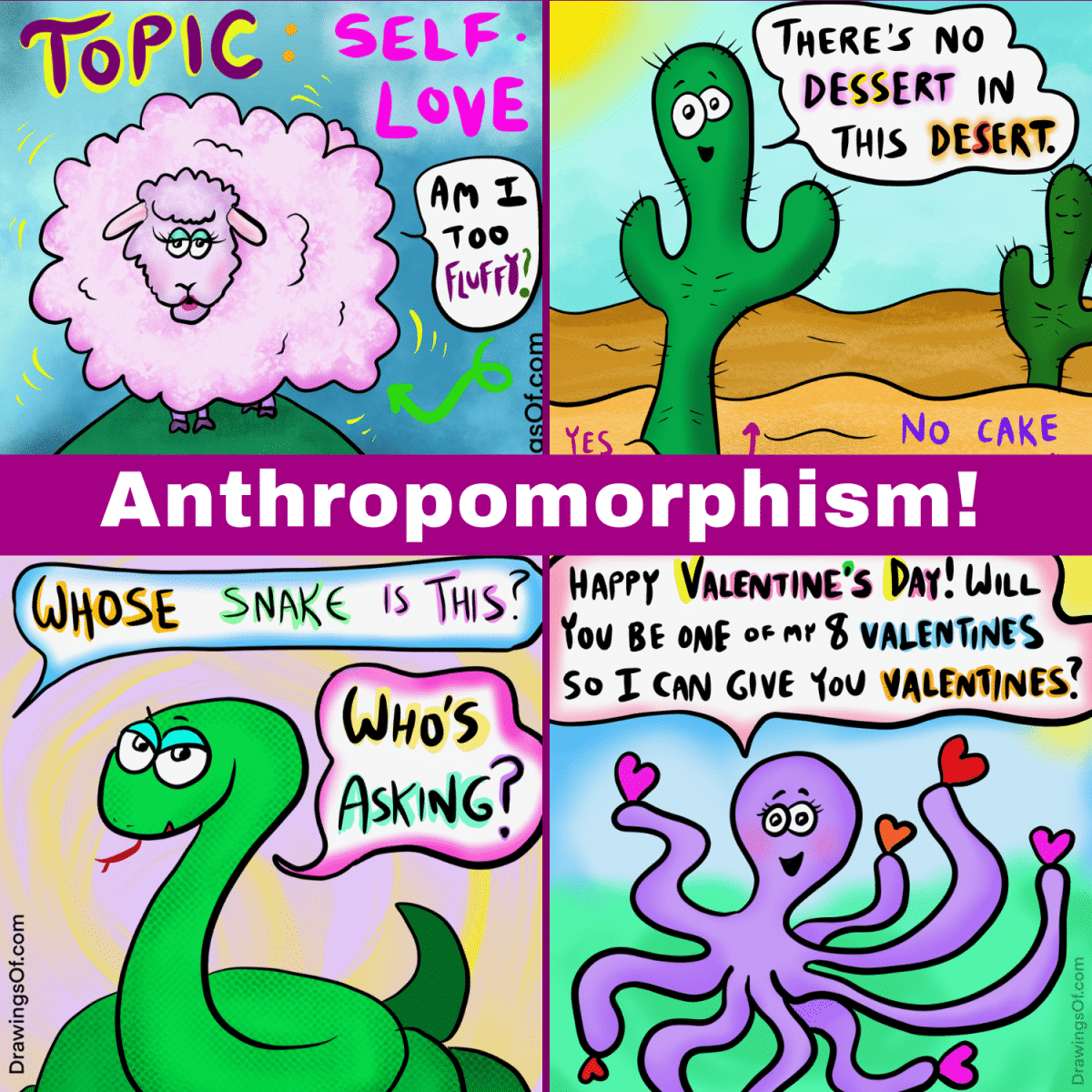
What if the quiet voice in your head—the one that whispers doubts when you’re alone—could become a trusted ally instead of a critic? What if the shadowy fears that haunt your thoughts could step into the light, not as monsters, but as messengers with lessons to teach? This isn’t a fantasy. It’s the power of anthropomorphism in therapy: the art of turning abstract emotions, internal conflicts, and psychological barriers into tangible, relatable characters. By personifying our inner experiences, we don’t just understand them better—we transform them. We heal.
The Alchemy of Self-Encounter: How Personification Unlocks the Psyche
At the heart of therapeutic anthropomorphism lies a radical act of self-encounter. When a client in cognitive behavioral therapy describes anxiety as a “jittery gremlin perched on their shoulder,” they’re not just using metaphor—they’re engaging in a form of cognitive restructuring. The gremlin isn’t just a symbol; it’s a presence, a character with habits, motives, and even a voice. This transformation from abstract dread to embodied entity allows the mind to interact with the emotion rather than be overwhelmed by it.
Consider the case of a survivor of emotional abuse who personifies their self-criticism as a “harsh librarian” who constantly shushes their achievements. Through guided imagery or narrative therapy, that librarian might be reimagined—not as a censor, but as a stern but well-meaning archivist who simply needs to learn a new cataloging system. The shift from enemy to flawed ally is subtle, yet profound. It invites curiosity over condemnation, and curiosity is the first step toward healing.
This process taps into the brain’s innate capacity for embodied cognition—the idea that our thoughts are deeply tied to physical sensation and imagery. When we give form to an emotion, we ground it in the tangible world, making it easier to examine, negotiate with, and ultimately, reshape.
From Shadow to Sage: Rewriting the Narrative of Inner Voices
Not all inner voices deserve a seat at the table of self-awareness. Some are echoes of past wounds, others are echoes of societal judgment. But what if we could audition these voices? What if we could ask them: “What do you truly want? What are you afraid of?” This is the essence of narrative therapy, where the client becomes the author of their own story—and the therapist, a co-editor.
Imagine a client who hears a voice that says, “You’ll never succeed.” Instead of dismissing it as irrational, the therapist might encourage them to give it a face, a name, and a backstory. Perhaps it’s “The Doubting Scholar,” a figure from a childhood where failure was met with ridicule. By externalizing the voice, the client can examine its origins without shame. They might discover that the scholar is actually a protector—one who once shielded them from disappointment but now stifles growth.
Through dialogue and gentle negotiation, the client can reassign the scholar’s role. Maybe the scholar becomes a “curious apprentice” who learns alongside them, or perhaps the client chooses to thank the scholar for its service and send it on a new mission—one of encouragement. This reframing doesn’t erase the voice; it transforms its purpose. It turns a saboteur into a student, a critic into a coach.
The real magic lies in the client’s newfound agency. They’re no longer at the mercy of an invisible force. They’re in conversation with it. And in that conversation, healing begins to take root—not through force, but through understanding.
The Paradox of Play: When Personification Becomes Too Real
Yet, for all its therapeutic promise, anthropomorphism in therapy is not without risk. There’s a fine line between playful exploration and the unintended reinforcement of pathology. What happens when the personified emotion becomes so vivid that it feels more real than the self? When the “gremlin” starts dictating behavior instead of being observed?
This is the paradox of therapeutic play: it must be safe, but not too safe. It must invite engagement, but not entrapment. Therapists must walk a tightrope between fostering creativity and maintaining boundaries. A client who becomes emotionally fused with their personified fear may struggle to disengage, especially in cases of dissociation or psychosis. The line between metaphor and delusion can blur.
To mitigate this, therapists often use structured techniques like the “empty chair” method or guided imagery with clear endpoints. They might ask the client to visualize placing the character in a box, on a shelf, or even in a different room—anything to reinforce that the personification is a tool, not an identity. The goal is to create a safe container for exploration, where the client can dance with their inner figures without losing themselves in the dance.
Moreover, cultural context matters. In some traditions, personifying emotions might be seen as inviting possession or spiritual interference. Sensitivity to these beliefs is crucial. Therapy must be culturally attuned, ensuring that the practice of anthropomorphism aligns with the client’s worldview—not imposed upon it.
Beyond the Couch: Personification in Daily Resilience-Building
The healing power of anthropomorphism doesn’t end when the therapy session does. It can become a lifelong practice of emotional alchemy. Many people find solace in journaling, where they converse with their inner critics or fears as characters. Others use art, sculpture, or even digital avatars to externalize their emotions and engage with them creatively.
Consider the practice of “emotion sculpting,” where a person molds clay into a shape that represents their current emotional state. The tactile act of creation makes the emotion tangible, and the act of reshaping it—smoothing rough edges, adding color—becomes a metaphor for emotional transformation. This isn’t just art therapy; it’s a form of embodied personification.
Even in mindfulness practices, anthropomorphism can play a role. A meditator might visualize their racing thoughts as “a flock of birds” that they gently guide back to a single tree. The birds aren’t suppressed; they’re acknowledged, redirected, and ultimately, allowed to fly away. This gentle, iterative process builds resilience by teaching the mind to coexist with its own turbulence.
The key is consistency. Like any skill, the ability to personify emotions effectively grows with practice. Over time, what begins as a therapeutic exercise becomes an intuitive way of relating to oneself—less as a battleground, more as a community.
The Future of Healing: Where Stories and Science Converge
As neuroscience delves deeper into the mechanisms of imagination and embodiment, the therapeutic use of anthropomorphism is gaining empirical support. Studies on embodied cognition and metaphor processing suggest that when we give form to abstract concepts, we activate multiple brain regions simultaneously—bridging logic and emotion, self and other, past and present.
Emerging therapies like Internal Family Systems (IFS) explicitly use personification to help clients understand their “parts”—subpersonalities that hold different roles, from protectors to exiles. By engaging with these parts as characters with distinct motivations, clients can uncover hidden traumas and restore harmony within their psyche.
Meanwhile, virtual reality (VR) is opening new frontiers. Imagine stepping into a digital landscape where your anxiety appears as a towering, shifting entity. Through VR, you can approach it, examine it, and even negotiate with it—all in a controlled, immersive environment. Early research shows that such experiences can reduce avoidance behaviors and increase emotional tolerance.
Yet, with innovation comes responsibility. As technology and therapy converge, ethical questions arise: Who owns the narrative of the personified self? How do we prevent digital personifications from becoming addictive distractions? The future of healing may lie in the fusion of ancient storytelling and cutting-edge science—but it must be guided by wisdom, not just wonder.
A Final Invitation: Meet Your Inner Cast of Characters
Anthropomorphism in therapy is more than a technique. It’s an invitation—to meet the parts of yourself you’ve avoided, to converse with the voices you’ve silenced, to rewrite the stories that no longer serve you. It’s a reminder that healing isn’t about erasing pain, but about understanding it. About giving it a face, a voice, a role—and then, gently, reassigning that role.
So, who is waiting to speak to you? What quiet figure has been knocking at the door of your awareness? Perhaps it’s time to open it. Not with force, but with curiosity. Not with fear, but with compassion. And maybe, just maybe, you’ll find that the most powerful healer isn’t out there—it’s the storyteller within.