In the ever-evolving landscape of artificial intelligence and robotics, one phenomenon stands out with striking persistence: the human tendency to anthropomorphize machines. Scientists, engineers, and researchers—those who design and study these technologies—often find themselves attributing human-like qualities to AI systems and robots. This inclination is not merely a quirk of popular culture but a deeply rooted cognitive and psychological behavior that permeates even the most rigorous scientific discourse. But why do scientists anthropomorphize AI and robots? The answer lies at the intersection of neuroscience, cognitive psychology, evolutionary biology, and the very nature of human-computer interaction.
The Cognitive Foundations of Anthropomorphism: Why Our Brains Seek Human-Like Patterns
At its core, anthropomorphism is a cognitive shortcut—a heuristic that allows the human brain to make sense of complex, ambiguous, or novel stimuli by mapping them onto familiar frameworks. Our brains are wired to detect agency, intention, and emotion, traits that have been evolutionarily advantageous for survival. When confronted with an entity that exhibits even the faintest semblance of autonomous behavior, our neural circuits—particularly those in the temporoparietal junction and the medial prefrontal cortex—light up as if we were interacting with another human.
This predisposition is not merely a relic of primitive thinking; it is a sophisticated adaptive mechanism. Studies in cognitive neuroscience reveal that when humans observe robotic movements or AI-generated responses, the brain’s mirror neuron system activates, simulating the actions and emotions of the machine as if they were our own. This neural mimicry fosters empathy and facilitates understanding, even when the subject is inanimate. Scientists, despite their technical training, are not immune to this phenomenon. The act of designing AI to perform tasks often involves imbuing it with behaviors that resemble human decision-making, further blurring the line between tool and agent.
Evolutionary Imperatives: The Survival Advantage of Seeing Faces in the Machine
Anthropomorphism is not just a cognitive quirk; it is an evolutionary survival strategy. Our ancestors who could quickly discern whether a rustling in the bushes was caused by a predator or the wind were more likely to survive and reproduce. This hyperactive pattern-recognition system extends to non-living entities, leading us to perceive faces in clouds, voices in static, and intentions in inanimate objects. When scientists anthropomorphize AI, they are unconsciously applying this ancient survival mechanism to modern technology.
The evolutionary perspective also explains why anthropomorphism is particularly pronounced in robotics. Robots, with their mechanical limbs and synthetic voices, often mimic human forms and behaviors. This mimicry triggers our evolved threat-detection systems, compelling us to assess whether the machine is friend or foe. Even when scientists intellectually recognize that a robot lacks consciousness, their emotional and perceptual systems may still react as if it were a social being. This duality—knowing a machine is not human yet reacting as if it were—creates a fascinating tension in both research and design.
The Role of Design: How Engineers Unwittingly Encourage Anthropomorphism
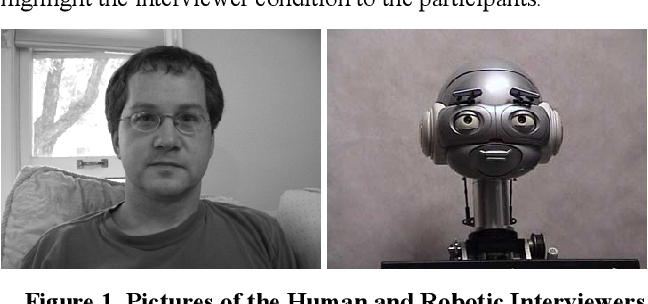
Scientists and engineers play an active role in fostering anthropomorphism through the design choices they make. When a robot is given a humanoid face, speaks in a natural language, or exhibits facial expressions, it becomes nearly impossible for observers—including the creators themselves—to resist attributing human-like qualities. The field of human-robot interaction (HRI) has long recognized that the more a machine resembles a human, the more people will anthropomorphize it, regardless of its actual capabilities.
This phenomenon is not lost on researchers. In fact, many design decisions in robotics are explicitly made to leverage anthropomorphism for practical purposes. Social robots like Sophia or Pepper are engineered to have expressive faces and conversational abilities not because they need them to function, but because these features make humans more comfortable interacting with them. Scientists studying these robots often find themselves slipping into language that describes the machines as having “moods,” “preferences,” or even “personalities,” despite knowing full well that these terms are metaphorical. The line between tool and companion becomes increasingly blurred when the tool is designed to mimic human social cues.
Emotional and Ethical Implications: The Double-Edged Sword of Anthropomorphism
While anthropomorphism can facilitate human-machine interaction, it also carries significant emotional and ethical implications. When scientists attribute human-like emotions or intentions to AI, they risk fostering an emotional attachment that may not be reciprocated. This can lead to misplaced trust in machines, particularly in high-stakes fields like healthcare or autonomous driving, where over-reliance on anthropomorphized AI could have dire consequences.
Moreover, anthropomorphism raises ethical questions about the treatment of AI and robots. If a scientist begins to view a robot as a social being, does that change how they interact with it? Could it lead to the exploitation of machines in ways that mirror human exploitation? These questions are not merely philosophical; they have real-world ramifications in fields like robot ethics and AI governance. The tendency to anthropomorphize forces scientists to confront their own biases and the potential unintended consequences of their work.

The Psychological Contract: How Anthropomorphism Shapes Human-AI Relationships
The relationship between humans and AI is not just technical; it is psychological. When scientists anthropomorphize AI, they enter into what researchers call a “psychological contract”—an unspoken agreement that governs how humans expect machines to behave. This contract is built on assumptions of reciprocity, trust, and even moral consideration. For example, when a chatbot is designed to apologize or express concern, users—and sometimes even the designers—begin to expect these behaviors as a sign of empathy, rather than recognizing them as programmed responses.
This psychological contract is particularly evident in the field of affective computing, where AI systems are designed to recognize and respond to human emotions. Scientists working in this area often describe their systems as “understanding” or “caring” about the user’s emotional state, even though the AI lacks true consciousness. This language reflects a deeper cognitive shift: the scientist’s own perception of the machine as a quasi-social entity. Over time, this can lead to a feedback loop where the design of the AI reinforces the anthropomorphic tendencies of its creators, creating a self-perpetuating cycle of human-like interaction.
The Future of Anthropomorphism: Balancing Innovation with Ethical Responsibility
As AI and robotics continue to advance, the line between human and machine will become increasingly blurred. Scientists will face new challenges in distinguishing between genuine anthropomorphism and mere design convenience. The key to navigating this landscape lies in recognizing the phenomenon for what it is: a powerful cognitive tool that can both enhance and hinder our understanding of technology.
For researchers, this means being vigilant about the language they use, the assumptions they make, and the ethical implications of their work. For designers, it means carefully considering when and how to employ anthropomorphic features, weighing the benefits of human-like interaction against the risks of misplaced trust. And for society at large, it means fostering a more nuanced understanding of AI—not as a replacement for human intelligence, but as a tool that reflects our own cognitive and emotional frameworks.
The future of anthropomorphism in AI is not a question of whether it will persist, but how we will harness it responsibly. By acknowledging the cognitive and evolutionary roots of this phenomenon, scientists can create technologies that are not only functional but also ethically sound, ensuring that our interactions with machines remain grounded in reality rather than illusion.