Why do we see faces in clouds, assign emotions to our pets, or believe that a grumpy storm is punishing us for forgetting an umbrella? The human mind, it seems, is hardwired to project itself onto the world. This tendency—known as anthropomorphism—isn’t just a quirk of poetic imagination; it’s a cognitive shortcut deeply embedded in our evolutionary past. But why? What evolutionary advantage could possibly come from mistaking a rock for a sleeping giant or a river for a vengeful spirit? To unravel this mystery, we must journey through the labyrinth of human cognition, where survival instincts and social intelligence collide in the most unexpected ways.
The Primordial Urge: When Survival Demands a Social Lens
Long before humans built cities or wrote laws, our ancestors roamed a world teeming with unseen dangers. A rustling in the bushes could mean a predator—or it could mean nothing. But misjudging the latter could be fatal. Here, anthropomorphism emerges as a brilliant (if occasionally overzealous) survival strategy. By interpreting ambiguous stimuli as social actors—whether friend, foe, or deity—early humans err on the side of caution. A shadowy figure in the distance isn’t just a trick of the light; it might be a rival tribe’s scout. Better to assume agency than to be caught unawares.
This “hyperactive agency detection device” (HADD), as cognitive scientists call it, is the brain’s way of playing it safe. Studies suggest that humans are more likely to perceive faces in random patterns than to miss a real one—a bias that likely saved lives on the savanna. The cost of a false positive (seeing a threat where there is none) was far lower than the cost of a false negative (ignoring a real one). Thus, anthropomorphism became a cognitive default, a mental heuristic that blurred the line between the animate and the inanimate.
The Social Brain Hypothesis: Why We Can’t Help But Relate
Anthropomorphism isn’t just about survival—it’s about connection. Humans are, after all, the most socially complex species on Earth. Our brains evolved to navigate intricate webs of relationships, where trust, cooperation, and deception shape every interaction. To thrive in such an environment, we developed an extraordinary capacity for empathy and mentalizing—the ability to infer the thoughts and feelings of others. But what happens when those “others” aren’t human at all?
Enter the “intentional stance,” a concept proposed by philosopher Daniel Dennett. This cognitive posture assumes that entities—whether animals, objects, or even natural phenomena—act with purpose. A river doesn’t just flow; it “wants” to reach the sea. A tree doesn’t merely grow; it “strives” toward the sunlight. By adopting this stance, we extend the social tools we use for human interaction to the non-human world. This isn’t mere whimsy; it’s a cognitive extension of our social intelligence. If we can predict the behavior of a rival by reading their facial expressions, why not apply the same logic to a storm by interpreting its ominous rumble as anger?
This tendency reaches its zenith in our relationships with animals. Domestic pets aren’t just creatures; they’re family members, confidants, and emotional barometers. The way a dog’s tail wags or a cat’s ears flatten becomes a language we instinctively understand. Even wild animals are anthropomorphized in folklore and myth, where foxes outwit humans and bears hold grudges. This isn’t just storytelling—it’s a testament to our brain’s relentless drive to find patterns and meaning in the chaos of existence.
The God-Shaped Hole: Anthropomorphism and the Divine
No discussion of anthropomorphism would be complete without addressing its most profound expression: religion. Gods, by definition, are beings that embody human traits—wrath, love, justice—yet exist beyond the physical world. The impulse to create deities in our own image is a direct extension of our cognitive wiring. If we see faces in clouds, why not see a divine face in the cosmos itself?
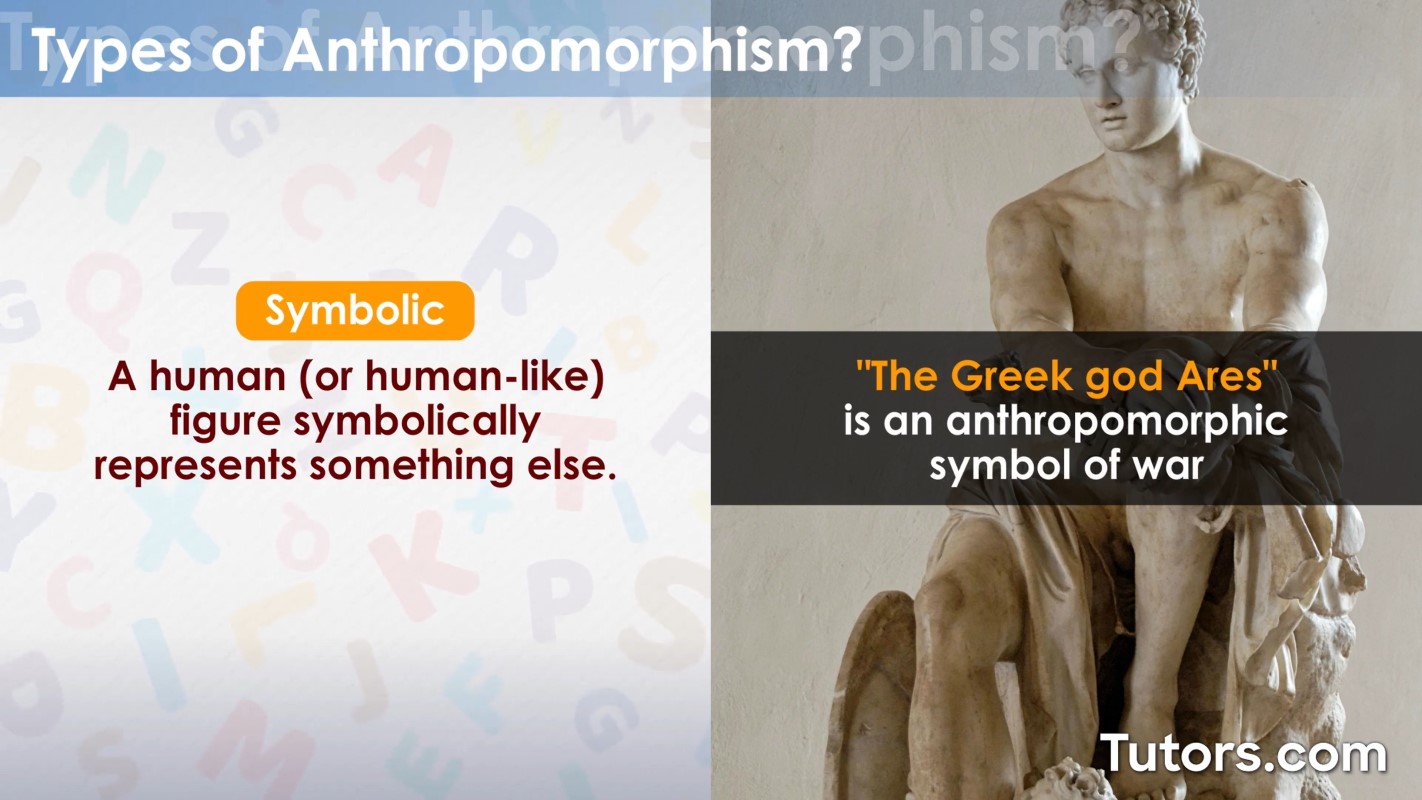
Anthropomorphism in religion serves a dual purpose. First, it makes the ineffable relatable. A storm god isn’t just a force of nature; it’s a being with motives, emotions, and a personality. Second, it reinforces social cohesion. Shared beliefs in anthropomorphic deities bind communities together, providing a framework for morality, cooperation, and collective identity. The ancient Greeks didn’t just worship Zeus; they engaged in a social contract with a figure who embodied their highest ideals—and their deepest fears.
Even in secular times, this impulse persists. We anthropomorphize not just gods but also abstract concepts like “Mother Nature” or “Lady Luck,” imbuing them with intentions and emotions. This isn’t mere superstition; it’s a cognitive legacy of our need to impose order on a chaotic world. If we can understand the intentions behind human actions, why not extend that understanding to the universe itself?
The Dark Side of Seeing Faces Everywhere
Yet for all its evolutionary advantages, anthropomorphism is a double-edged sword. While it helps us navigate uncertainty, it can also lead us astray. The same brain that sees a face in a rock might also see malice in a misplaced tool or a curse in a misfortune. This tendency to overattribute agency can fuel paranoia, superstition, and even conflict. In a world where every shadow is a potential threat, it’s easy to spiral into a cycle of fear and misinterpretation.
Consider the phenomenon of “pareidolia,” where the brain perceives familiar patterns—especially faces—in random stimuli. While this can be harmless (or even delightful, as in the case of cloud gazing), it can also have darker implications. In legal contexts, for example, eyewitness testimony is notoriously unreliable because the brain fills in gaps with assumptions. Similarly, in medical settings, patients may misattribute symptoms to supernatural causes, delaying treatment. Even in modern times, anthropomorphism can distort our understanding of technology, leading to the belief that algorithms or AI systems have emotions or intentions.
This paradox highlights a fundamental tension in human cognition: our brains are wired to find meaning, but meaning isn’t always where we think it is. The challenge, then, is to harness the power of anthropomorphism without succumbing to its pitfalls. How do we distinguish between a useful cognitive shortcut and a dangerous delusion?
The Future of Anthropomorphism: From Cave Walls to Silicon Chips
As we stand on the precipice of an era dominated by artificial intelligence and advanced robotics, anthropomorphism takes on new dimensions. We’re already seeing this in the rise of “digital companions”—AI chatbots designed to mimic human empathy, or robots programmed to express emotions. But what happens when our machines become so lifelike that we can’t help but treat them as sentient beings?
This isn’t just a philosophical question; it’s an evolutionary one. If our brains evolved to see agency in the world around us, what happens when that world includes entities that are neither fully alive nor fully inanimate? Some researchers argue that this could lead to a new form of social interaction, where humans form deep emotional bonds with AI. Others warn of the dangers of deception—both self-deception (believing a machine truly understands us) and the deception of others (using anthropomorphism to manipulate).
The implications are vast. Will we one day anthropomorphize our smart homes, treating them as capricious entities that “decide” when to turn on the lights? Could this lead to a resurgence of animistic beliefs in a post-religious world? Or will we develop new cognitive frameworks to navigate this brave new world? One thing is certain: the impulse to see ourselves in everything around us isn’t going away. It’s a fundamental part of what it means to be human.

Conclusion: The Echo of Ourselves in the World
Anthropomorphism is more than a quirk of human psychology; it’s a mirror held up to our deepest instincts. It reveals our need for connection, our fear of the unknown, and our relentless search for meaning in a chaotic universe. From the earliest hunter-gatherers who saw spirits in the wind to the modern AI enthusiasts who debate whether their chatbot is “alive,” the story is the same: we see ourselves everywhere because, in a way, we always have.
Yet this tendency is not a flaw—it’s a feature of our cognitive architecture. It’s what allows us to empathize with a stranger, to find solace in a pet’s gaze, and to seek justice in the natural order. The challenge, then, is not to eliminate anthropomorphism but to wield it wisely. To recognize when it serves us—and when it blinds us. For in the end, the faces we see in the world may say less about the world itself and more about the echo of humanity that resonates within us all.