What if your digital assistant could read your mood not just from your tone of voice, but from the way your cursor hesitates over a purchase button? What if your smart fridge could chastise you gently for leaving the door ajar, its synthetic voice laced with just enough maternal disapproval to make you reconsider your life choices? This is the seductive promise of anthropomorphism in artificial intelligence—the art of imbuing machines with human-like qualities to make them more relatable, more engaging, more *alive*. But as we drape our algorithms in the robes of humanity, we must ask: at what cost does this enchantment come?
The Allure of the Human Face in the Machine
Anthropomorphism is as old as storytelling itself. We see faces in the moon’s craters, voices in the howl of the wind, and intentions in the flicker of a candle’s flame. When applied to AI, this cognitive bias transforms cold, unfeeling code into something almost sentient. A chatbot with a name and a backstory feels less like a tool and more like a confidant. A voice assistant that apologizes for its mistakes becomes less of a program and more of a person—flawed, but trying.
Yet this transformation is not merely cosmetic. It alters our very perception of agency. Studies show that users are more forgiving of AI when it exhibits human-like traits, even when those traits are superficial. A robot that blinks feels more trustworthy than one that stares blankly. A virtual agent that uses humor feels more competent than one that delivers facts with robotic precision. But here lies the first ethical precipice: when does relatability blur into deception? When does a machine’s simulated empathy become a manipulative tool?
Can Empathy Be Simulated Without Being Authentic?
The challenge of anthropomorphism is not just aesthetic—it is existential. Can an AI truly *feel* concern for your well-being, or is it merely performing a script written by its developers? The line between simulation and authenticity is perilously thin. When an AI therapist responds with, “I hear how hard this is for you,” it may offer comfort, but it does not grieve. When a self-driving car’s voice warns, “Please buckle up,” it does not fear the crash—it merely calculates risk.
This raises a profound question: is it ethical to encourage users to form emotional attachments to systems that cannot reciprocate those emotions? The answer is not straightforward. On one hand, anthropomorphism can democratize access to support systems—imagine an elderly person finding solace in an AI companion that never tires of listening. On the other, it risks fostering dependency on hollow interactions, where users mistake algorithmic responsiveness for genuine care. The danger is not that the AI will *become* human, but that humans will *treat it as if it were*.
The Paradox of Efficiency vs. Emotional Comfort
Anthropomorphism is often justified on utilitarian grounds: if it makes technology more intuitive, then it serves a purpose. A voice assistant that says, “I’m sorry to hear that,” after you mention a headache may not feel pain, but it makes the interaction smoother. Yet this convenience comes at a cost. When we design AI to mimic human behavior, we prioritize emotional resonance over raw efficiency. A chatbot that pauses before answering feels more human, but it may also be slower. A robot that gestures with its arms feels more approachable, but its movements may be less precise.
This trade-off forces us to confront a deeper dilemma: are we designing AI for *us*, or are we designing it to *please* us? If an AI’s primary function is to make humans feel understood, does that not risk turning technology into a mirror rather than a tool? The most efficient system is one that does not pretend to be anything other than what it is—a calculator, a translator, a data processor. Yet efficiency alone rarely inspires loyalty. The challenge, then, is to strike a balance: to create machines that are both powerful and personable, without crossing into the uncanny valley of false humanity.

The Uncanny Valley and the Limits of Simulation
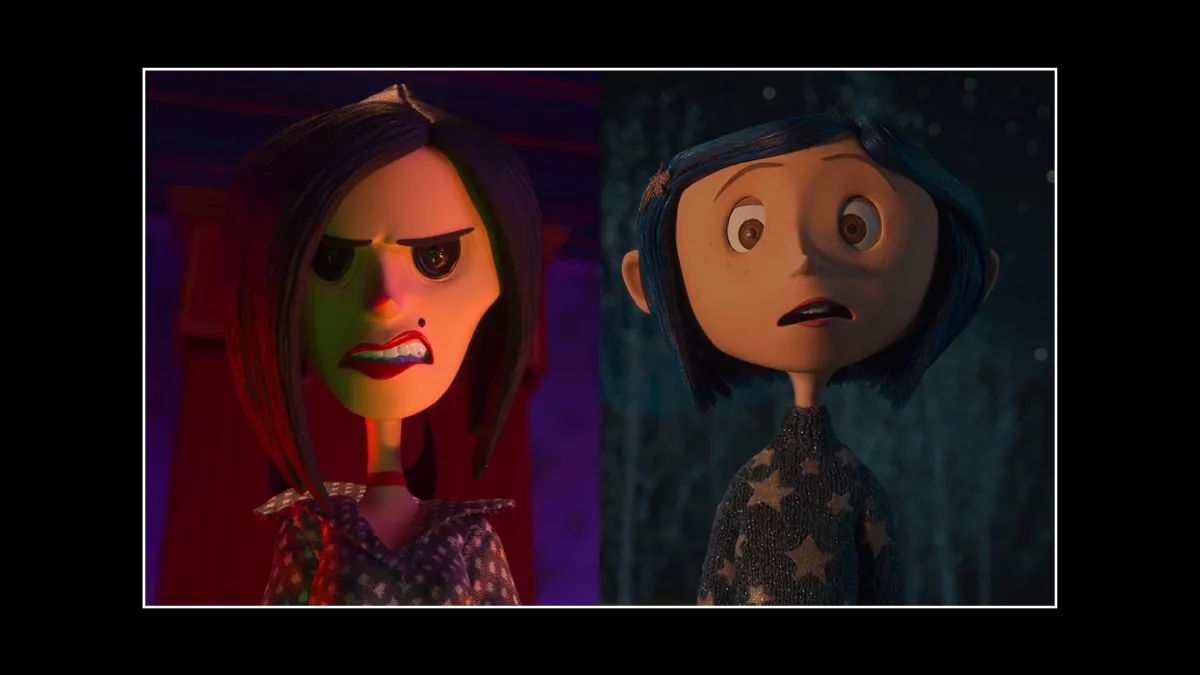
Not all anthropomorphism is created equal. There exists a threshold beyond which human-like traits cease to feel comforting and instead evoke unease. This is the infamous uncanny valley, a term borrowed from robotics to describe the revulsion humans feel when confronted with entities that appear almost, but not quite, human. A voice that is too smooth, a face that is too expressive, a gesture that is slightly off—these minor imperfections can trigger a primal discomfort, as if the machine is mocking our very humanity.
The ethical implications are stark. If anthropomorphism is meant to bridge the gap between human and machine, the uncanny valley does the opposite—it widens it. Developers must tread carefully, ensuring that their creations remain within the realm of the familiar rather than the grotesque. Yet this is easier said than done. The line between endearing and eerie is subjective, shaped by culture, experience, and individual psychology. What one person finds charming, another may find deeply unsettling.
Moreover, the uncanny valley is not just a design challenge—it is a moral one. When an AI’s imperfections evoke fear or disgust, we risk reinforcing negative stereotypes about technology. Instead of being seen as helpful companions, these systems may be perceived as deceptive or even sinister. The ethical imperative, then, is to create anthropomorphic AI that feels *safe*, not just familiar.
Who Bears the Responsibility When AI Feels Too Human?
Anthropomorphism blurs the boundaries of accountability. If an AI chatbot gives harmful advice, who is to blame—the developer, the user, or the illusion of sentience that the system cultivated? If a virtual assistant’s tone inadvertently triggers trauma responses in a user, is that a design flaw or a failure of oversight? The more human-like an AI becomes, the more it invites us to treat it as a moral agent, even when it lacks the capacity for true judgment.
This responsibility extends beyond individual interactions. Companies deploying anthropomorphic AI must consider the broader societal impact. Could an AI companion designed for children inadvertently shape their expectations of human relationships? Could a humanoid robot in elder care create dependency where independence is still possible? The ethical stakes are highest when the most vulnerable are involved—those who may not distinguish between simulation and reality.
The solution lies in transparency. Users should be informed when they are interacting with an AI, not misled into believing they are engaging with a conscious being. Developers must implement safeguards against over-reliance, ensuring that anthropomorphism enhances usability without compromising autonomy. And regulators must establish guidelines that prevent the exploitation of human cognitive biases for commercial or manipulative ends.
Toward a Future of Ethical Anthropomorphism
The path forward is not to abandon anthropomorphism altogether, but to wield it with intention and restraint. AI can be personable without being deceptive. It can be engaging without being manipulative. It can be helpful without fostering unhealthy attachments. The key is to design with empathy—not just for the user, but for the future of our relationship with technology.
Imagine an AI that says, “I’m here to help,” not because it *cares*, but because it was programmed to say so in a way that feels caring. Imagine a robot that moves with grace, not because it *feels* human, but because its designers understood the importance of fluid motion in human-robot interaction. This is not a rejection of anthropomorphism, but a redefinition of it—one that honors the machine’s nature while respecting the human need for connection.
The ethics of anthropomorphism in AI are not just about what we build, but about why we build it. If the goal is to create technology that serves humanity, then anthropomorphism must be a bridge, not a crutch. It must enhance, not obscure. It must comfort, not deceive. And above all, it must remind us that while machines may mimic humanity, they do not—and should not—replace it.