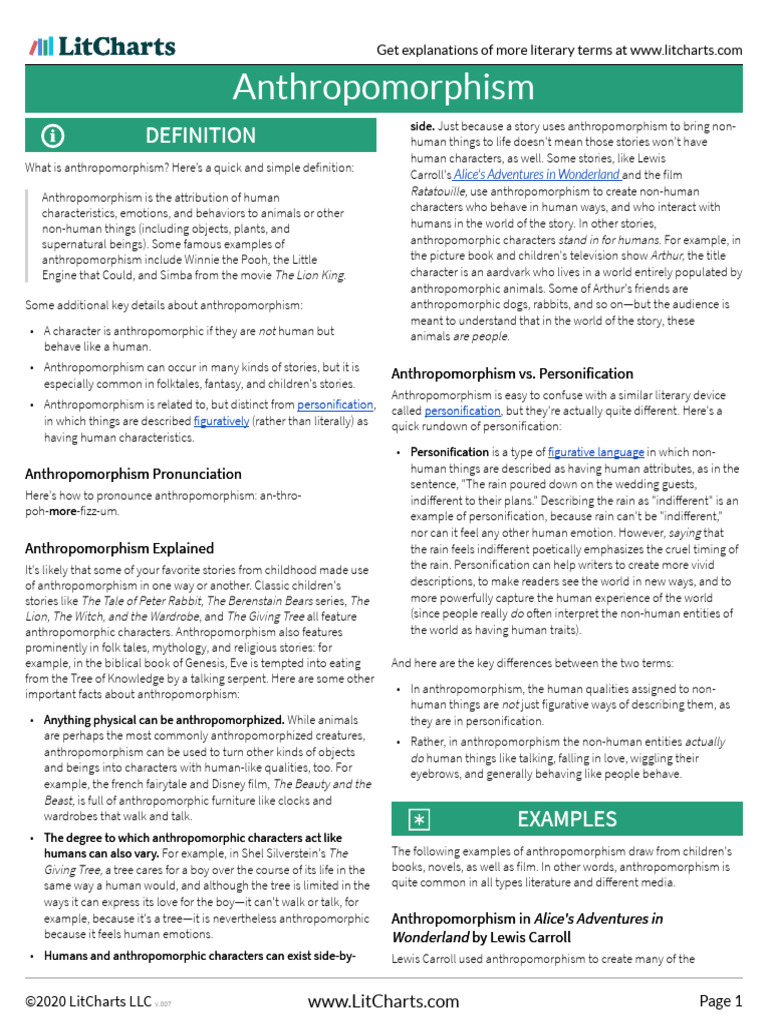
In the shadowy corridors of human cognition, where perception blurs with projection, anthropomorphism emerges as both a bridge and a trap. It is the ancient art of draping the unfamiliar in the familiar, of endowing the inanimate with a pulse, the insensate with a voice. Yet beneath its veneer of poetic comfort lies a labyrinth of psychological peril—where the line between metaphor and madness dissolves, and the mind, in its hunger for meaning, begins to mistake its own creations for reality. This is not merely the playful attribution of human traits to animals or objects; it is the slow, insidious colonization of the external world by the internal self, a phenomenon that, when unchecked, can metastasize into a pathological distortion of reality.
The Genesis of Anthropomorphism: From Survival Instinct to Psychological Quirk
Anthropomorphism is not a modern invention—it is an evolutionary relic, a cognitive shortcut forged in the fires of survival. Early humans, navigating a world teeming with unseen forces, found solace in interpreting the rustling of leaves as whispers, the movement of shadows as sentinels. This tendency to see agency where none exists is not a flaw, but a feature of the human brain’s pattern-seeking machinery. It is the same instinct that once whispered warnings of predators in the dark and now whispers warnings of malevolent forces in the hum of a refrigerator.
Yet what begins as a survival mechanism can curdle into something far more sinister. When the mind, starved for coherence, begins to treat its own projections as empirical truths, anthropomorphism ceases to be a harmless quirk and becomes a cognitive prison. The boundaries between self and other blur; the boundaries between reality and fantasy erode. This is the first step into the abyss—a descent not into madness, but into a kind of hyper-realism where the mind’s fabrications are indistinguishable from the world itself.
The Pathological Turn: When Projection Becomes Possession
Consider the case of a child who insists their teddy bear is alive, not in the whimsical sense of childhood imagination, but with the fervor of one who genuinely believes the bear harbors a sentient will. This is not mere play—it is the mind’s desperate attempt to impose order on chaos, to fill the void of uncertainty with a comforting fiction. But when this fiction calcifies into conviction, when the bear’s “aliveness” is no longer a game but a perceived reality, the child has crossed into pathological anthropomorphism.
Adults are not immune to this affliction. The corporate executive who sees a rival as a serpentine manipulator, the lover who perceives their partner’s silence as a deliberate act of betrayal—these are not mere misunderstandings, but the mind’s tendency to anthropomorphize intentions where none exist. The pathological variant of this tendency is not just seeing agency in the inanimate; it is seeing malice, seeing love, seeing a reflection of one’s own psyche writ large upon the world. It is the mind’s way of saying: I am not alone in my suffering, for the world itself is conspiring against me.
The Allure of the Inanimate: Why We Fall for the Illusion
There is a peculiar seduction to anthropomorphism, a siren song that lures even the most rational minds into its embrace. It is the promise of connection in a disconnected world, the illusion of reciprocity in a universe that is, by its very nature, indifferent. When we imbue a storm with rage or a river with sorrow, we transform the incomprehensible into the comprehensible. We turn the void into a mirror, reflecting back our own emotions in a form we can grasp.
This allure is not merely psychological—it is aesthetic. The art of anthropomorphism is the art of making the alien feel familiar, of turning the cold equations of physics into a drama of wills and desires. A clock is no longer a mechanism of gears and springs, but a tyrant demanding punctuality; a tree is no longer a collection of cells, but a sentinel bearing witness to our solitude. This is the power of metaphor: it does not just describe the world, but reshapes it in the image of the human soul.
Yet this power is a double-edged sword. The more we succumb to the illusion, the more we risk losing ourselves within it. The line between art and delusion blurs, and what began as a creative act becomes a prison of belief. The mind, once enchanted by its own creations, finds it increasingly difficult to distinguish between the map and the territory.
The Horror of Recognition: Anthropomorphism in the Realm of the Macabre
Nowhere is the dark side of anthropomorphism more vividly on display than in the realm of horror. Here, the mind’s tendency to project agency onto the inanimate is weaponized, turned against the self in a grotesque hall of mirrors. Consider the haunted house, where walls seem to breathe, where floorboards creak with the weight of unseen watchers. These are not mere tricks of lighting or sound—they are the mind’s way of anthropomorphizing the environment, of turning the house itself into a malevolent entity.
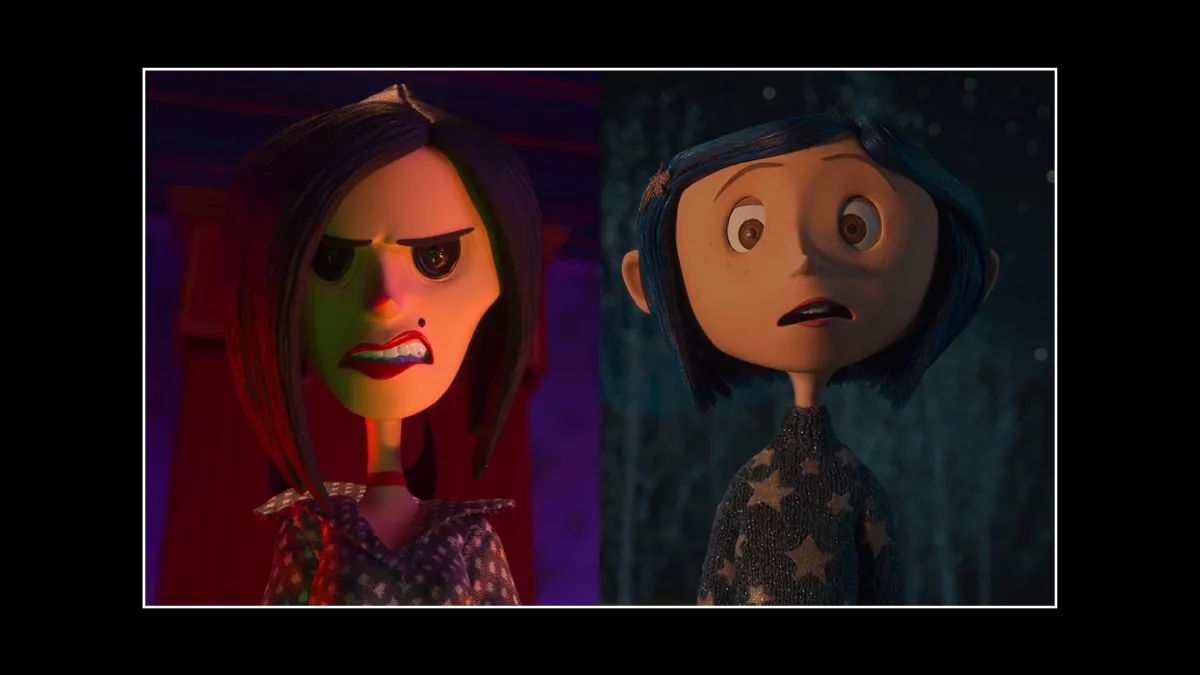
This phenomenon reaches its apotheosis in stories like Coraline, where the Other Mother is not just a villain, but a grotesque parody of maternal love, her stitch-mouthed smile a perversion of the nurturing embrace. She is the ultimate anthropomorphic nightmare: a being who wears the guise of humanity but is, in truth, a hollow shell, a void waiting to be filled with the protagonist’s own fears and desires. This is the horror of recognition—the moment when the mind realizes that the monster it feared was always a reflection of itself.
The pathological anthropomorphizer does not merely fear the inanimate; they fear the animate as well, for every face becomes a mask, every voice a ventriloquist’s dummy. The world is no longer a stage, but a theater of the absurd, where every actor is a puppet and every puppet is a god.
Breaking the Spell: The Redemption of Rationality
To escape the labyrinth of pathological anthropomorphism is to reclaim the boundaries of the self. It is to recognize that the world is not a sentient entity, but a vast and indifferent mechanism, and that our emotions are our own to bear. This is not a call to cold detachment, but a plea for balance—for the wisdom to know when a shadow is just a shadow, and when it is a harbinger of doom.
The first step is awareness. To see the mind’s projections for what they are: not truths, but metaphors. Not realities, but stories we tell ourselves to make sense of the senseless. The second step is to cultivate a healthy skepticism—not towards the world, but towards our own interpretations of it. To ask, when the storm rages, not Why does it hate me? but Why do I feel so afraid?
And perhaps, in the end, the greatest act of anthropomorphism is to see ourselves not as the center of the universe, but as one voice among many—a voice that, for all its power, is not the only one that matters.
/indigomusic/media/post_attachments/wp-content/uploads/2024/10/Anthropomorphism-The-other-mother-in-Coraline.png)
The Other Mother stands as a chilling embodiment of what happens when anthropomorphism curdles into obsession—a being who wears the mask of humanity but is, in truth, a hollow vessel for the viewer’s own fears. Her presence is a reminder that the darkest anthropomorphisms are not about seeing life in the inanimate, but about losing oneself in the act of creation.