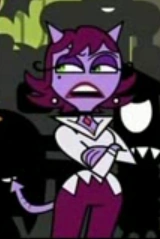
What if the most chilling villains in fiction weren’t just human—or even humanoid—but something far more unsettling? What if they wore fur, feathers, or scales while grinning back at us with a knowing glint in their eyes? Anthropomorphic villains, those cunning creatures who straddle the line between beast and monster, have long haunted our stories, their duality making them all the more terrifying. They challenge our perceptions of morality, blur the boundaries between instinct and intellect, and often force us to question: Are they truly evil, or just playing by a different set of rules? From the calculating to the chaotic, these characters redefine villainy with a playful menace that lingers long after the final page or frame. Let’s explore the best anthropomorphic villains in fiction, those who turn the tables on heroism with a grin and a claw.
The Allure of the Beastly Antagonist: Why Anthropomorphic Villains Captivate Us
Anthropomorphic villains thrive in the liminal space between the familiar and the foreign. Their human-like traits—speech, emotion, ambition—make them relatable, even sympathetic, while their animalistic instincts render them unpredictable. This duality is magnetic. Consider the way a fox’s sly grin can mask a heart of ice, or how a bear’s lumbering gait belies a mind of Machiavellian cunning. These characters don’t just threaten; they seduce. They make us complicit in their schemes, if only for a moment, as we marvel at their ingenuity. The best among them aren’t just obstacles to overcome—they’re puzzles to unravel, their very existence a challenge to our moral certainties. What does it say about us that we’re drawn to their chaos? Perhaps it’s the thrill of the unknown, the vicarious rebellion against order, or simply the joy of watching a creature so unlike us outsmart the so-called “civilized” world.

The Puppeteers of Paranoia: Villains Who Manipulate Through Charm
Some anthropomorphic villains don’t rely on brute force or raw power. Instead, they wield charm like a scalpel, slicing through trust with a smile. Take, for instance, the fox archetype—the trickster who thrives in the shadows of folklore, his silver tongue weaving lies as effortlessly as a spider spins silk. These villains understand human (and inhuman) psychology better than most heroes, exploiting desires, fears, and vanity to bend others to their will. Their greatest weapon isn’t a blade or a curse, but the illusion of camaraderie. They make you *want* to believe them, even as their claws tighten around your throat. The challenge they pose is psychological: Can you resist the allure of their words long enough to see the monster beneath? History’s most notorious con artists often share traits with these fictional foes—charisma masking malice—and that’s what makes them so unsettling. They remind us that the most dangerous predators don’t always roar.
The Brute Force Paradox: When Size Doesn’t Equal Strength
Contrary to the adage, brute force isn’t always the most effective tool in an anthropomorphic villain’s arsenal. Some of the most formidable foes are those who turn their physicality into a psychological weapon. A hulking bear, for example, might not need to fight at all—his mere presence can cow lesser beings into submission. Yet the true mastery lies in those who defy expectations. A villain who appears frail or unassuming, only to reveal a terrifying intellect or supernatural resilience, subverts our instincts entirely. The challenge here is one of perception: How do you fight an enemy who doesn’t play by the rules of engagement? Their strength isn’t just in their muscles, but in their ability to redefine the battlefield. They force heroes—and readers—to adapt, to question whether strength is measured in claws or cunning. In a world where might often makes right, these villains expose the fragility of that assumption.
The Tragic Villain: When Evil is Born from Pain
Not all anthropomorphic villains are born evil—they’re made. The most compelling among them are those who started as heroes, only to be broken by betrayal, abandonment, or injustice. Their villainy isn’t a choice, but a survival mechanism, a way to reclaim power in a world that stripped it from them. This trope is particularly potent in stories where the line between hero and villain is deliberately blurred. A once-noble wolf, cast out by his pack, might turn to savagery not out of malice, but because he sees no other path. The challenge for the audience is empathy—can we condemn a character who is, at their core, a victim? These villains force us to confront uncomfortable truths about vengeance and redemption. They ask: What would you become if the world told you, again and again, that you were nothing? Their stories are cautionary tales, but also tragedies, reminding us that villainy is often a cycle, not a birthright.
The Cosmic Jester: Villains Who Dance on the Edge of Madness
Some anthropomorphic villains aren’t just evil—they’re *insane*. Not in the clinical sense, but in the way that chaos itself is a form of genius. These characters operate outside the rules of logic, their actions defying explanation yet somehow feeling inevitable. They’re the jester who grins as the world burns, the serpent who whispers nonsense that somehow makes sense in the dark. Their unpredictability is their power. Heroes struggle to counter them because there’s no pattern to exploit, no motive to appeal to. The challenge they present is existential: How do you fight an enemy who doesn’t fight back, but instead *rewrites the rules* of the game? Their villainy isn’t personal—it’s cosmic. They’re the embodiment of entropy, the grinning face of inevitability. To defeat them is to impose order on the unknowable, a task that feels Sisyphean by design.
The Ultimate Test: Can a Villain Be Both Fearsome and Fascinating?
The pinnacle of anthropomorphic villainy isn’t just about terror—it’s about transcendence. The best villains don’t just scare us; they *enchant* us. They make us question our allegiances, our morals, even our own humanity. They’re the characters we love to hate, but also the ones we can’t help but admire. The challenge they pose to creators and audiences alike is this: How do you craft a villain so compelling that they overshadow the hero? How do you make cruelty feel like art? The answer lies in their complexity. A villain who is purely evil is forgettable. But one who is flawed, charismatic, and just plausible enough to be real? That’s the stuff of legends. These characters linger because they reflect our own dualities—the parts of us that are noble and the parts that are selfish, the light we embrace and the shadows we deny. In the end, the best anthropomorphic villains aren’t just antagonists. They’re mirrors.