In the cacophony of modern advertising, where consumers are bombarded with thousands of messages daily, one strategy has emerged as a masterful conductor of emotional resonance: anthropomorphism. The practice of imbuing non-human entities—be they products, brands, or even abstract concepts—with human characteristics is not merely a creative whim. It is a psychological lever that unlocks profound emotional connections, transforming passive observers into engaged participants in a brand’s narrative. This phenomenon, often subtle yet undeniably potent, speaks to a deeper human fascination with the familiar, the relatable, and the almost-alive. To understand its power is to peer into the very architecture of human cognition and emotion.
The Allure of the Familiar: Why We Relate to the Unhuman
At its core, anthropomorphism is a cognitive shortcut—a way for our brains to process complexity by framing it in terms we already understand. When a brand adopts human traits, it ceases to be a distant entity and becomes a character in our mental story. Consider the iconic M&M’s characters: their googly eyes, expressive gestures, and playful banter make them more than candy—they are companions. This transformation is not accidental; it is a deliberate act of personification, a linguistic and visual technique that bridges the gap between the inanimate and the sentient.
Neuroscientific research suggests that our brains are wired to anthropomorphize. Studies using fMRI scans reveal that when we perceive human-like traits in non-human objects, the same neural circuits responsible for social cognition—those that process empathy, trust, and emotional reciprocity—are activated. This explains why a talking cereal box or a mascot with a face feels less like an advertisement and more like an interaction. The phenomenon taps into our innate anthropomorphic bias, a predisposition to see agency, intention, and even personality in the world around us. It is as if our minds are constantly scanning for life, and when none is found, we invent it.
The Alchemy of Emotion: Turning Products into Stories
Anthropomorphism does not just make ads memorable; it makes them meaningful. By humanizing a product, marketers transform it from a commodity into a protagonist in a larger narrative. Take, for instance, the rise of virtual influencers—digitally rendered personas with human-like personalities. These entities, though artificial, cultivate followings because they embody relatable human struggles: ambition, self-doubt, or the quest for authenticity. When a virtual influencer shares a personal anecdote or expresses vulnerability, it triggers the same emotional responses as a human creator would, forging a bond that transcends the screen.
This emotional alchemy is particularly potent in storytelling. A detergent brand that personifies its product as a diligent, cheerful helper—imagine a bottle with a smiling face—invites consumers to project their own desires for cleanliness and care onto it. The product becomes a silent partner in their daily rituals, a silent ally in their pursuit of order. This narrative framing is not just clever marketing; it is a form of emotional scaffolding, providing structure to the abstract and making the intangible feel tangible. The result? A product that is not just purchased but experienced.
The Subtle Power of Subversion: When the Unexpected Humanizes
Anthropomorphism thrives not only in overt personification but also in the subversive—when the familiar is disrupted by the uncanny. Consider a robot vacuum cleaner that, in a moment of “exhaustion,” collapses dramatically after completing its task. The humor and pathos of the scene humanize the machine, making its labor feel like a shared struggle. This technique, known as affective anthropomorphism, leverages the juxtaposition of the mechanical and the emotional to create a memorable impression.
Such moments play on our cognitive dissonance, the mental discomfort that arises when our expectations are upended. By imbuing an inanimate object with human-like frailty or humor, brands create a cognitive “click”—a moment where the brain pauses, smiles, and says, “Ah, I see you.” This is not mere entertainment; it is a form of emotional inoculation, making the brand more resilient to the noise of competing messages. The more a consumer laughs or feels with an ad, the more likely they are to remember it—and the brand behind it.
The Dark Side of the Coin: When Anthropomorphism Backfires
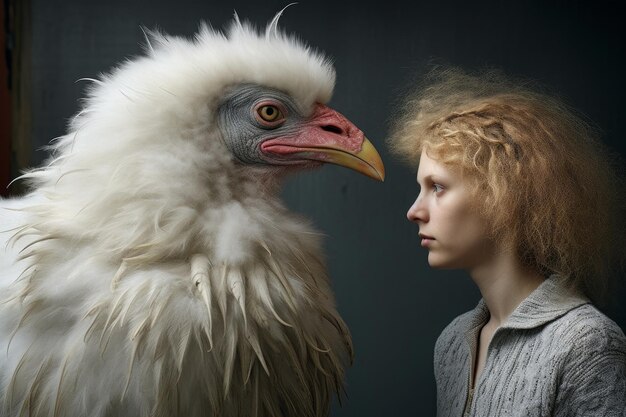
Yet, anthropomorphism is not without its pitfalls. When executed poorly, it can feel manipulative or even unsettling, a phenomenon known as the uncanny valley. A brand that oversteps the boundary between charming and creepy risks alienating its audience. Imagine a mascot with exaggerated human features that veers into grotesque territory—a smile too wide, eyes too large. The result is not endearment but revulsion, a reminder that the line between relatable and repulsive is thinner than we think.
Moreover, anthropomorphism can inadvertently reinforce stereotypes or oversimplify complex issues. A brand that personifies a disease as a villainous character, for example, might trivialize the lived experiences of those affected. The key lies in balance: the humanization must feel authentic, not reductive. It must honor the complexity of the human experience rather than reducing it to a caricature. When done right, anthropomorphism elevates; when done wrong, it erodes trust.
The Future of Connection: Anthropomorphism in the Digital Age
As technology advances, so too does the potential for anthropomorphism. Artificial intelligence and machine learning are enabling brands to create entities that not only look human but behave human—responding to emotions, adapting to context, and even evolving over time. Virtual assistants like Siri or Alexa, with their synthetic voices and programmed personalities, are early examples of this trend. Yet, the future may hold even more sophisticated iterations: brands that feel like friends, products that feel like confidants, and services that feel like partners in our daily lives.
This evolution raises profound questions about the nature of human connection in an increasingly digital world. If a brand can make us laugh, cry, or feel understood, does it matter whether it is human or not? The answer lies in the emotional payoff. Anthropomorphism, at its best, is not about deception; it is about connection. It is a reminder that, in a world of algorithms and automation, the most powerful tool a brand can wield is the ability to make us feel seen.

The next time you encounter an ad where a cereal box winks at you or a car seems to “smile” as it drives by, pause for a moment. Behind that wink or smile lies a carefully crafted strategy—a recognition of our deepest desire to find the human in the inhuman. And in that recognition, brands do not just sell products; they sell belonging.