In the boundless theater of the natural world, wild animals often serve as enigmatic actors, performing roles that resonate deeply within the human psyche. Observers frequently project intricate tapestries of emotions onto these creatures, sculpting narratives that bridge the chasm between species. This proclivity toward attributing emotions to wild animals is not merely a whimsical fancy; it embodies a profound intersection of biology, anthropology, and the human yearning for connection. Delving into why we anthropomorphize wild creatures uncovers layers of cognitive, cultural, and evolutionary underpinnings that shape our collective empathy and curiosity.
The Mirror of Our Own Emotional Landscape
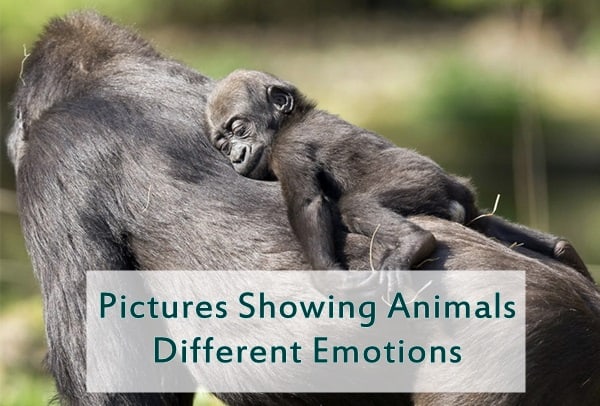
At its core, attributing emotions to wild animals is akin to peering into a reflective pool—where the depths reveal fragments of our inner world. The human brain, wired for social cognition, instinctively interprets facial expressions and behaviors through the lens of familiarity. This neural predisposition stimulates a cascade of empathic responses, encouraging us to assign feelings such as joy, fear, sorrow, or curiosity to animals whose expressions bear semblances to our own.
Consider how a monkey’s cautious glance or a dog’s exuberant tail wag evokes a sense of emotional clarity. These gestures are windows, not only into animal cognition but also into human sentimental projection. This reflective process is not mere anthropomorphism—indiscriminate humanization—but rather an intricate dance of recognition, where shared evolutionary roots reveal a hidden kinship. The emotive bridge we build, thus, is grounded in the universality of survival imperatives and social bonds that transcend species.
Evolutionary Echoes: The Biological Basis of Emotional Attribution
The foundation for attributing emotions to wild animals is entrenched in evolutionary confluence. Mammals, birds, and other vertebrates share homologous brain structures—such as the limbic system—that mediate emotions. This neuroanatomical similarity galvanizes our capacity to perceive emotional states in animals, because many of their behaviors are driven by neural mechanisms mirroring our own.
Emotions serve as adaptive strategies to navigate life’s vicissitudes. The frantic flight of a gazelle, the tender grooming of a primate, or the vigilant stares of wolves are not random acts but complex emotional communications honed through millennia of natural selection. Recognizing these manifestations is, therefore, a biological inevitability, and our attribution of emotion becomes a natural extension of an ancient dialogue embedded within shared heritage.
The Cultural Crucible: Stories, Symbolism, and Collective Imagination
Human cultures have perpetually woven wild animals into the fabric of myth, legend, and allegory. From the cunning fox in Aesop’s fables to the wise owl in indigenous lore, animals become repositories for human virtues, vices, and existential truths. This narrative tradition amplifies our tendency to perceive animals as emotional beings, endowed with qualities reflective of human experience.
Such symbolism not only heightens the animals’ unique appeal but also transforms them into metaphors for human struggles and aspirations. The wolf, often viewed through a prism of fear and reverence, embodies complex emotional states ranging from loneliness to ferocity. This multilayered portrayal enriches our engagement with wildlife, facilitating deeper emotional investment and fostering a collective consciousness attuned to the natural world’s fragility.
The Human-Animal Bond: Empathy as a Survival Mechanism
Empathy is the silent chord that resonates through the human-animal bond. It is through empathic attunement that we attribute emotions to wild animals, recognizing their struggles and triumphs as reflective of our own. This connection serves important adaptive functions, encouraging compassionate behavior and conservation efforts.
Research underscores the role of empathy in promoting prosocial behaviors toward animals, which in turn bolsters ecological stewardship. By perceiving animals as emotional individuals, humans are more inclined to act as guardians rather than exploiters. This empathetic orientation emerges not merely from admiration but from a sophisticated understanding that emotional lives are integral to the wellbeing of other sentient beings.
The Enigma of Subjectivity: The Limits and Implications of Emotional Attribution
While the attribution of emotions to wild animals enriches our understanding, it also poses epistemological challenges. Animals’ subjective experiences remain largely inaccessible, suspended beyond the veil of human perception. This uncertainty invites caution, lest we impose anthropocentric biases that obscure rather than illuminate the true nature of their inner lives.
The conundrum lies in balancing empathy with scientific rigor. Emotional attribution serves as a heuristic, guiding interaction and ethical consideration. Yet, it must be tempered with awareness of behavioral context and species-specific communication modalities. A nuanced approach acknowledges that while animals exhibit behaviors indicative of emotional states, their expression and experience are invariably distinct from human emotion.
The Unique Appeal: Wild Animals as Gateways to Wonder and Reflection
The irresistible allure of attributing emotions to wild animals lies in their role as emissaries of the untamed and mysterious. In their often inscrutable gaze and unpredictable movements, they invite contemplation of life’s elemental forces. This fascination is a portal to wonder, sparking imaginative journeys into realms where instinct and intellect converge.
Through the prism of emotion, animals emerge not as mere specimens but as vibrant testamentaries of earthly resilience and complexity. They embody a living paradox—wild yet intimate, aloof yet profoundly expressive. This duality fuels our fascination, compelling us to navigate the terrain between scientific inquiry and poetic reverie.
Conclusion: A Bridge Beyond Species
Attributing emotions to wild animals constitutes more than a cognitive or cultural exercise. It is a dynamic bridge—spanning neural, evolutionary, and symbolic realms—that connects disparate worlds. This bridge nurtures empathy, guides ethical stewardship, and enriches the human experience with profound reflections on life, survival, and kinship. As we continue to explore the emotional tapestries of wild beings, we not only glimpse their inner lives but also deepen our understanding of what it means to be sentient and interconnected in a vast, shared biosphere.