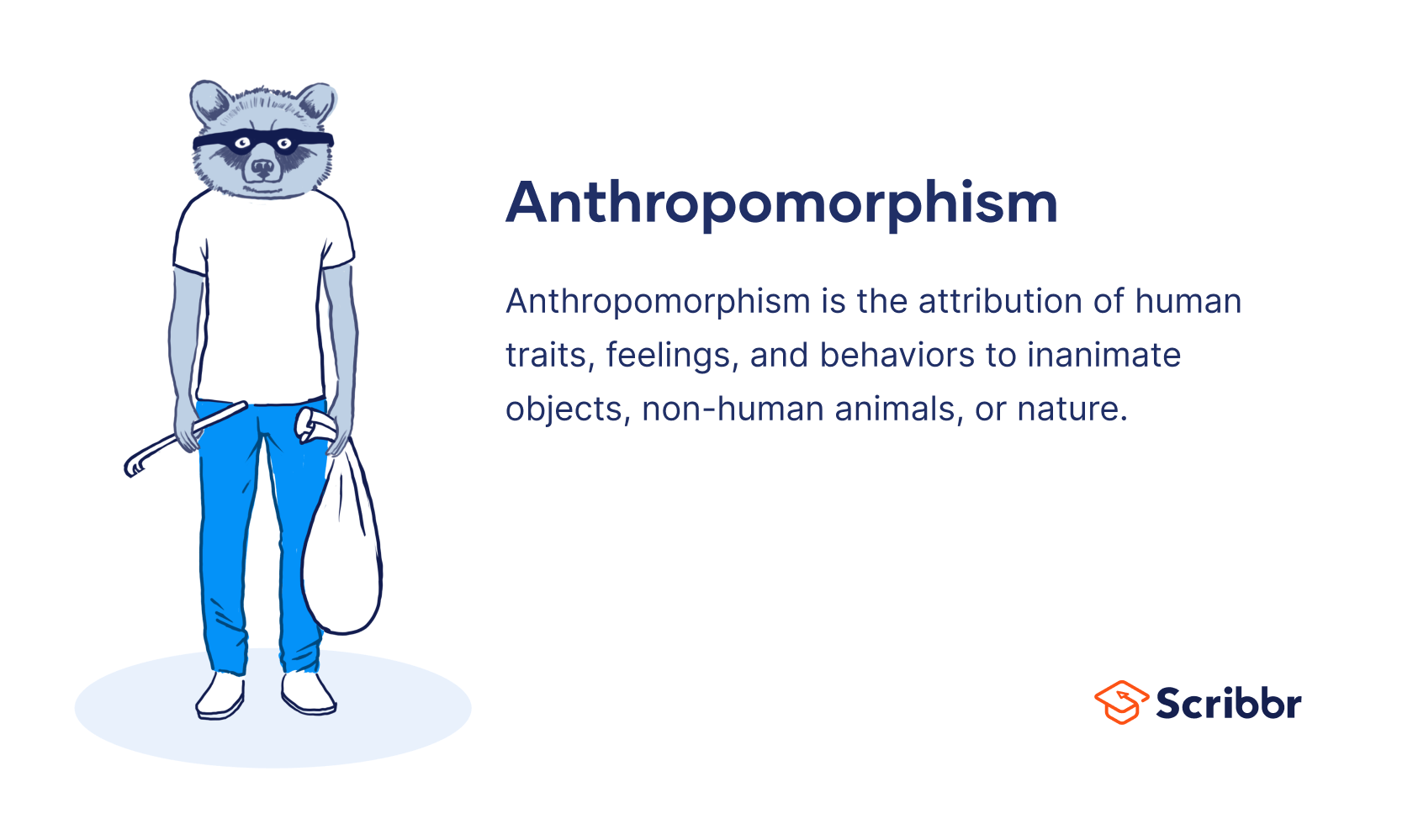
The human brain is an extraordinary organ, capable of feats that blur the line between perception and imagination. One of its most intriguing tendencies is anthropomorphism—the innate proclivity to attribute human traits, emotions, and intentions to non-human entities. Whether it’s a car that “refuses” to start on a cold morning, a pet that “seems guilty” after an accident, or even a storm that “rages” across the sky, our minds instinctively seek patterns of human behavior in the world around us. This cognitive shortcut, while occasionally leading to whimsical misunderstandings, serves as a fundamental survival mechanism, shaping how we interact with technology, nature, and even each other. To unravel the science behind anthropomorphism is to peer into the very architecture of human cognition, where empathy, pattern recognition, and evolutionary imperatives converge.
The Cognitive Foundations of Anthropomorphism: How the Brain Fills in the Blanks
At its core, anthropomorphism is a byproduct of the brain’s relentless pursuit of meaning. Our minds are wired to detect agency—whether in the flicker of a shadow, the hum of a refrigerator, or the sudden silence of a crowded room. This hyperactive agency detection system, a survival trait honed over millennia, errs on the side of caution. Better to assume a rustling bush hides a predator than to dismiss it as the wind and risk becoming prey. Psychologists refer to this as the hyperactive agency detection device (HADD), a neural mechanism that predisposes us to see intention where there may be none.
Neuroimaging studies reveal that when we anthropomorphize, the brain’s temporoparietal junction (TPJ)—a region associated with theory of mind—lights up with activity. This area, which helps us infer the mental states of others, extends its reach to non-human entities, treating them as if they possess consciousness. Meanwhile, the medial prefrontal cortex (mPFC), responsible for self-referential thinking, becomes engaged, blurring the boundaries between “self” and “other.” The result? A seamless projection of human-like qualities onto inanimate objects, animals, or even abstract concepts like fate or luck.
This cognitive habit isn’t merely a quirk of imagination; it’s a testament to the brain’s efficiency. By framing the unfamiliar in familiar terms, we reduce cognitive load, making the world more navigable. A child who fears the “monster under the bed” isn’t just indulging in fantasy—she’s employing a coping strategy, transforming an amorphous fear into a tangible, albeit imaginary, adversary.
Anthropomorphism in Technology: The Rise of the “Friendly” Machine
The digital age has amplified anthropomorphism, transforming cold, unfeeling machines into entities we can relate to—or even befriend. Voice assistants like Siri or Alexa don’t just respond to commands; they adopt personas, complete with names, genders, and conversational quirks. This isn’t accidental. Companies leverage anthropomorphism to foster trust and engagement, turning software into what researchers call social actors. When a GPS system politely announces, “In 500 feet, turn left,” it mimics the tone of a helpful human guide, reducing frustration and increasing compliance.
But the implications run deeper than user experience. Studies show that people are more likely to forgive a device’s errors if it exhibits human-like traits. A robot that “apologizes” for a mistake feels less threatening than one that simply fails. This phenomenon, known as the computers-are-social-actors (CASA) paradigm, demonstrates how deeply ingrained anthropomorphism is in our interactions with technology. Even the design of interfaces plays a role: rounded corners and “smiling” emojis trigger the same neural pathways as human facial expressions, eliciting warmth and approachability.
Yet, this blurring of lines between human and machine raises ethical questions. Should AI be designed to evoke empathy? Can a chatbot’s simulated concern replace human connection? As technology becomes more lifelike, the answers grow murkier, forcing us to confront the boundaries of our own projections.
Anthropomorphism in Nature: When the Wind Whispers and the Trees Watch
Long before the advent of artificial intelligence, humans anthropomorphized the natural world. Ancient cultures personified rivers as gods, storms as vengeful spirits, and animals as moral agents. Today, this tendency persists in subtler forms. We speak of the “wrath” of the ocean, the “patience” of a mountain, or the “intelligence” of a beehive. This isn’t mere poetic license; it’s a cognitive framework that helps us navigate an unpredictable environment.
Research in environmental psychology suggests that anthropomorphism can foster environmental stewardship. When people view forests as “suffering” from deforestation or rivers as “dying” from pollution, they’re more likely to support conservation efforts. The extended self theory posits that by extending our sense of self to include nature, we develop a vested interest in its well-being. This explains why campaigns to “save the planet” resonate more deeply than abstract calls to “reduce carbon emissions.”
However, anthropomorphism in nature isn’t without pitfalls. It can lead to misplaced empathy—for instance, attributing human-like suffering to an insect or dismissing the “aggression” of a predator as morally culpable. Such projections can distort ecological understanding, turning complex systems into simplistic morality plays. The key lies in balancing anthropomorphic intuition with scientific literacy, using our tendency to care as a bridge to deeper knowledge.
The Dark Side of Anthropomorphism: When Projection Becomes Prejudice
While anthropomorphism often serves as a bridge between the known and the unknown, it can also cast long shadows. When applied to social groups, it morphs into a dangerous tool of dehumanization or idealization. Historical examples abound: colonizers justified exploitation by portraying indigenous peoples as “childlike” or “savage,” while modern media often reduces entire cultures to caricatures. Conversely, anthropomorphism can lead to the romanticization of oppressive systems—imagining a “benevolent” dictator or a “noble” slaveholder, for instance.
Psychologically, this stems from the ingroup-outgroup bias, where we reserve full humanity for those we identify with while stripping it from others. The brain’s tendency to anthropomorphize becomes a double-edged sword, capable of both empathy and exclusion. Even in seemingly benign contexts, such as attributing human traits to animals, we risk imposing our own biases. A study found that people were more likely to describe a dog as “loyal” if it was a breed they liked, revealing how anthropomorphism can be swayed by preexisting preferences.
Recognizing this shadow side is crucial in an era where AI, deepfakes, and synthetic media blur the line between human and non-human entities. The ethical imperative isn’t to abandon anthropomorphism entirely but to wield it with awareness, ensuring that our projections align with reality rather than distort it.
Anthropomorphism in Art and Storytelling: The Alchemy of Empathy
From Aesop’s fables to Pixar’s Toy Story, anthropomorphism has been the lifeblood of storytelling. By endowing animals, objects, or even abstract concepts with human motivations, artists create narratives that resonate on a visceral level. This isn’t just about entertainment; it’s about tapping into the brain’s mirror neuron system, which fires not only when we perform an action but also when we observe someone else doing it. When a cartoon fox “smiles,” our own facial muscles subtly mimic the expression, fostering a sense of connection.
Literature, too, thrives on anthropomorphism. Shakespeare’s Macbeth personifies guilt as a “bloody hand,” while Mary Shelley’s Frankenstein forces readers to grapple with the humanity of a creature labeled a “monster.” These techniques work because they leverage our brain’s predisposition to see intention and emotion everywhere. Even in visual art, the use of anthropomorphic forms—such as the smiling sun in ancient Egyptian hieroglyphs—serves as a universal language, transcending cultural barriers.
In the digital age, this tradition has evolved into interactive anthropomorphism, where video game characters or virtual pets develop “personalities” based on player interactions. Games like The Sims or Animal Crossing exploit our innate desire to nurture and be nurtured, creating feedback loops of engagement. The success of these platforms underscores a fundamental truth: anthropomorphism isn’t just a cognitive quirk; it’s a cornerstone of human connection.
Cultivating Mindful Anthropomorphism: Balancing Intuition and Reality
Given its ubiquity, anthropomorphism isn’t something we can—or should—eliminate. Instead, the goal is to harness its power while mitigating its risks. This begins with self-awareness: recognizing when we’re projecting human traits onto non-human entities and questioning why. Are we anthropomorphizing to feel in control? To avoid discomfort? To simplify complexity?
Education plays a pivotal role here. Teaching critical thinking alongside empathy can help individuals distinguish between metaphorical and literal truth. For instance, a child who learns that a volcano isn’t “angry” but is instead the result of tectonic activity gains both scientific literacy and emotional resilience. Similarly, in the realm of AI, designing systems that acknowledge their limitations—rather than pretending to be human—can foster healthier interactions.
Ultimately, anthropomorphism is a testament to the brain’s creativity and adaptability. It’s what allows us to find solace in a pet’s companionship, marvel at the “intelligence” of an ant colony, and even grieve for a fictional character as if they were real. By understanding its mechanisms, we can navigate a world where the line between human and non-human grows ever more porous—without losing sight of what it means to be human in the first place.