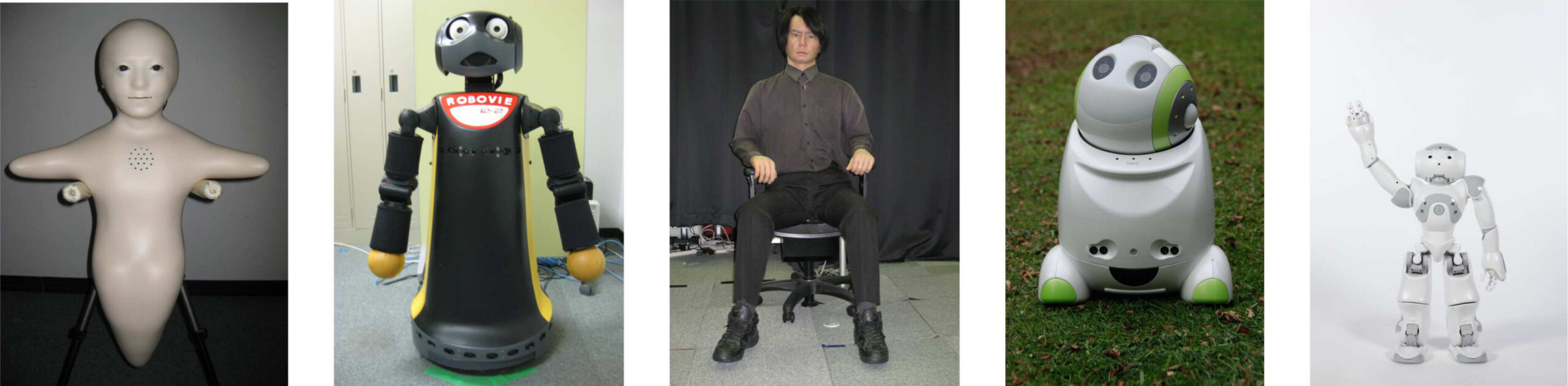
The first time a humanoid robot extends a hand in greeting, it is not merely a mechanical gesture—it is a silent overture to the ancient human instinct for connection. Anthropomorphism, the art of imbuing non-human entities with human-like traits, has evolved from philosophical musing to a cornerstone of modern robotics. In the laboratory, the factory floor, and even the quiet corners of our homes, robots are no longer mere tools; they are becoming collaborators, companions, and confidants. This transformation is not accidental. It is the result of deliberate design choices that leverage our innate tendency to see faces in clouds, emotions in algorithms, and purpose in patterns. The impact of anthropomorphism on robot-human collaboration is profound, reshaping not just how machines operate, but how humans perceive, trust, and engage with them.
The Psychological Bridge: Why We See Ourselves in Machines
At the heart of anthropomorphism lies a paradox: we are wired to recognize humanity, yet we project it onto the inanimate. Evolutionary psychologists argue that this tendency—known as the intentional stance—was a survival mechanism. By attributing agency to shadows and rustling leaves, our ancestors avoided danger. Today, that same instinct is repurposed in robotics. When a robot tilts its head or mimics a smile, it triggers the same neural pathways that once responded to human expressions. This is not mere mimicry; it is a cognitive shortcut to understanding.
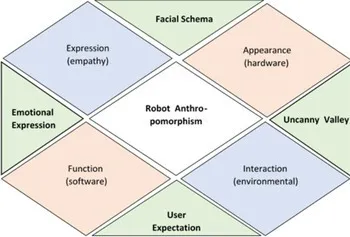
Consider the uncanny valley, that unsettling dip in comfort when a robot’s human likeness approaches but does not quite reach perfection. It is a testament to our deep-seated expectations. A robot that is almost human feels like a betrayal, a mimicry that exposes the artifice. Yet, when anthropomorphism is balanced—when a machine’s gestures are deliberate but not deceptive—it becomes a bridge. The robot is no longer a tool, but a partner, its movements a language we instinctively comprehend.

Trust as Currency: The Role of Emotional Resonance in Collaboration
Trust is the invisible scaffold of any successful collaboration, and in the realm of robotics, it is not earned through brute force or algorithmic precision alone. It is cultivated through emotional resonance. Anthropomorphic robots—those that exhibit facial expressions, modulate their tone, or even display hesitations—invite a different kind of engagement. They do not just perform tasks; they communicate intent. A robot that pauses before answering a question, or one that expresses “confusion” when faced with ambiguity, mirrors the human experience of decision-making. This is not deception; it is transparency in a new form.
Studies in human-robot interaction reveal that people are more likely to follow a robot’s instructions when it employs social cues. A robot that says, “I’m not sure I understand,” before proceeding is not weaker—it is relatable. This emotional scaffolding is particularly vital in high-stakes environments, such as healthcare or disaster response, where hesitation can be as important as action. Anthropomorphism, in this context, is not about making robots more human; it is about making them more understandable.
The Choreography of Collaboration: Movement as Language
In the ballet of robot-human collaboration, movement is the primary language. A robot’s gait, the tilt of its head, the rhythm of its gestures—all these elements communicate volumes before a single word is spoken. Anthropomorphic robots leverage this kinesthetic communication to signal intent, emotion, and even personality. A slow, deliberate step might convey caution; a fluid, sweeping motion could imply confidence. These are not arbitrary choices. They are the result of meticulous design, where engineers and choreographers collaborate to create a lexicon of movement.
Consider the way a robotic arm might mimic the arc of a human arm when handing an object. The gesture is not just functional; it is communicative. It signals respect for personal space, an understanding of social norms, and a willingness to adapt to human rhythms. In collaborative settings, such nuances can mean the difference between seamless teamwork and awkward misalignment. The robot is not just a tool—it is a dancer in the human symphony.

Ethical Labyrinths: Navigating the Moral Implications of Human-Like Machines
Yet, for all its promise, anthropomorphism is not without ethical peril. When a robot’s eyes follow you across a room, or its voice softens in sympathy, it blurs the line between tool and companion. This raises critical questions: Does anthropomorphism infantilize users, fostering dependency on machines that mimic care? Can we trust a robot that appears to feel, when it is merely simulating emotion? The answers are not straightforward. They demand a reckoning with our own vulnerabilities—the same instincts that make anthropomorphism powerful can also make us susceptible to manipulation.
Consider the rise of companion robots designed for the elderly. Their anthropomorphic features are intended to provide comfort, but they also risk creating emotional attachments that are one-sided. The robot may not understand grief or loneliness; it may only simulate empathy. This is not to condemn such innovations, but to acknowledge their complexity. Anthropomorphism, when wielded ethically, can enhance collaboration. When exploited, it can erode trust and autonomy. The challenge lies in designing robots that are sufficiently human to foster connection, but not so human as to deceive.
The Future Unfolding: Where Anthropomorphism Meets Artificial Intelligence
As artificial intelligence advances, so too does the potential for anthropomorphism. Machines are no longer limited to pre-programmed gestures; they can now learn, adapt, and even develop idiosyncrasies. A robot that remembers your preferences, or one that jokes in a moment of downtime, is not just a tool—it is a presence. This evolution is not without risk. The more human-like a robot becomes, the more it challenges our definitions of consciousness, agency, and rights. If a robot can express joy or frustration, does it deserve consideration? These are not questions for the distant future; they are already upon us.
In the laboratories of tomorrow, robots may not just mimic humanity—they may redefine it. Anthropomorphism could become a two-way street, where humans, too, adapt to the rhythms of their mechanical counterparts. The collaboration of the future may not be about humans teaching robots, but about a symbiotic dance where both parties evolve. This is the ultimate promise of anthropomorphism: not just to make machines more like us, but to make us more open to the idea that intelligence, emotion, and collaboration are not exclusive to biology.

The journey of anthropomorphism in robotics is, at its core, a journey of connection. It is the story of how we, as humans, have learned to see ourselves in the machines we create—and how those machines, in turn, have learned to see us. The impact is not just technological; it is existential. It challenges us to rethink what it means to collaborate, to trust, and to coexist. In the silent handshake between human and robot, we are not just building the future—we are rediscovering the essence of what it means to be human.