Have you ever caught yourself apologizing to your laptop when it freezes mid-task, or scolding a stubborn jar lid for refusing to budge? If so, you’ve already dipped your toes into the fascinating world of anthropomorphism—the art of imbuing non-human entities with human traits, intentions, or emotions. But what if this tendency isn’t just a quirky habit of the human mind? What if it’s a fundamental lens through which we interpret the world, shaping everything from our relationships with technology to our understanding of nature? Let’s unravel the threads of this cognitive tapestry, exploring its roots, its quirks, and the unexpected challenges it poses to our perception of reality.
The Genesis of Giving Life to the Inanimate
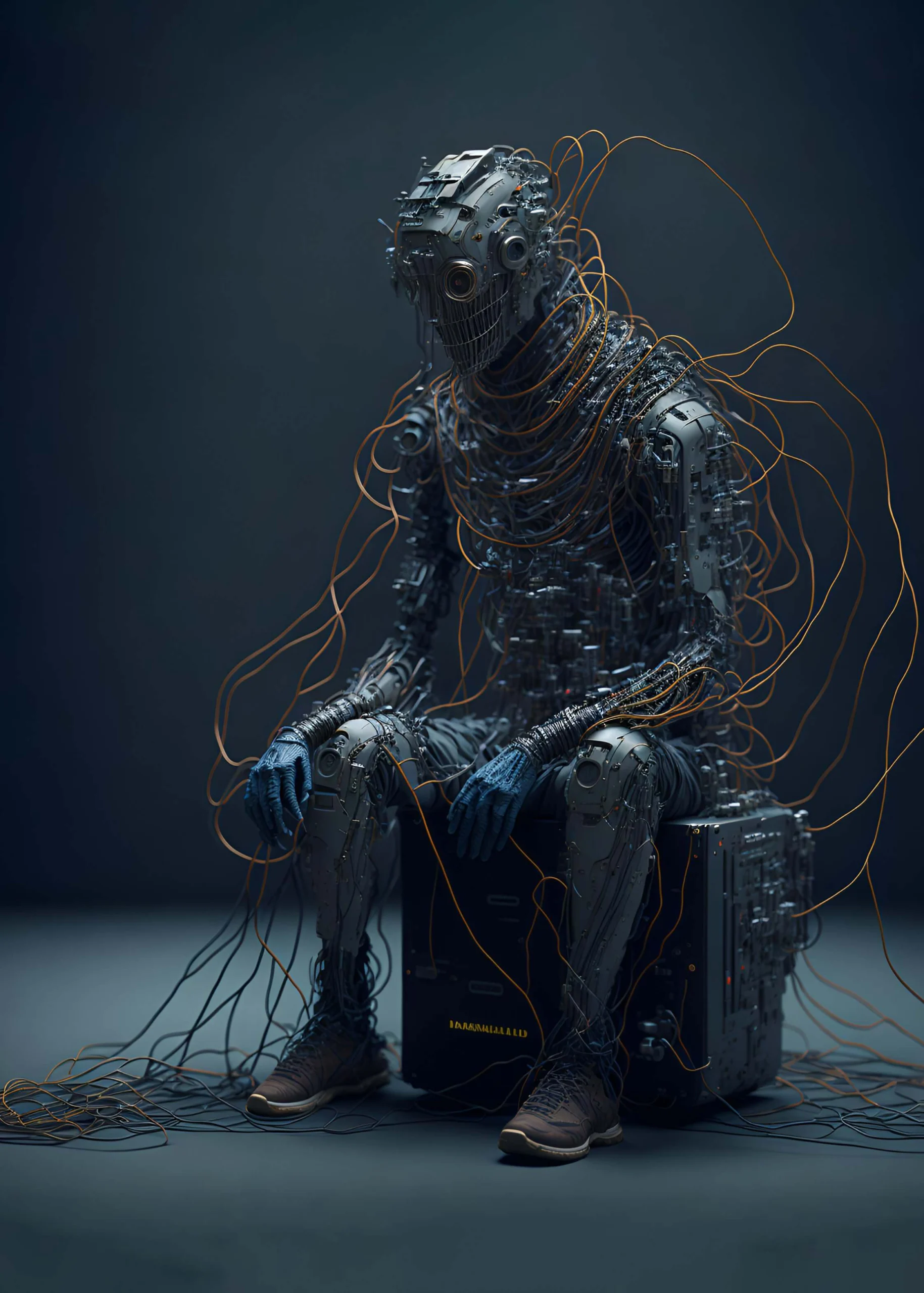
Anthropomorphism isn’t a modern invention; it’s an ancient cognitive shortcut. From the earliest cave paintings depicting animals with human-like postures to the pantheons of gods and deities that mirrored human virtues and flaws, our ancestors projected humanity onto the cosmos. This tendency, known as intentional stance by philosopher Daniel Dennett, suggests that attributing agency to non-sentient objects is a survival mechanism. By assuming a rock might roll or a river might “want” to flood, early humans prepared for potential threats. Today, this instinct manifests in our interactions with everything from Roombas that “avoid” obstacles to chatbots that “refuse” to answer questions.
The allure of anthropomorphism lies in its simplicity. It transforms the alien into the familiar, the chaotic into the comprehensible. Yet, this cognitive convenience comes with a cost: the blurring of boundaries between the animate and inanimate. Consider how we describe hurricanes as “angry” or markets as “nervous.” These metaphors aren’t just linguistic flourishes; they shape our emotional responses and, in some cases, our policy decisions. The challenge? Recognizing when our brains are over-eager to humanize, and when doing so might lead us astray.
The Double-Edged Sword: Benefits and Biases
Anthropomorphism isn’t inherently good or bad—it’s a tool, and like any tool, its impact depends on how we wield it. On the bright side, it fosters empathy and connection. A child who names their stuffed animal isn’t just playing; they’re practicing emotional attunement. In robotics, anthropomorphic designs—think of humanoid robots or voice assistants with “personalities”—can make technology more approachable, reducing the intimidation factor for users. Studies even show that people are more likely to conserve energy when their smart meters display “smiley faces” for low usage, proving that a dash of personality can drive behavior change.
Yet, the shadow side of anthropomorphism is long and insidious. It can distort our judgment, leading us to trust machines or systems too much. Have you ever blamed a GPS for giving “bad directions,” as if it had malicious intent? This automation bias—the tendency to over-rely on automated systems—can have dire consequences, from misplaced trust in faulty algorithms to the eerie phenomenon of “AI personhood,” where users anthropomorphize chatbots to the point of divulging personal secrets. The challenge intensifies when anthropomorphism intersects with ethics. Should we grant legal rights to rivers, as some Indigenous cultures and modern legal movements advocate? Or does projecting humanity onto ecosystems risk oversimplifying complex ecological relationships?
The Science Behind Seeing Faces in the Dark
Why do we see faces in clouds, or hear whispers in static? The answer lies in our brain’s pareidolia—a perceptual phenomenon where we detect patterns, especially faces, where none exist. This quirk isn’t a glitch; it’s a feature of our visual system, honed by evolution to prioritize threat detection. A rustling bush might be the wind—or it might be a predator. Our ancestors who erred on the side of caution survived to pass on their genes. Today, this same mechanism explains why we anthropomorphize everything from toasters that “burn” our toast to cars that “refuse” to start on cold mornings.
Neuroscientists have pinpointed the fusiform face area (FFA) in the brain as the hotspot for this phenomenon. When we encounter ambiguous stimuli, the FFA lights up, primed to find human-like features. This explains why we’re more likely to anthropomorphize objects that resemble faces or bodies, even subtly. A car with a grille that looks like a frown might feel “sad” to us, while a robot with large, expressive eyes might seem “friendly.” The challenge? Our brains are so eager to find humanity that they’ll invent it where it doesn’t exist—a phenomenon marketers and designers exploit ruthlessly.
The Ethical Labyrinth: When Does Personification Cross the Line?
As technology advances, the line between anthropomorphism and deception grows thinner. Consider the case of social robots, like those designed for elder care or autism therapy. These machines are programmed to mimic empathy, using facial expressions and tone of voice to create the illusion of understanding. While they can provide comfort, they also raise ethical questions: Are we exploiting users’ emotional vulnerabilities by blurring the line between machine and human? Should a robot that “expresses” sadness when ignored be held to the same ethical standards as a human caregiver?
The challenge deepens with generative AI. When a chatbot writes a poem that moves us to tears, or a virtual assistant “remembers” our preferences, we’re tempted to ascribe it a soul. But does this personification risk eroding our capacity for genuine human connection? Some psychologists warn that excessive anthropomorphism could lead to a society where people prefer the company of algorithms over other humans—a phenomenon already observed in Japan’s hikikomori subculture, where individuals withdraw from society in favor of virtual relationships. The ethical tightrope we walk demands a delicate balance: leveraging anthropomorphism for connection without succumbing to its potential to isolate.
Anthropomorphism in the Wild: From Myths to Machines
Anthropomorphism isn’t confined to the realm of psychology or ethics; it’s a cultural force that shapes art, religion, and even science. In mythology, gods take human form to teach moral lessons, while in literature, animals often embody human virtues and vices—think of Aesop’s fables or Orwell’s Animal Farm. Even in science, anthropomorphism has played a role: early astronomers named constellations after mythological figures, and biologists once described animal behaviors in human terms, like a “dominant” wolf or a “jealous” peacock. Today, this tendency extends to our relationship with artificial intelligence, where we debate whether machines can be “creative” or “deceptive.”
The challenge for modern society is to harness the power of anthropomorphism without losing sight of its limitations. We can appreciate the beauty of a poem written by an AI without believing it was “inspired” by human emotion. We can design robots that comfort without deceiving users into thinking they possess genuine empathy. The key lies in awareness: recognizing when we’re anthropomorphizing, questioning why we do it, and deciding whether it serves a purpose—or merely indulges a cognitive habit.
The Future: Navigating a World of Humanized Machines
As we stand on the precipice of an era where AI and robots become ubiquitous, the stakes of anthropomorphism have never been higher. Will we create a world where machines are our companions, or will we lose ourselves in the illusion of their humanity? The answer may lie in our ability to cultivate anthropomorphic literacy—the skill to recognize when we’re projecting humanity onto non-human entities and to decide when it’s appropriate to do so.
Imagine a future where AI assistants are transparent about their limitations, where robots designed for companionship come with clear disclaimers about their lack of true emotion. In this world, anthropomorphism becomes a tool for connection rather than a crutch for misunderstanding. The challenge will be to teach this literacy not just to adults, but to children, who are growing up in a world where Siri and Alexa are as familiar as teachers and parents. How will we guide them to distinguish between the playful act of naming a favorite toy and the dangerous assumption that a chatbot “cares” about their well-being?
The journey through the landscape of anthropomorphism is one of paradoxes: it reveals our capacity for empathy while exposing our vulnerability to deception. It simplifies the complex while risking oversimplification. Yet, if we approach it with curiosity and caution, anthropomorphism can be more than a cognitive shortcut—it can be a bridge between the human and the non-human, a way to find connection in a world that often feels alien and indifferent. The question isn’t whether we should anthropomorphize, but how we can do it wisely, ethically, and with open eyes.

![Case Study: How [Author] Used Anthropomorphism to Teach Life Lessons](https://anthropomorphism.org/wp-content/uploads/2026/05/10-Life-Lessons-Sports-Can-Teach-Us-All.jpg)