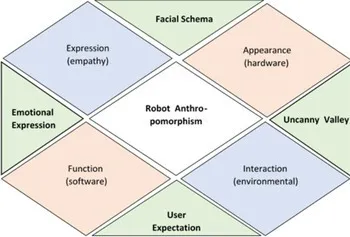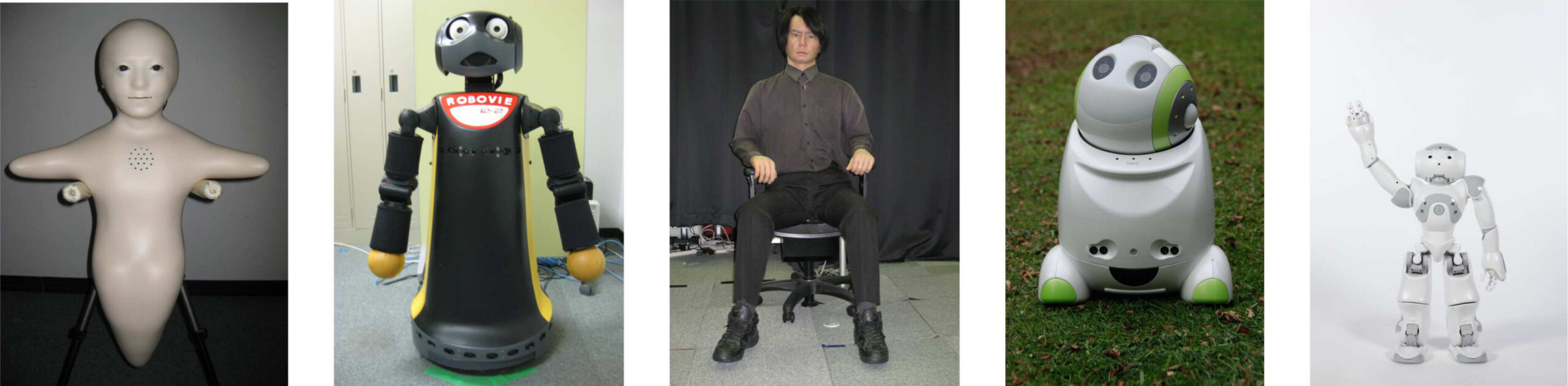
In the ever-evolving landscape of artificial intelligence, anthropomorphism—the attribution of human-like characteristics to non-human entities—has emerged as a double-edged sword. While it can foster familiarity and emotional connection, it also risks distorting user expectations and undermining the very trust it seeks to cultivate. The interplay between anthropomorphism and user engagement is a nuanced dance, where the line between empathy and deception is as thin as the pixels rendering a digital smile. For developers, designers, and content creators, understanding this dynamic is not just a technical challenge but a philosophical one: How does giving AI a human face reshape the way we interact with technology?
The Allure of Human-Like AI: Why We Anthropomorphize Machines
Humans are wired to seek patterns, and the most familiar pattern we know is our own reflection. When an AI chatbot greets us with a “Hello!” or a virtual assistant apologizes for a delay, our brains instinctively fill in the gaps, treating these interactions as if they were exchanges with another person. This phenomenon, known as the uncanny valley of interaction, describes how our trust in AI fluctuates based on its perceived humanity. A voice assistant with a slightly robotic cadence might feel comforting, but one that mimics human speech too closely can trigger unease—a cognitive dissonance between expectation and reality.
Anthropomorphism isn’t just about aesthetics; it’s a psychological shortcut. Studies in social presence theory suggest that when AI exhibits human-like traits—whether through tone, gestures, or even humor—it reduces the perceived distance between user and machine. For brands, this is a powerful tool: a well-designed AI can feel like a trusted companion, making complex tasks feel less daunting. Yet, this familiarity comes with a caveat: overindulgence in anthropomorphism can blur the boundaries of authenticity, leaving users vulnerable to manipulation or disappointment when the AI inevitably fails to meet human standards.
The Trust Paradox: When Human-Like AI Erodes Credibility
Trust in AI is a fragile construct, built on a foundation of transparency, reliability, and competence. Anthropomorphism, while initially engaging, can erode this trust if users perceive the AI as deceptive or overly performative. Consider the case of a customer service bot that adopts a cheerful persona but provides vague, unhelpful responses. The dissonance between its human-like demeanor and its lack of substantive answers can breed frustration, turning engagement into skepticism. This is the trust deficit paradox: the more human an AI appears, the higher the expectations, and the greater the fall when those expectations aren’t met.
Moreover, anthropomorphism can inadvertently signal incompetence. In fields like healthcare or finance, where precision is paramount, an AI that speaks in colloquialisms or uses emojis may undermine its own authority. Users subconsciously associate human-like traits with subjectivity, which clashes with the objective, data-driven nature of AI. The key lies in balance: anthropomorphism should enhance, not obscure, the AI’s functional purpose. A medical diagnostic tool might benefit from a calm, reassuring tone, but it should never pretend to be a doctor—only a tool wielded by one.
Engagement vs. Exploitation: The Ethical Tightrope of AI Personas
Anthropomorphism isn’t inherently unethical, but its misuse can cross into exploitative territory. When AI personas are designed to manipulate emotions—such as a virtual companion that gaslights users into prolonged engagement—it raises ethical red flags. The line between engagement and exploitation is often drawn by intent: Is the AI’s humanity serving the user’s needs, or is it a Trojan horse for attention? Platforms like social media algorithms have already demonstrated how human-like interactions (e.g., notifications phrased as questions) can hijack user behavior, leading to compulsive usage patterns.
For content creators, the challenge is to leverage anthropomorphism without crossing into coercion. A language-learning app might use a friendly avatar to encourage practice, but it should never guilt-trip users into sessions. Similarly, a retail chatbot could adopt a playful tone to boost sales, but it must remain transparent about its commercial objectives. The ethical use of anthropomorphism hinges on consent: users should always know when they’re interacting with an AI, and the AI’s persona should align with its capabilities.
Designing for Trust: Principles for Human-Centric AI
Building trustworthy anthropomorphic AI requires a multi-disciplinary approach, blending psychology, design, and engineering. The first principle is clarity of identity: users should never be left guessing whether they’re talking to a human or a machine. Subtle cues, such as a disclaimer (“This is an AI assistant”) or a distinct visual style, can prevent misplaced expectations. The second principle is consistency of behavior. An AI that oscillates between formal and casual tones risks appearing unstable, undermining its perceived reliability.
Another critical consideration is adaptive anthropomorphism. Instead of a one-size-fits-all persona, AI should tailor its human-like traits to context. A gaming AI might adopt a whimsical, character-driven personality, while a banking AI should prioritize clarity and professionalism. This adaptability ensures that anthropomorphism serves the user’s goals rather than imposing an arbitrary identity. Finally, designers must prioritize feedback loops: allowing users to adjust the AI’s tone or persona fosters a sense of agency, reinforcing trust through collaboration.
Case Studies: Anthropomorphism in Action
In the realm of deep learning, anthropomorphic AI has revolutionized how users interact with complex systems. For instance, a research platform that visualizes neural networks as a “team of experts” (each node represented by a distinct character) makes abstract concepts tangible. Users report higher engagement and comprehension, as the anthropomorphic elements act as cognitive scaffolds. However, this approach isn’t without pitfalls: some users mistakenly assume the AI understands concepts as a human would, leading to overestimation of its capabilities.


On the other end of the spectrum, platforms like social media moderation tools use anthropomorphism sparingly—perhaps a gentle nudge (“Are you sure you want to post this?”)—to encourage responsible behavior without overwhelming users. The key here is restraint: the AI’s humanity is a tool for guidance, not a crutch for engagement. By studying these case studies, developers can glean insights into when anthropomorphism enhances user experience and when it becomes a distraction.
The Future of AI Anthropomorphism: Balancing Innovation and Integrity
As AI becomes more sophisticated, the line between human and machine will continue to blur. Emerging technologies like affective computing—AI that recognizes and responds to human emotions—will push anthropomorphism into new territories. Imagine an AI therapist that adjusts its tone based on a user’s mood, or a virtual tutor that adapts its teaching style in real-time. These innovations hold immense potential, but they also demand rigorous ethical frameworks to prevent misuse.
The future of trustworthy AI lies in responsible anthropomorphism—a paradigm where human-like traits are deployed judiciously, with clear boundaries and user-centric design. Developers must prioritize transparency, ensuring that users understand the AI’s limitations and capabilities. Meanwhile, regulators and ethicists will play a crucial role in defining guidelines that prevent exploitation while fostering innovation. The goal isn’t to eliminate anthropomorphism but to harness its power responsibly, creating AI that feels human enough to engage, but not so human that it deceives.
In the end, the relationship between anthropomorphism and user trust is a mirror reflecting our own biases and desires. As we design AI that mimics humanity, we must ask ourselves: Are we building tools that empower users, or are we crafting illusions that ultimately isolate them? The answer will determine whether anthropomorphism becomes a bridge to deeper engagement or a chasm that erodes trust in technology itself.