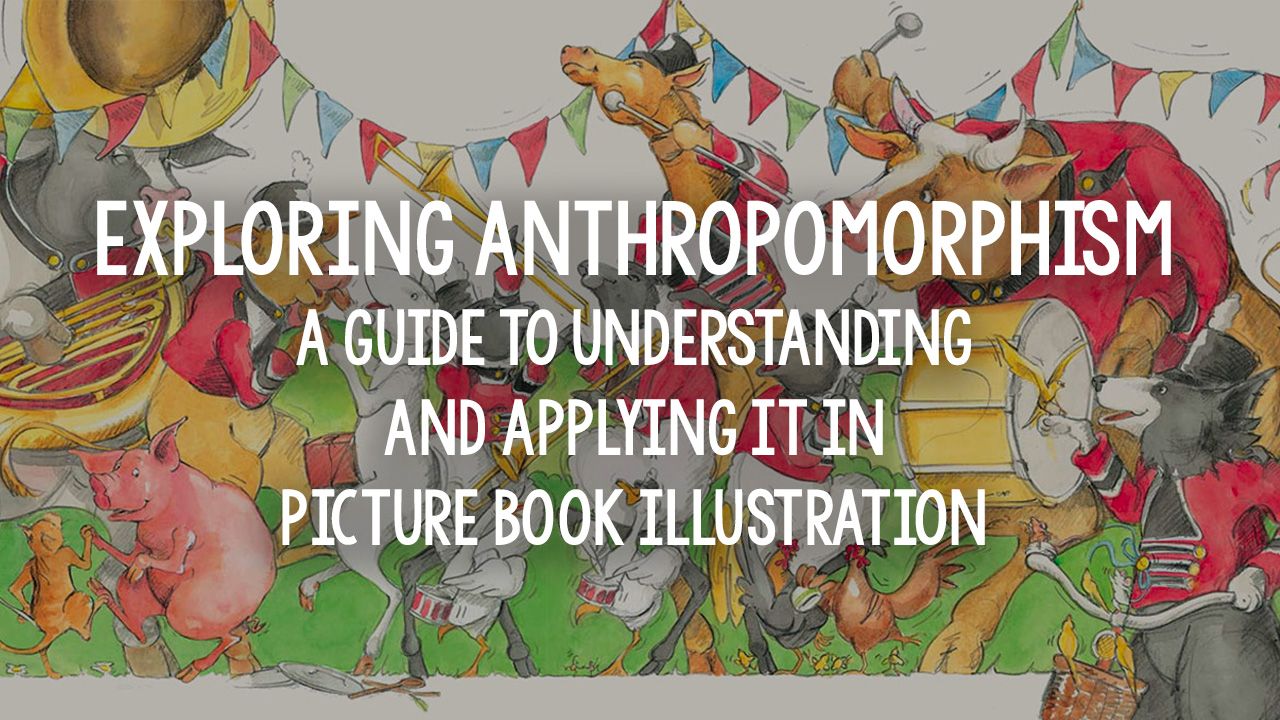
What if the trees whispered secrets to those who listened? What if the rivers carried memories of civilizations long forgotten? What if the stars themselves were not mere celestial bodies, but ancient storytellers watching over humanity? These questions, though whimsical at first glance, lie at the heart of one of humanity’s most enduring narrative devices: anthropomorphism. The act of imbuing non-human entities—animals, objects, natural phenomena, or even abstract concepts—with human traits, emotions, and intentions has woven itself into the very fabric of folklore and mythology across cultures. But why does this practice persist? And what challenges does it pose to our understanding of storytelling and human cognition?
The Allure of the Humanized World: Why Anthropomorphism Endures
Anthropomorphism is not merely a literary flourish; it is a cognitive bridge. Humans are wired to seek patterns, to assign agency, and to interpret the world through the lens of their own experiences. When a storm rages, it is easier to imagine an enraged deity hurling thunderbolts than to confront the chaotic indifference of atmospheric physics. This tendency, known as intentional stance—a term coined by philosopher Daniel Dennett—reflects our innate drive to predict and explain behavior by attributing human-like motivations to non-human agents.
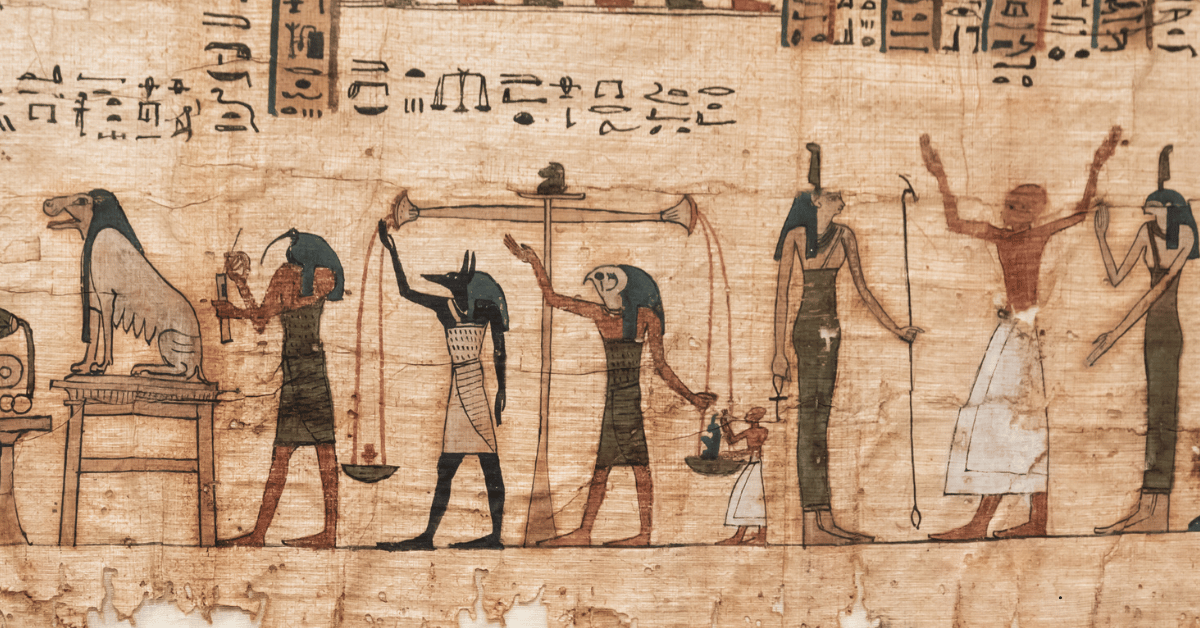
In folklore, this manifests in a dazzling array of forms. The trickster fox of Japanese yōkai tales, who outwits both gods and mortals, is not just a clever animal but a mirror reflecting human cunning and folly. Similarly, the Greek god Zeus, though a thunder-wielding sovereign, is as prone to petty jealousies and vengeful tantrums as any mortal king. By humanizing the divine and the natural, early storytellers rendered the incomprehensible comprehensible. A flood was no longer a random deluge but a divine punishment; a drought was not a meteorological anomaly but the wrath of a neglected deity. Anthropomorphism, in this sense, was a tool for making the world feel less alien and more navigable.
The Dual Nature of Anthropomorphism: Gift and Curse
Yet, for all its narrative power, anthropomorphism is a double-edged sword. On one hand, it fosters empathy. When a child reads about a lonely cloud shedding tears in a children’s story, they learn to project their own emotions onto the world around them, nurturing emotional intelligence. On the other hand, it risks trivializing complex systems. To reduce a river to a “weeping maiden” or a mountain to a “sleeping giant” may simplify its ecological or geological significance, but it also risks obscuring the very real consequences of human actions—like pollution or deforestation—by framing nature as a passive participant in human dramas.
Consider the paradox of the anthropomorphic fallacy: the tendency to overestimate the intelligence or intentions of non-human entities. A classic example is the ancient belief that the sun “chases” the moon across the sky, as if celestial bodies were engaged in a celestial game of tag. While charming, such interpretations can lead to misconceptions that persist for generations. The challenge, then, is to wield anthropomorphism as a lens rather than a veil—using it to illuminate human experiences without eclipsing the truths of the non-human world.
Cultural Variations: How Different Traditions Humanize the Inhuman
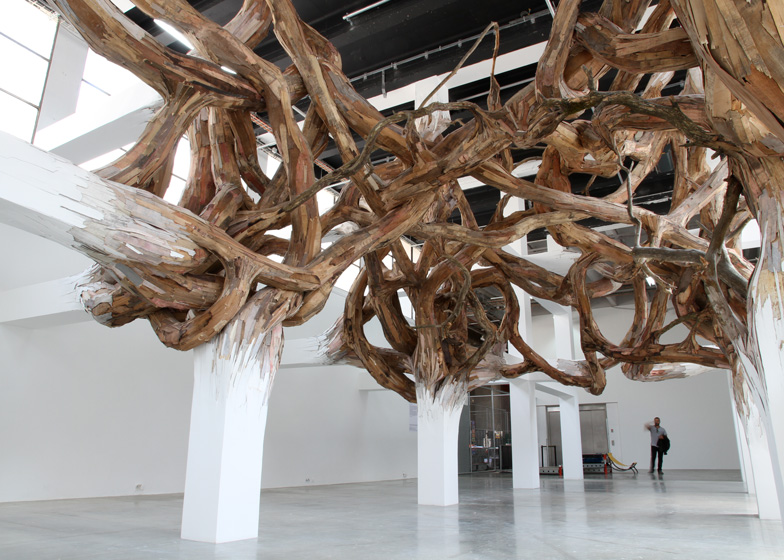
The practice of anthropomorphism is not monolithic; it varies wildly across cultures, each adding its own flavor to the humanized cosmos. In Norse mythology, the world tree Yggdrasil is not just a colossal oak but a living, breathing entity whose roots and branches cradle the nine realms. Its “health” is tied to the fate of the cosmos, making it a sentient force rather than a mere plant. Meanwhile, in Hindu traditions, the river goddess Ganga is venerated not as a body of water but as a divine mother whose waters purify sins and grant blessings. Here, anthropomorphism transcends mere personification—it becomes a form of worship, a way to engage with the sacred.
Contrast this with the animistic traditions of Indigenous Australian cultures, where every rock, tree, and waterhole is believed to possess a spirit or ancestral presence. Unlike Western anthropomorphism, which often centers on human-like figures, these traditions emphasize a more fluid, less hierarchical relationship between humans and the non-human world. The challenge for outsiders interpreting such narratives is to avoid reducing them to mere “primitive” versions of human-centric storytelling. Instead, they invite us to reconsider what it means to be human in a world where agency is not exclusive to our species.
The Psychological Underpinnings: Why We Can’t Help But Humanize
To understand why anthropomorphism is so pervasive, we must delve into the psychology of perception. Studies in cognitive science suggest that our brains are predisposed to detect faces and human-like patterns, a phenomenon known as pareidolia. This explains why we see “smiling” suns in children’s drawings or why the man in the moon feels like a familiar companion rather than a random arrangement of craters. Evolutionarily, this tendency may have conferred survival advantages: attributing agency to predators or prey could mean the difference between life and death.
Moreover, anthropomorphism serves a social function. By projecting human traits onto animals or objects, we create a shared language of emotion and intention. A dog that “smiles” or a car that “purrs” becomes a participant in our social world, fostering bonds that transcend species boundaries. This is why mascots, from the Geico gecko to the Michelin Man, are so effective—they turn inanimate or non-human entities into relatable characters, making complex ideas (like insurance or tire durability) more digestible.
The Ethical Dilemma: When Anthropomorphism Crosses the Line
Yet, anthropomorphism is not without its ethical pitfalls. When corporations personify their products—think of the “M&M’s” characters or the “Pillsbury Doughboy”—they risk blurring the line between commodity and consciousness. Does a talking cereal box trivialize the very concept of personhood? Similarly, in environmental discourse, anthropomorphizing nature can both inspire conservation efforts and undermine them. On one hand, stories of “Mother Earth” being “wounded” by pollution evoke empathy; on the other, they risk infantilizing the natural world, reducing it to a passive victim rather than an active, complex system.
The challenge, then, is to strike a balance. Anthropomorphism can be a powerful tool for advocacy, but it must be used judiciously. When does humanizing nature become a form of exploitation? When does it cross into the realm of speciesism—the belief that human traits are inherently superior to those of other beings? These are not just philosophical questions; they are practical ones, shaping how we design policies, craft narratives, and interact with the world around us.
The Future of Anthropomorphism: From Myth to Machine
As technology advances, anthropomorphism takes on new dimensions. Artificial intelligence, with its chatbots and virtual assistants, is often designed to mimic human speech patterns, emotions, and even flaws. The challenge here is to avoid creating a new form of anthropomorphic fallacy: the assumption that AI possesses true understanding or consciousness simply because it can mimic human behavior. This is the ELIZA effect, named after the early chatbot that convinced users it was empathetic, despite having no genuine emotional capacity.
Yet, this new frontier also offers opportunities. Anthropomorphism in AI can make technology more accessible, bridging the gap between human and machine. A voice assistant that “apologizes” for a mistake feels more relatable than a cold, error-reporting system. The key is to recognize the boundaries—to celebrate the human-like qualities of technology without conflating them with genuine sentience. After all, the goal is not to create machines that think like humans, but to create tools that serve humans in ways that feel intuitive and humane.
Anthropomorphism, then, is more than a storytelling device—it is a mirror reflecting our deepest fears, desires, and curiosities. It allows us to confront the unknown by framing it in familiar terms, whether that unknown is a storm, a god, or an algorithm. Yet, it also challenges us to question the limits of our projections, to distinguish between empathy and projection, and to recognize when our human-centric narratives might be doing more harm than good.
So the next time you see a cloud that looks like a dragon or a river that seems to sigh, pause for a moment. Is it the world speaking to you—or is it your mind, reaching out to make sense of the chaos? The answer may lie somewhere in between.