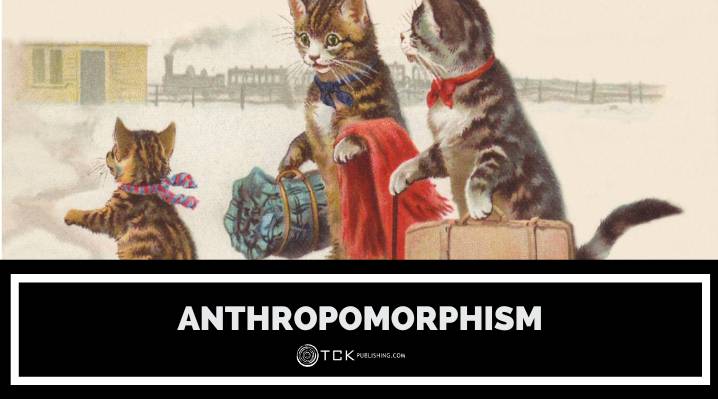
In the grand tapestry of human understanding, few threads are as persistent as our tendency to see ourselves reflected in the cosmos. This phenomenon—where the inanimate is imbued with human traits, intentions, or emotions—is known as anthropomorphism. It is a cognitive shortcut, a way for our minds to navigate the unfamiliar by framing it in familiar terms. Nowhere is this more evident than in the realm of physics, where the cold equations of the universe often yield to narratives that whisper of intention, design, or even personality. From the rebellious electron to the harmonious dance of celestial bodies, physics is not merely a study of matter and energy; it is a mirror held up to humanity’s deepest fascinations.
The Allure of the Familiar: Why We Humanize the Cosmos
At its core, anthropomorphism is a survival mechanism. Our brains are wired to detect agency—whether in a rustling bush or a distant star—because mistaking a predator for a shadow could be fatal. This hyperactive pattern-recognition extends beyond threats; it seeks patterns in the mundane and the monumental alike. When we describe a black hole as “hungry” or a supernova as “violent,” we are not just indulging in poetic license. We are translating the incomprehensible into a language our minds can grasp. The universe, in its vast and silent expanse, offers no inherent meaning. It is we who impose it, stitching together a narrative where particles obey laws and stars perform their roles with purpose.
This tendency is not limited to laypeople. Even seasoned physicists occasionally slip into anthropomorphic language when describing phenomena. A “reluctant” particle, a “shy” neutrino, or a “perfectly behaved” quantum state—these terms reveal a subconscious desire to personify the abstract. It is as if the universe, in its indifference, becomes a stage where the drama of human experience plays out in cosmic proportions.
The Quantum Stage: Where Particles Wear Human Faces
Nowhere is the humanization of physics more pronounced than in quantum mechanics, the branch of science that governs the subatomic world. Here, particles do not merely exist; they “choose,” “obey,” or “rebel” against the rules. The famous double-slit experiment, where particles behave differently when observed, has led some to speculate about a “conscious” universe—a notion that borders on the mystical. Yet even without invoking consciousness, the language of quantum physics is steeped in human-like agency. Electrons “tunnel” through barriers as if defying gravity, photons “decide” their paths, and quantum states “collapse” under observation. These descriptions are not literal, but they reveal a profound truth: our understanding of the universe is inextricably linked to our understanding of ourselves.
Consider the concept of “entanglement,” where particles remain instantaneously connected across vast distances. To describe this as “spooky action at a distance” (Einstein’s phrase) is to acknowledge the eerie, almost personal nature of the phenomenon. It is as if the particles share a secret, a bond that transcends space and time. In this way, quantum mechanics does not just describe the universe; it invites us to see it as a vast, interconnected web of relationships—much like our own social networks.
The Celestial Choreography: Stars as Cosmic Dancers
If the quantum world is a stage for particle personalities, then the macrocosm is a ballet of celestial bodies, each performing its role with grace and precision. Planets orbit stars in “perfect” harmony, galaxies collide in “dramatic” encounters, and black holes “consume” matter with an insatiable appetite. These descriptions are not just metaphors; they are narratives that give structure to the chaos of the cosmos. The laws of physics, after all, are not arbitrary. They are the rules of a grand performance, where every actor—from the smallest asteroid to the largest galaxy—plays a part in the cosmic drama.
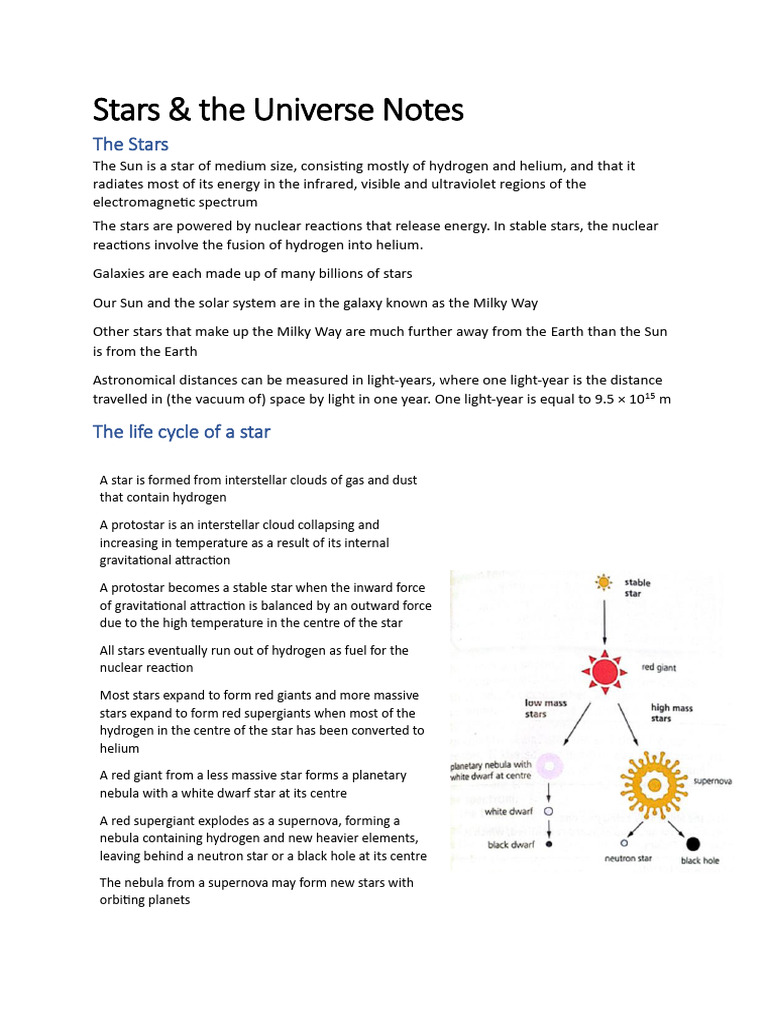
Take the life cycle of a star, for instance. A star is born in a nebula, “lives” through nuclear fusion, and eventually “dies” in a supernova or a quiet fade into a white dwarf. The language here is unmistakably biological, as if stars are not just balls of plasma but living entities with lifespans and destinies. This anthropomorphism is not just poetic flourish; it reflects our deep-seated need to see patterns and purpose in the universe. A star’s “death” is not an end but a transformation, much like the cycle of life and death in human cultures. In this way, the cosmos becomes a mirror of our own existence, a reflection of our hopes, fears, and eternal quest for meaning.
The Paradox of Control: Seeking Order in Chaos
Anthropomorphism in physics also reveals a paradox: we humanize the universe to impose order on its chaos. The laws of physics are, by definition, impersonal and deterministic. Yet, when we describe them in human terms, we are attempting to exert a measure of control over the unknown. By framing the universe as a sentient entity—whether benevolent, indifferent, or malevolent—we reduce its randomness to a narrative we can comprehend. This is why creation myths, religious cosmologies, and even scientific theories often anthropomorphize the cosmos. It is easier to believe in a universe that “cares” than one that is utterly indifferent.
This paradox is perhaps most evident in the search for a “Theory of Everything,” the holy grail of physics. The very name suggests a desire for unity, a belief that the universe is not a collection of disparate phenomena but a single, coherent whole. To frame it as a “theory” is to imply that the universe has a design, a purpose, or at least a set of rules that can be uncovered. In this quest, we are not just seeking knowledge; we are seeking companionship in the vastness of space. The universe, in our imagination, becomes a partner in dialogue rather than a silent void.
The Ethical Implications: When Personification Shapes Science
While anthropomorphism can be a powerful tool for understanding, it also carries risks. When we describe particles as “choosing” their paths or stars as “dying,” we risk conflating metaphor with reality. This can lead to misconceptions about the nature of physics itself. For instance, the idea that quantum particles “choose” their states has fueled debates about free will and determinism, blurring the line between science and philosophy. Similarly, the personification of celestial bodies can obscure the true scale and indifference of the cosmos, making it seem as if the universe is a stage designed for human observation.
Yet, these risks are not without merit. The ethical implications of anthropomorphism in physics are profound. If we see the universe as a sentient entity, we may be more inclined to treat it with reverence and care. The same language that describes a “hungry” black hole can inspire awe and humility in the face of nature’s power. In this way, anthropomorphism becomes not just a cognitive tool but a moral one—a way to bridge the gap between the scientific and the spiritual.
The Future of Cosmic Narratives: Beyond Anthropomorphism
As our understanding of the universe deepens, so too does our ability to move beyond anthropomorphism. Modern physics, with its equations and experiments, offers a language that is increasingly divorced from human experience. Yet, even as we strive for objectivity, the allure of personification remains. Perhaps this is because the universe, in all its complexity, is too vast for our minds to grasp without the aid of metaphor. Or perhaps it is because, deep down, we are still searching for a connection—a way to see ourselves in the cosmos.
In the end, anthropomorphism in physics is neither good nor bad. It is a reflection of our humanity, a testament to our need to find meaning in the unknown. Whether we describe the universe as a clockwork mechanism, a living organism, or a silent void, we are engaging in a dialogue that spans millennia. And in that dialogue, we are not just observers of the cosmos; we are participants in its grand narrative.
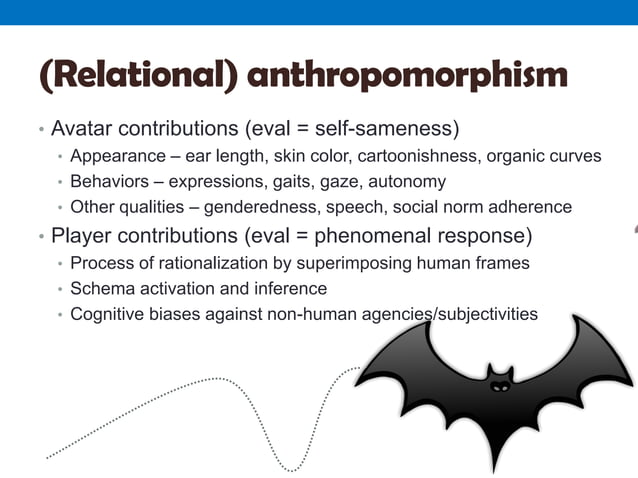
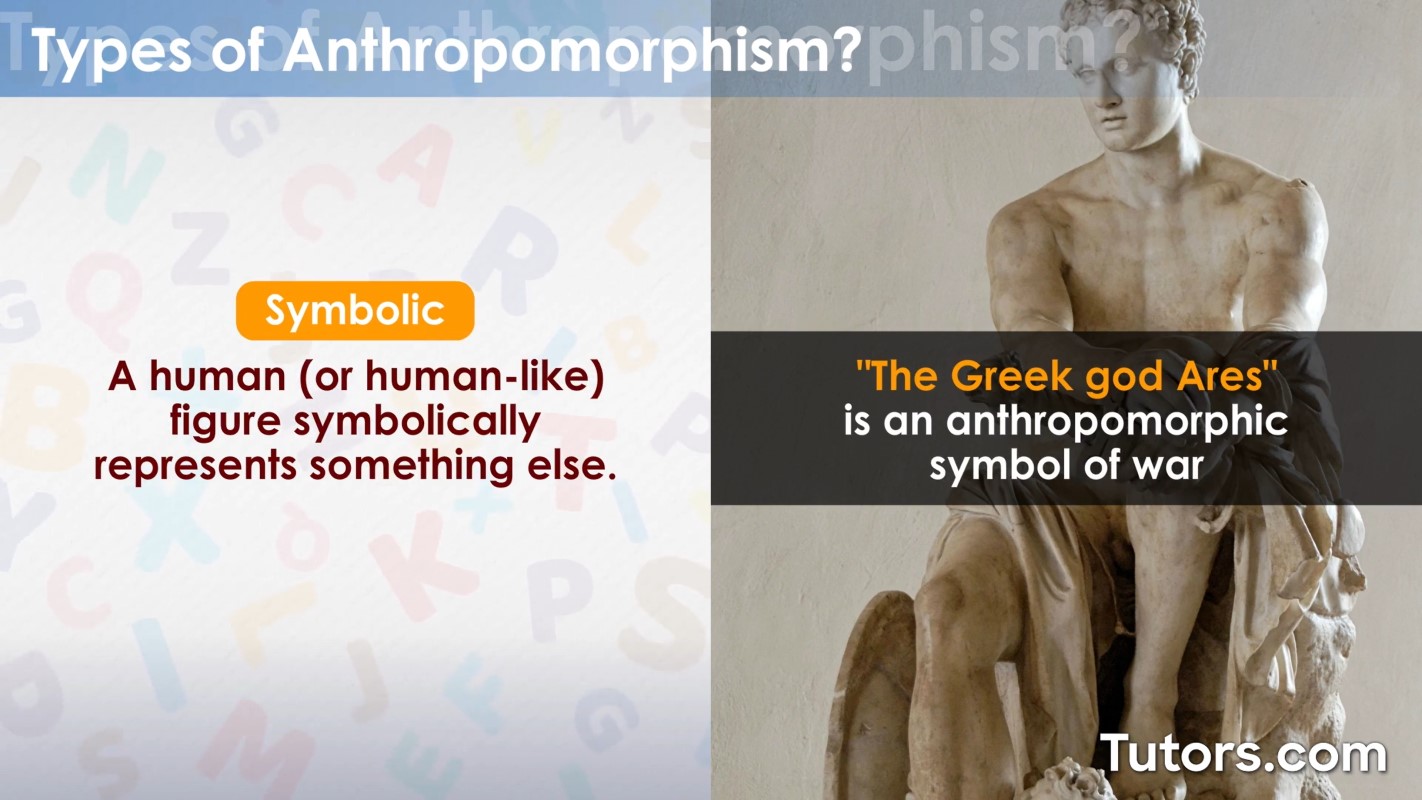
This image captures the essence of anthropomorphism in physics, where abstract concepts are given human-like qualities to aid understanding.