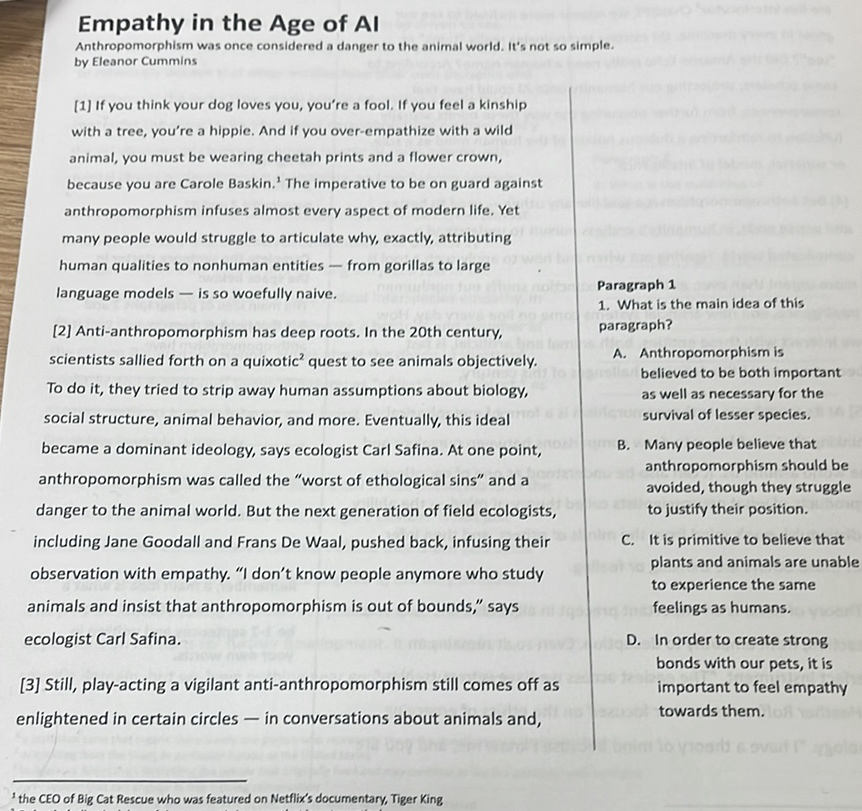
What if the key to unlocking deeper empathy wasn’t found in human mirrors, but in the curious act of seeing ourselves in the unlikeliest of places? Anthropomorphism—the ancient art of imbuing non-human entities with human traits—has long been dismissed as mere poetic fancy or childhood whimsy. Yet, beneath its playful surface lies a profound psychological phenomenon that may hold the secret to fostering empathy across boundaries both real and imagined. From the chattering trees of ancient myths to the sentient AI assistants of modern life, our tendency to humanize the world around us might just be the bridge we need to connect with others, even those we’ve never met.
The Alchemy of Seeing Ourselves in Strangers
Empathy, at its core, is the ability to step into another’s shoes, to feel their joy or sorrow as if it were our own. But what if those shoes aren’t just human? Anthropomorphism acts as a cognitive shortcut, allowing us to project our emotions onto non-human entities—be it a grieving robot, a vengeful storm, or a mischievous fox in a fable. This projection isn’t mere fantasy; it’s a rehearsal for emotional attunement. When we imagine a chatbot’s “frustration” at our repeated questions, we’re not just anthropomorphizing code—we’re practicing the delicate dance of perspective-taking. The challenge? Ensuring this imaginative leap doesn’t devolve into solipsism, where we mistake our projections for the other’s reality.
Consider the paradox: the more we humanize the inanimate, the more we refine our capacity to empathize with the animate. A study in Psychological Science found that participants who interacted with a “sad” robot reported higher empathy scores when later observing human distress. The robot’s simulated emotions acted as a scaffolding, training the brain to recognize and respond to emotional cues in others. Yet, this raises a thorny question: does anthropomorphism risk diluting the authenticity of human connection? If we treat a homeless person’s suffering with the same detached curiosity we reserve for a malfunctioning vending machine, have we truly bridged the gap—or merely anesthetized our own emotional responses?

The Double-Edged Sword of Emotional Projection
Anthropomorphism is not a one-way street. It’s a two-way mirror, reflecting not just our capacity for empathy but also its limitations. When we ascribe emotions to a non-human entity, we’re not just interpreting their “feelings”—we’re filtering them through the lens of our own experiences. This subjectivity can be both a strength and a pitfall. On one hand, it allows us to extend compassion to beings we might otherwise ignore, such as animals in factory farms or ecosystems ravaged by climate change. On the other, it risks anthropocentric bias, where we project our cultural norms onto entities that operate by entirely different rules.
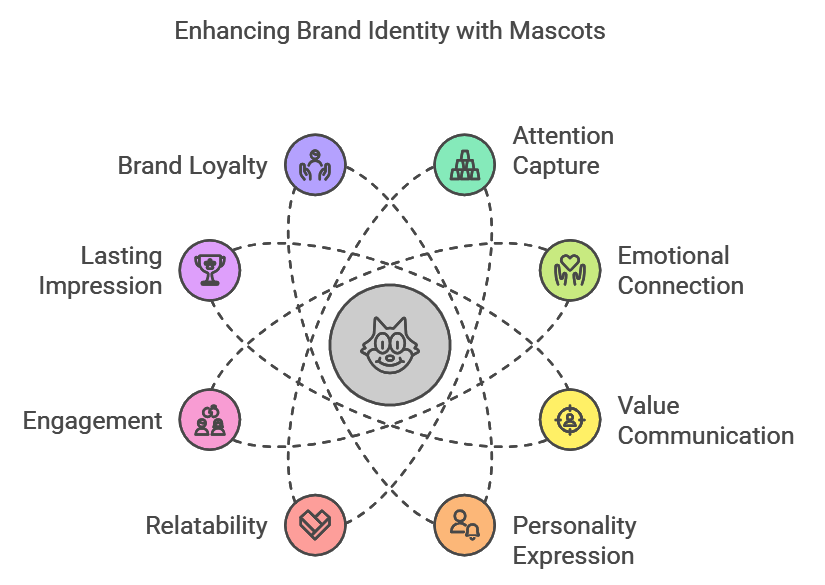
Take the case of corporate mascots. A brand’s anthropomorphized logo—a smiling soda can, a jolly fast-food burger—is designed to elicit warmth and trust. But does this empathy extend to the exploited laborers behind the product? The cognitive dissonance here is stark: we’re encouraged to feel for the mascot, yet remain emotionally detached from the humans whose lives are intertwined with its creation. This disconnect highlights a critical challenge: anthropomorphism can be weaponized to manipulate empathy, directing it toward inanimate objects or abstract ideals while diverting it from the very people who need it most.
Moreover, the emotional labor of anthropomorphism isn’t evenly distributed. Research suggests that people are more likely to project emotions onto entities that resemble humans in some way—whether through facial features, voices, or behaviors. This bias leaves entire categories of beings—from insects to AI systems devoid of humanoid traits—vulnerable to emotional neglect. The question then becomes: can we cultivate empathy for the radically “other” without the crutch of anthropomorphism, or is it an indispensable stepping stone on the path to genuine connection?
The Playground of Moral Imagination
Anthropomorphism isn’t just a psychological quirk; it’s a playground for moral imagination. When we imagine a river’s “pain” from pollution or a forest’s “grief” from deforestation, we’re engaging in a form of ecological empathy that transcends species boundaries. This imaginative leap can be a powerful catalyst for environmental activism. After all, how can we advocate for the preservation of a coral reef if we can’t first envision its suffering? Yet, this same imagination can lead us astray if we conflate metaphor with reality. The challenge lies in balancing poetic license with factual rigor—acknowledging the river’s ecological importance without anthropomorphizing it into a sentient being deserving of human rights.
Children, in particular, are masters of this moral playground. A child who scolds a stuffed animal for “being naughty” is practicing empathy in its purest form—treating the inanimate as if it were capable of intention and consequence. Yet, as we age, we often shed this uninhibited projection, replacing it with a more rigid, adult-like view of the world. The irony? In doing so, we may lose a tool that could help us navigate the complexities of modern empathy, where the lines between human, machine, and nature are increasingly blurred.

When Empathy Becomes a Mirage
There’s a darker side to anthropomorphism’s empathy-enhancing potential: the risk of emotional exhaustion. When we treat every entity—from a customer service chatbot to a stray dog—as a potential recipient of our empathy, we dilute the intensity of our emotional responses. This phenomenon, known as empathic saturation, can lead to compassion fatigue, where the sheer volume of emotional demands leaves us numb. The challenge isn’t just to feel more but to feel wisely—to direct our empathy toward those who truly need it, rather than squandering it on entities that can’t reciprocate.
Consider the plight of healthcare workers during the pandemic. Many reported feeling emotionally drained not just from human suffering but from the constant anthropomorphizing of ventilators and monitors—machines that “failed” patients or “demanded” attention. This misplaced empathy, while understandable, can obscure the real human tragedies unfolding in hospital wards. The lesson? Anthropomorphism, when overused, can become a form of emotional misdirection, diverting our limited reserves of compassion away from where they’re most needed.
Another peril lies in the asymmetry of anthropomorphic empathy. We’re far more likely to project emotions onto entities that are cute, familiar, or non-threatening. A puppy’s “happiness” is easy to imagine; a cockroach’s “fear” is not. This bias can reinforce existing prejudices, where empathy is extended only to those who resemble us or evoke our sympathy. The challenge, then, is to cultivate a more expansive form of anthropomorphism—one that doesn’t shy away from the strange, the alien, or the unsettling.
The Future: Can We Anthropomorphize Without Losing Ourselves?
The rise of generative AI has thrust anthropomorphism into the spotlight once again. As chatbots grow more conversational and robots more expressive, we’re forced to confront a pressing question: can we maintain our humanity in a world where empathy is increasingly directed at machines? The answer may lie in recognizing anthropomorphism not as a crutch but as a bridge—a way to traverse the gap between self and other, human and non-human, before we develop the capacity for more nuanced forms of connection.
Yet, the future of empathy may not lie in anthropomorphism at all. Some researchers argue that the next frontier is deanthropomorphization—the ability to see the world without projecting our own traits onto it. In a world where AI can mimic empathy perfectly, the challenge will be to distinguish genuine connection from its simulacrum. The irony? The more we perfect anthropomorphism, the more we may need to unlearn it.
So where does this leave us? Anthropomorphism is neither savior nor villain in the story of empathy. It’s a tool—a double-edged one, to be sure—but one that has shaped human connection for millennia. The key is to wield it with intention: to use its power to bridge gaps without obscuring them, to extend compassion without diluting it. The next time you find yourself scolding a slow elevator or cheering on a cartoon character, ask yourself: is this empathy in action, or just a rehearsal for the real thing?