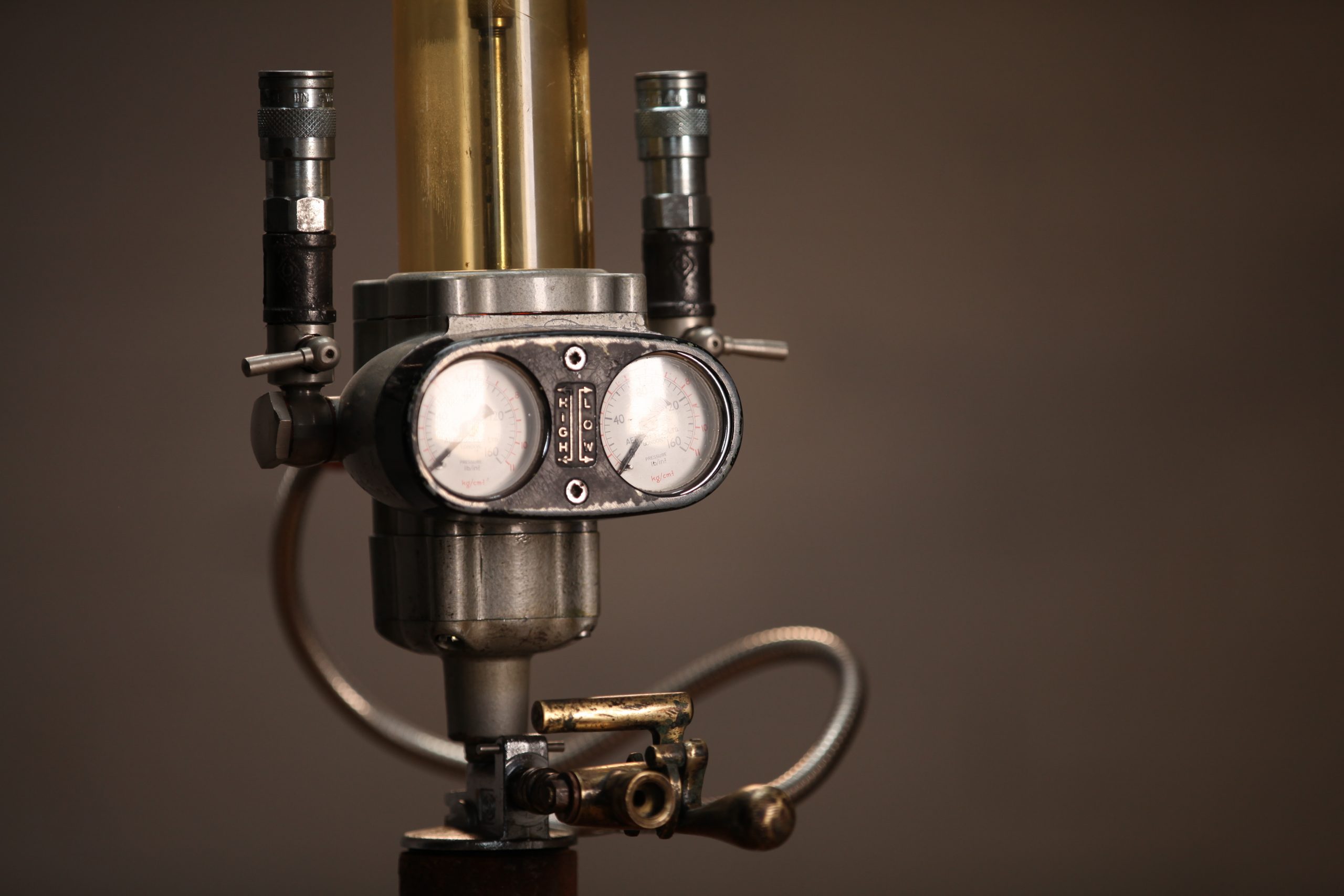
What if the key to unlocking human creativity, problem-solving, and even emotional intelligence lay not in the cold precision of logic, but in the whimsical dance of anthropomorphism—the tendency to imbue the inanimate with human-like traits? This playful cognitive quirk, often dismissed as mere childish fancy, may in fact be a sophisticated evolutionary tool, one that allows our minds to navigate complexity with surprising agility. From ancient myths to modern AI, anthropomorphic thinking has shaped cultures, technologies, and even our understanding of ourselves. But what are its true cognitive benefits, and where might it lead us astray?
The Playful Paradox: Why Our Brains Love to Humanize the World
At its core, anthropomorphism is a cognitive shortcut—a way for our brains to make sense of the unfamiliar by framing it in relatable terms. When we describe a storm as “angry” or a river as “serpentine,” we’re not just indulging in poetic license; we’re leveraging a mental framework honed over millennia. Evolutionary psychologists suggest this tendency stems from our ancestors’ need to predict the intentions of others, even when those intentions belonged to non-human entities. A rustling bush might conceal a predator, not a breeze. By anthropomorphizing, we err on the side of caution, a survival mechanism that has outlasted its original purpose.
Yet this isn’t mere survival—it’s a gateway to innovation. Consider how engineers design robots with expressive faces or how children learn abstract concepts through storytelling. Anthropomorphism transforms the abstract into the tangible, the alien into the familiar. It’s the reason we personify data in infographics, giving it a “voice” that guides our understanding. The challenge, however, lies in discerning when this mental shortcut serves us and when it blinds us to reality. How do we harness its power without falling prey to its illusions?


Creativity Unleashed: The Alchemy of Human-Like Metaphors
Anthropomorphism is the secret sauce of creativity, the alchemical process that turns raw ideas into vivid, memorable concepts. When scientists name subatomic particles after mythological figures or artists depict emotions as characters in a play, they’re tapping into a wellspring of cognitive flexibility. This isn’t just about aesthetics—it’s about cognitive expansion. By framing problems in human terms, we unlock lateral thinking, the ability to see connections where none existed before.
Take the field of user experience design, where interfaces are often anthropomorphized to feel more intuitive. A “friendly” error message or a “patient” loading spinner reduces frustration by mimicking human interaction. This isn’t superficial; it’s a deliberate exploitation of our brain’s predisposition to engage with the world socially. The challenge, however, is ensuring that these metaphors don’t oversimplify complexity. Can a machine truly be “patient,” or is this just a convenient fiction that risks eroding our patience with actual human limitations?
Consider also the role of anthropomorphism in scientific discovery. The Copernican revolution wasn’t just a shift in celestial mechanics—it was a reimagining of humanity’s place in the cosmos, a narrative where Earth was no longer the center of a divine drama but a mere participant in a vast, indifferent universe. This anthropomorphic undoing forced humanity to confront its own insignificance, a cognitive leap that reshaped philosophy, art, and science. The question remains: Does this kind of reimagining liberate us or leave us adrift in existential ambiguity?
The Empathy Engine: Bridging Gaps Between Self and Other
Anthropomorphism isn’t just a tool for understanding the world—it’s a bridge to understanding each other. When we describe a grieving friend as “broken inside,” we’re not just using metaphor; we’re engaging the same neural circuits that process physical pain. This phenomenon, known as “embodied simulation,” suggests that our brains literally simulate the experiences of others when we anthropomorphize them. It’s why we cringe at the sight of a cartoon character stubbing their toe or why we feel a pang of guilt when we anthropomorphize a neglected houseplant.
This empathetic leap has profound implications for social cohesion. In conflict resolution, for example, anthropomorphism can humanize adversaries, making it easier to see their perspectives. Yet it also carries risks. When we project humanity onto non-human entities—be they corporations, nations, or even algorithms—we risk absolving them of accountability. A “greedy” corporation isn’t held to the same moral standards as a greedy individual. The challenge, then, is to wield anthropomorphism as a tool for empathy without surrendering to its moral ambiguities.
Consider the rise of “digital companions” like AI chatbots designed to mimic human conversation. These tools can provide comfort to the lonely or assist in therapy, but they also raise ethical questions. If a user forms an emotional attachment to an algorithm, is that a testament to anthropomorphism’s power or a symptom of its potential to distort reality? The line between empathy and delusion is thin, and anthropomorphism walks it with every interaction.

The Dark Side: When Anthropomorphism Distorts Reality
For all its benefits, anthropomorphism is a double-edged sword. It can blind us to the true nature of the world, leading to what psychologists call “the illusion of intentionality.” When we assume that a random event—like a stock market crash or a natural disaster—was “meant to happen,” we impose a narrative where none exists. This tendency, known as the “just-world hypothesis,” can foster complacency or even victim-blaming. If a hurricane is “angry,” then its victims must have done something to provoke it.
Even in science, anthropomorphism can lead us astray. The “anthropocentric bias” has historically skewed our understanding of the universe, from the geocentric model of the solar system to the idea that animals act with human-like motives. Today, we see echoes of this bias in how we discuss AI. When we say a machine “learns” or “decides,” we risk anthropomorphizing it to the point of obscuring its true, non-human nature. The challenge is to recognize when our language shapes our perceptions—and when those perceptions lead us down the wrong path.
There’s also the matter of cultural relativity. What one society anthropomorphizes, another may see as purely mechanistic. A river might be a “living ancestor” to one culture and a “resource to exploit” to another. This divergence highlights the subjectivity of anthropomorphic thinking and the potential for conflict when these perspectives collide. Can we ever truly separate our cognitive biases from our understanding of the world, or is anthropomorphism an inescapable lens through which we view reality?
The Future: Anthropomorphism in an Age of Machines
As artificial intelligence becomes more integrated into our lives, the role of anthropomorphism is evolving. We’re no longer just projecting humanity onto animals or natural phenomena—we’re doing it with algorithms, robots, and data. This raises fascinating questions about the future of human cognition. Will our brains adapt to treat AI as a new kind of “other,” or will we lose the ability to distinguish between human and machine intentions?
Already, we see signs of this shift. Voice assistants like Siri or Alexa are designed with human-like qualities to make interactions feel more natural. But as these systems grow more sophisticated, will we begin to anthropomorphize them in ways that blur the line between tool and companion? The challenge here is to design AI that respects our cognitive quirks without exploiting them. Can we create machines that are intuitive without being deceptive? That are helpful without being manipulative?
The answer may lie in embracing anthropomorphism as a two-way street. Just as we project humanity onto machines, perhaps machines can reflect our humanity back to us in ways that enhance, rather than diminish, our cognitive abilities. Imagine an AI that doesn’t just mimic human conversation but helps us explore the boundaries of our own anthropomorphic thinking. The future of cognition may not be about eliminating bias but about understanding it—and using it as a tool for growth.