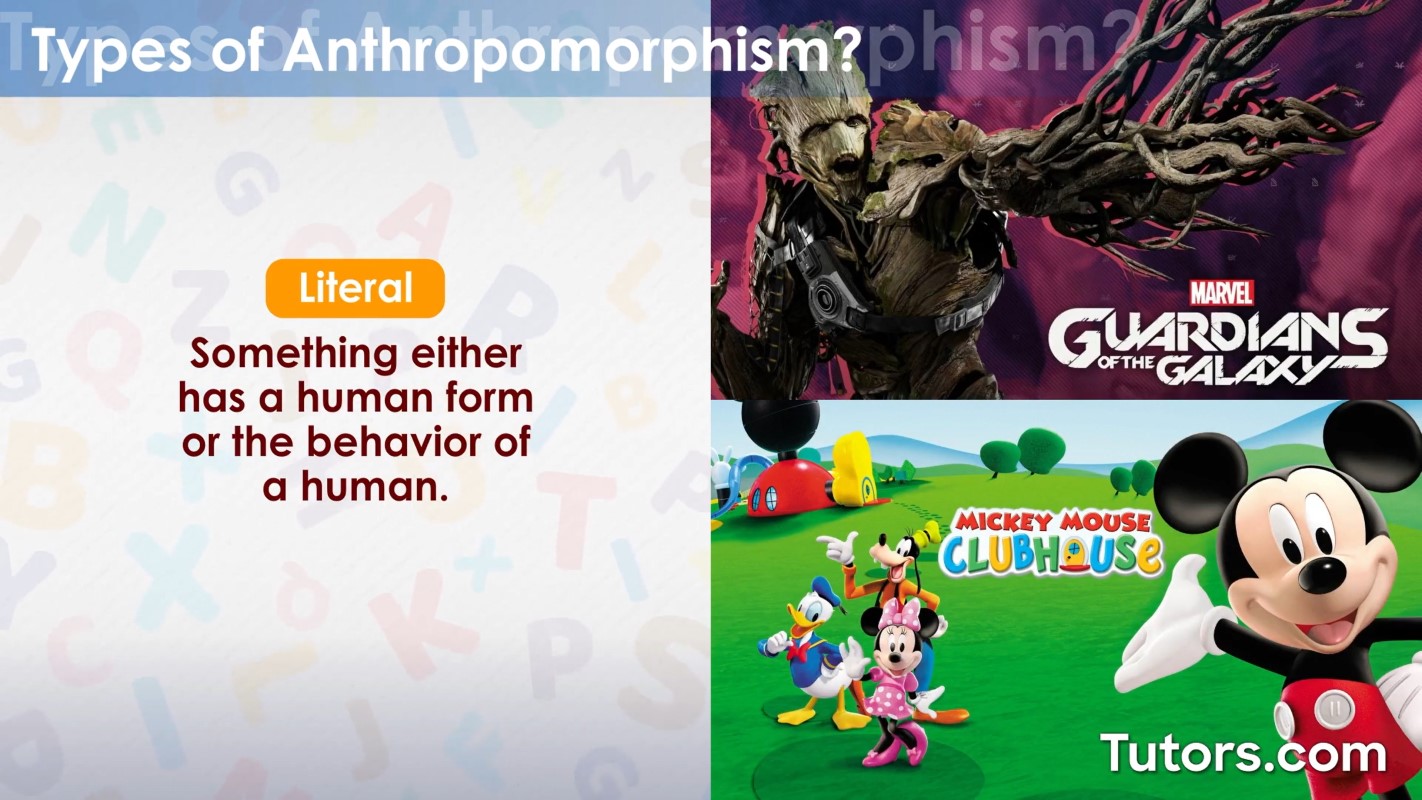
In the grand tapestry of human cognition, few threads are as intricately woven as anthropomorphism—the tendency to imbue the inanimate with human traits, intentions, and emotions. This phenomenon, far from being a mere quirk of imagination, serves as a cognitive bridge between the known and the unknown, the familiar and the alien. It is not merely a literary device or a psychological oddity but a fundamental mechanism that has shaped our perception of the world for millennia. To understand its evolutionary purpose is to peer into the very architecture of human thought, where survival, curiosity, and meaning converge in a dance as old as consciousness itself.
The Primordial Instinct: Survival Through Pattern Recognition
Long before humans could articulate the concept of gods or spirits, our ancestors relied on anthropomorphism to navigate a world teeming with unseen dangers. The rustling of leaves was not just wind—it could be a predator. A shadow in the dark was not merely an optical illusion but a lurking threat. By projecting human-like agency onto natural phenomena, early humans transformed ambiguous stimuli into actionable intelligence. This cognitive shortcut, known as the hyperactive agency detection device, allowed our forebears to err on the side of caution, a survival advantage that outweighed the occasional false alarm.
Consider the case of a hunter-gatherer hearing a twig snap in the underbrush. Without anthropomorphism, the sound might be dismissed as mere chance. But with it, the mind conjures a lurking predator, a rival tribe, or a vengeful spirit. The cost of overestimating danger was far lower than the cost of underestimating it. Thus, anthropomorphism became a silent sentinel, a mental guardian that kept our ancestors alive in an unpredictable world. It was not just a way of seeing the world—it was a way of surviving it.
The Social Scaffold: Forging Connections in an Indifferent Universe
Anthropomorphism is not confined to the realm of the dangerous; it extends to the benign, the beautiful, and the benevolent. Rivers that “weep,” mountains that “watch,” and storms that “rage” are not just poetic flourishes—they are expressions of a deeper truth: humans are social creatures, and we seek connection wherever we can find it. This tendency to anthropomorphize extends even to non-living entities because it satisfies a fundamental need—the need for reciprocity.
When we attribute human-like qualities to a river or a tree, we are not merely indulging in fancy. We are engaging in a form of social cognition, treating the world as if it were populated by beings capable of intention and emotion. This is not mere solipsism; it is a survival strategy. By anthropomorphizing, we reduce the cognitive load of interacting with the world. A river that “demands” respect is easier to navigate than an indifferent force of nature. A tree that “whispers” secrets is more engaging than a silent organism. In this way, anthropomorphism transforms the world from a chaotic void into a familiar, if not friendly, landscape.
The Cognitive Catalyst: Fueling Creativity and Innovation
Anthropomorphism is not just a relic of our past; it is a catalyst for our future. It is the spark that ignites creativity, the lens through which we explore the boundaries of possibility. When we imagine a robot with a “personality,” we are not just designing a machine—we are extending the human experience into the realm of the artificial. When we write a story about a sentient AI, we are not just crafting fiction; we are rehearsing for a future where machines might one day share our world.
This creative impulse is deeply rooted in our evolutionary history. Our ancestors who could imagine the unseen—whether it was a god, a spirit, or a future event—were better equipped to plan, to innovate, and to adapt. Anthropomorphism, in this sense, is not just a way of seeing the world; it is a way of shaping it. It allows us to project our desires, fears, and aspirations onto the blank canvas of reality, turning the abstract into the tangible, the impossible into the possible.
The Psychological Paradox: Comfort in the Face of the Unknown
There is a paradox at the heart of anthropomorphism: it both soothes and unsettles. On one hand, it provides comfort by making the unfamiliar familiar. A thunderstorm is not just a clash of air masses; it is the voice of an angry deity. A volcano is not merely a geological event; it is the wrath of a sleeping titan. By giving form and intention to the chaotic, anthropomorphism reduces anxiety, offering a sense of control in an otherwise uncontrollable world.
Yet, on the other hand, anthropomorphism can also evoke dread. When we project human-like malice onto a force of nature, we are not just personifying it—we are demonizing it. This duality is evident in the way we treat both the benevolent and the malevolent in our myths and legends. The sun is a life-giving father; the storm is a vengeful monster. This tension between comfort and fear is not a flaw in our cognitive machinery—it is a feature. It reflects the dual nature of existence itself: a world that can nurture us or destroy us, often in the same breath.
The Modern Manifestation: From Myths to Machines
Anthropomorphism is not confined to the ancient past or the realm of the supernatural. It permeates our modern world in ways both subtle and profound. Consider the way we interact with technology. A digital assistant that “remembers” our preferences is not just a program—it is a companion. A self-driving car that “hesitates” at an intersection is not merely a machine—it is a cautious driver. These interactions are not mere anthropomorphic projections; they are the result of deliberate design, a testament to the enduring power of this cognitive bias.
Even in the sciences, anthropomorphism plays a role. Biologists speak of a cell’s “decision-making” process. Economists describe markets as having “moods.” These are not just metaphors; they are tools for understanding complex systems. By framing the inanimate in human terms, we make the incomprehensible comprehensible. It is a way of bridging the gap between the known and the unknown, a cognitive shortcut that allows us to navigate the vast and often bewildering landscape of modern knowledge.
The Ethical Implications: When Projection Becomes Exploitation
Yet, for all its benefits, anthropomorphism is not without its dangers. When we project human-like qualities onto entities that do not possess them, we risk distorting reality. This is particularly evident in the way we treat animals, the environment, and even other humans. To anthropomorphize a wolf as a “villain” is to ignore its ecological role. To see a forest as a “resource” rather than a living system is to reduce it to a mere commodity. These distortions can have real-world consequences, from environmental degradation to social injustice.
There is, then, a fine line between using anthropomorphism as a tool for understanding and using it as a crutch for ignorance. The challenge lies in recognizing when we are engaging in a cognitive shortcut and when we are indulging in a dangerous fantasy. It is a balance between the poetic and the practical, the imaginative and the empirical. To navigate this balance is to wield the power of anthropomorphism with wisdom and restraint.
The Future Horizon: Anthropomorphism in the Age of AI
As we stand on the precipice of a new era—one defined by artificial intelligence and machine learning—anthropomorphism takes on a new significance. We are already seeing the emergence of AI systems that are designed to mimic human emotions, intentions, and even personalities. From chatbots that “empathize” with users to robots that “express” joy, we are entering a world where the boundaries between human and machine are increasingly blurred.
This raises profound questions about the nature of consciousness, agency, and ethics. If we treat an AI as if it were human, does it become more human? If we project intentions onto a machine, do we risk losing sight of its true nature? These are not just philosophical musings; they are practical concerns that will shape the future of technology, society, and perhaps even our own self-understanding. Anthropomorphism, in this context, is not just a cognitive tool—it is a mirror, reflecting back to us our deepest hopes, fears, and assumptions about what it means to be human.