Weather forecasting often transcends mere data and charts, infiltrating everyday conversation with a curious blend of scientific rigor and human-like characterization. People frequently describe the weather as if it possesses intent and personality—“the storm is angry,” or “the sun is shy today.” This anthropomorphic lens offers more than poetic flair; it reflects a deeper human inclination to interpret natural phenomena through relatable frameworks. But does this mode of expression genuinely aid our understanding and interaction with weather forecasts, or does it obscure the complexity that lies beneath the meteorological veil?
The Roots of Anthropomorphism in Human Cognition
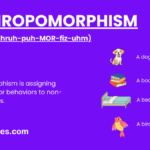
Anthropomorphism, the attribution of human traits, emotions, or intentions to non-human entities, is a prevalent cognitive shortcut used to make sense of the world. At its core, it is a mechanism that diminishes the abstraction of complex systems, allowing the mind to anchor unfamiliar or chaotic events to familiar social behaviors. Weather, inherently intangible and capricious, invites such treatment. By personifying atmospheric phenomena, individuals foster a semblance of control and predictability over an otherwise inscrutable natural force.
This tendency is deeply wired into human psychology. Evolutionary pressures favored individuals who could anticipate and decode the behavior of others—an advantage equally applicable when interpreting ambiguous environmental cues. Thus, the weather’s unpredictable oscillations are metaphorically recast as human moods, easing the cognitive load required to engage with fluctuating data.

Anthropomorphism as a Communicative Tool in Weather Forecasting
The language used by meteorologists and media outlets to relay weather information often employs subtle or overt anthropomorphic constructs. These linguistic choices serve a dual purpose: enhancing memorability and increasing emotional resonance with the audience. When a cold front is said to “advance aggressively” or a drought “lingers persistently,” the forecast assumes a narrative form that transcends sterile data points.
This narrative mode caters to the innate human craving for stories, transforming the abstract into an experiential saga. It endows forecasts with characters and plots, which enhances public engagement and compliance with weather advisories. Additionally, anthropomorphic language can simplify complex meteorological dynamics, making them more accessible without requiring specialized knowledge.
Risks and Misinterpretations Embedded in Anthropomorphic Forecasts
Despite its communicative virtues, anthropomorphism in weather forecasting can foster misconceptions and oversimplifications. When weather phenomena are personified, there is a latent risk of encouraging deterministic or erroneous interpretations—misleading the public into ascribing intentionality where none exists. This presents a paradox; while personification cultivates understanding by relatability, it simultaneously cultivates mythos divorced from scientific reality.
For instance, describing a hurricane as “vengeful” may unintentionally anthropomorphize nature’s impartial mechanics, potentially skewing risk assessment or response urgency. The metaphorical language might also obscure the distinction between correlation and causation, leading to fatalistic attitudes or underestimation of human agency in climate mitigation efforts.
The Intersection of Anthropomorphism and Artificial Intelligence in Weather Prediction
Modern weather forecasting increasingly integrates artificial intelligence (AI) and machine learning algorithms that analyze vast troves of atmospheric data. While these advanced systems transcend human cognitive biases, their outputs and explanations often still incorporate anthropomorphic metaphors to aid comprehension. This juxtaposition highlights a persistent human need for relatable constructs, even when interacting with inherently impersonal technology.
AI-driven models enhance precision, yet their complexity can be esoteric for laypeople. Anthropomorphic framing serves as a bridge, rendering algorithmic predictions more comprehensible and emotionally salient. This interplay underscores a broader narrative: as our predictive tools become more sophisticated, the human penchant for personalization remains an essential facet of how we interpret and act on forecast information.
Deeper Psychological and Cultural Fascinations with Weather Personification
The anthropomorphic portrayal of weather taps into ancient cultural traditions and mythologies that ascribe personalities to natural forces. From rain gods to winds imbued with sentiment, civilizations have long humanized their environment as a way to explain and influence the vicissitudes of daily life. This enduring cultural memory perpetuates the allure of personifying weather, blending scientific understanding with symbolic meaning.
Moreover, the unpredictability of weather stirs a psychological interplay between anxiety and fascination. By assigning character to meteorological events, humans create a narrative framework that manages uncertainty and existential vulnerability. It is a dance between awe and mastery, where weather becomes not just a phenomenon to endure but an entity to converse with. This dynamic reveals profound insights into human relationships with nature, autonomy, and fate.
Conclusion: Navigating Between Poetic Personification and Scientific Precision
Anthropomorphism in weather forecasting embodies a dual-edged sword—it enriches communication and emotional connection while risking distortion of scientific realities. Recognizing this tension allows for more intentional use of personification without compromising clarity. The challenge lies in striking a delicate balance: preserving the evocative power of anthropomorphic descriptions while grounding public understanding in empirical knowledge.
Ultimately, the human tendency to imbue weather with personality is emblematic of a broader quest for meaning amidst complexity. It reflects an innate drive to relate, narrate, and find coherence in the caprices of nature. When wielded judiciously, anthropomorphism becomes not a hindrance but a profound tool—connecting data to experience, meteorology to mythology, and science to the human spirit.