In the intricate theater of economics, models serve as scripts—simplified narratives that attempt to encapsulate the multifaceted dance of human behavior and market forces. Yet, beneath the austere equations and cold graphs lies a fascinating phenomenon: anthropomorphism. This subtle infusion of human traits into economic constructs breathes life into otherwise sterile abstractions. The role of anthropomorphism in economic models is akin to a masterful storyteller weaving familiar faces into an enigmatic tale, forging a bridge between numerical coldness and the warmth of human intuition. This interplay not only enriches comprehension but also unveils the unique allure and limitations embedded in economic theorizing.
The Genesis of Anthropomorphism in Economic Reasoning
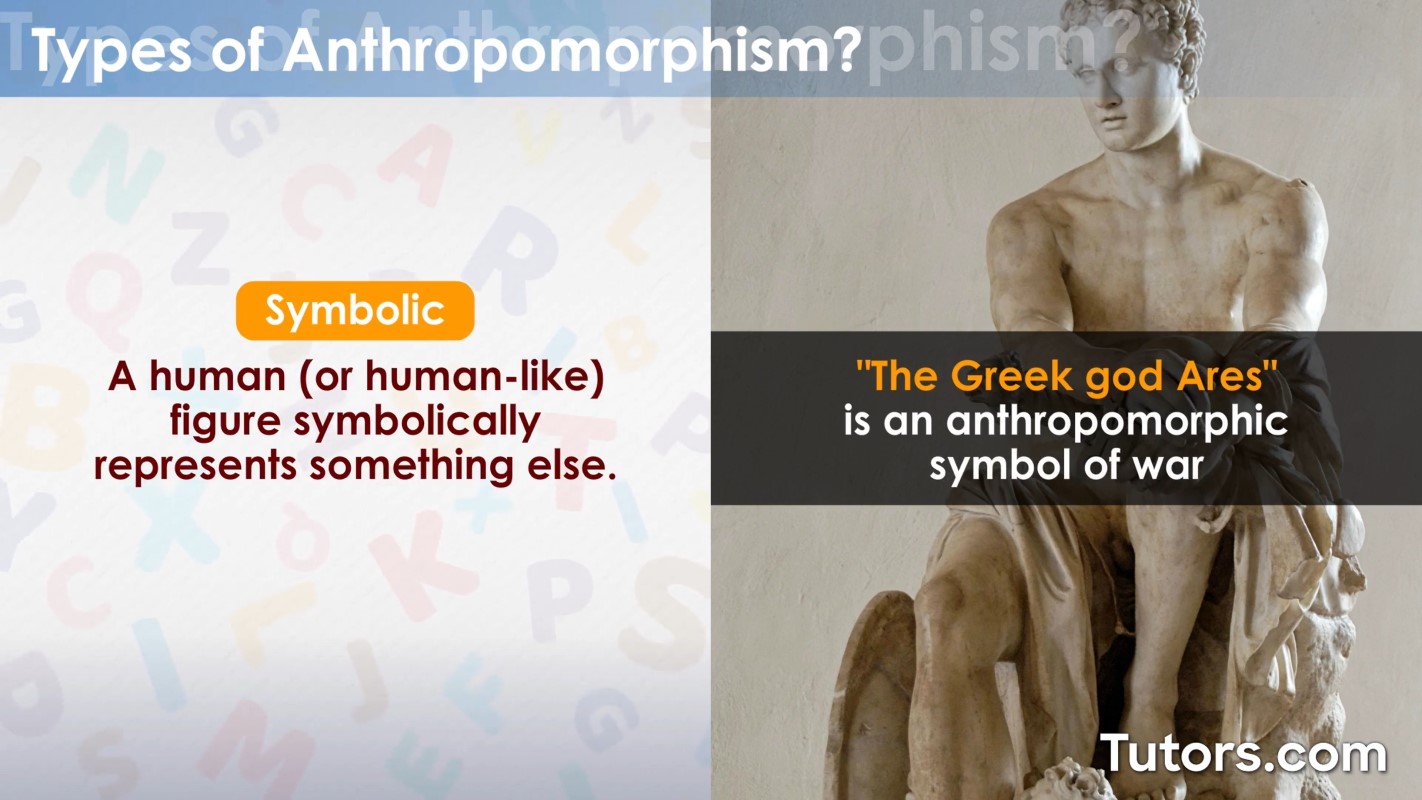
Anthropomorphism, the attribution of human characteristics to non-human entities, forms the cornerstone of storytelling across cultures. Economics, while grounded in rational analysis, is no stranger to this practice. Historically, economists have personified markets as entities that “adjust,” “respond,” or “correct themselves,” enveloping inanimate systems with animated qualities. This phenomenon originates from an intrinsic cognitive bias—humans interpret complex environments through the prism of human experience. In economic parlance, this manifests as models that implicitly or explicitly endow agents, institutions, or even the market itself with intentions, desires, and emotions.
Such personification is not merely ornamental; it acts as both a heuristic device and a narrative strategy. It simplifies the inscrutable architecture of markets and economic agents by rendering them intelligible in human terms. The market is no longer a nebulous aggregation of transactions but a “player” in the economic arena, capable of “deciding” and “reacting.” In this light, anthropomorphism serves as a linguistic and conceptual tool that transmutes complexity into accessible storytelling.
Anthropomorphism as a Cognitive Scaffold in Behavioral Economics
Behavioral economics, which challenges the neoclassical assumptions of rationality, leans heavily on anthropomorphic motifs to capture the nuances of human decision-making. Here, economic agents are often depicted with psychological idiosyncrasies—fear, greed, bias, and irrationality—attributes hitherto reserved for human narratives. This infusion humanizes economic agents, revealing the intricate emotional contours that shape choices.
Consider the metaphor of the consumer as a “navigational voyager,” steering through a sea of information but sometimes caught in undercurrents of cognitive bias. Such imagery enriches the understanding of decision processes that defy simplistic rational models. By endowing agents with quasi-human traits, economists underscore the unpredictability and richness of economic behavior, acknowledging that individuals are not mere automatons but actors embedded in socially and emotionally charged contexts.
The Market as a Living Organism: The Metaphorical Heartbeat of Macroeconomic Models
Macroeconomic discourse often indulges in vivid metaphors that cast the market as a living organism—pulsating, breathing, and reacting to external stimuli. This anthropomorphic framing conjures images of the economy as an entity with a heartbeat, capable of feverish overheating or languorous stagnation. Such metaphors facilitate the comprehension of abstract phenomena like inflation, recession, and growth cycles, attributing vitality and temporality to what are essentially statistical aggregates.
For instance, phrases like “market correction,” “economic recovery,” or “financial contagion” evoke human-scale processes—a healing wound, a relapsing illness, or the spread of a virus. These imaginative transfers enable policymakers, investors, and the public to grasp complex systemic dynamics emotionally and intuitively. This storytelling approach transforms the economy into a protagonist whose health and vitality command collective attention and action.
The Allure and Pitfalls of Anthropomorphic Economic Models
The unique appeal of anthropomorphism in economic models lies in its dual capacity to illuminate and obfuscate. On one hand, personifying economic elements fosters accessibility, making esoteric theories approachable and relatable. It imbues models with narrative power, transforming dry data into compelling stories that resonate with human experience. This narrative engagement can enhance pedagogical outcomes and inform decision-making heuristics.
However, this same attribute can engender misconceptions. Anthropomorphic metaphors risk oversimplification by glossing over structural complexities and systemic interdependencies. Markets do not possess consciousness or intention; the appearance of agency is a cognitive mirage. Overreliance on human-like analogies may lead to anthropocentric fallacies, erroneously attributing moral or volitional undertones to economic phenomena. This conflation can distort policy interpretations, inflate expectations, or obscure the mechanistic realities underlying economic fluctuations.
Anthropomorphism and the Evolution of Economic Thought
The trajectory of economic thought reveals an evolving relationship with anthropomorphic conceptualizations. Classical economists personified the “invisible hand” as a benevolent guide directing markets toward equilibrium. This metaphor wielded profound explanatory power, embedding moral philosophy into economic theory. However, as economics embraced mathematical formalism and empirical precision, the explicit use of anthropomorphic language receded, supplanted by abstract, agent-based modeling.
Contemporary economics oscillates between these poles, envisioning agents both as rational calculators and as emotionally infused beings navigating social contexts. Advances in complexity economics and agent-based simulations revive anthropomorphic insights by modeling agents with adaptive behaviors and interactions, mimicking social dynamics. These developments signal a synthesis: maintaining analytical rigor while embracing the anthropomorphic impulse to represent the vibrancy of human economic life.
The Narrative Power of Anthropomorphism in Economic Communication
Anthropomorphism also wields tremendous influence in the communication of economic ideas beyond professional circles. Public discourse often resorts to vivid personifications to elucidate economic conditions and policies. The “angry market,” the “restless investor,” or the “sleeping giant economy” are not mere rhetorical flourishes but narrative anchors that engage collective imagination.
This personification fosters emotional resonance, helping individuals navigate the abstractions of fiscal policy, trade dynamics, or financial crises. It contextualizes impersonal forces within familiar social scripts, making economic phenomena more palpable. Consequently, anthropomorphism emerges as an indispensable tool in the democratization of economic knowledge, bridging divides between technical expertise and public understanding.
Conclusion: Embracing the Ambiguity of Anthropomorphism in Economics
Anthropomorphism in economic models functions as a double-edged sword—unleashing the power of narrative while imposing the constraints of metaphorical distortion. Its role is both pragmatic and poetic: pragmatically, it scaffolds comprehension and communication; poetically, it enlivens dry abstractions with the vibrancy of human experience. Recognizing this duality invites a more nuanced engagement with economic models—appreciating their imaginative appeal while maintaining critical awareness of their limits.
Ultimately, anthropomorphism breathes humanity into the cold mathematics of economics, reminding us that behind every curve and calculation lies a story of human endeavor, frailty, and aspiration. It is through this narrative lens that economic models transcend mere analysis to become chronicles of the human condition itself.