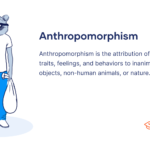
Anthropomorphic mascots have long served as potent symbols within the arena of politics, transcending mere caricatures to become vessels of identity and emotion. These animated embodiments, often drawn from animals or mythical figures endowed with human traits, occupy a unique niche that bridges the gap between abstract political ideologies and the collective psyche of the electorate. Their strategic deployment in political campaigns is a testament to the intricate relationship between symbolism and persuasion.
The Historical Roots of Anthropomorphic Political Mascots
The use of anthropomorphic figures to represent political entities stretches back centuries. These mascots provide a tangible representation of complex ideologies, making abstract political concepts more accessible to the general public. For instance, animals like the eagle have symbolized freedom and strength in American iconography since the country’s inception. Over time, political factions discovered that personifying themselves through relatable, or sometimes antagonistic, mascots could distill their values and principles into succinct visual metaphors. These historical antecedents underscore the enduring power of anthropomorphism in shaping political narratives.
Psychological Resonance: Why Anthropomorphism Appeals to Voters
At the heart of the appeal lies the innate human tendency to anthropomorphize – to ascribe human characteristics to non-human entities. This psychological mechanism fosters emotional connections, enabling voters to perceive mascots as relatable and trustworthy entities. By endowing mascots with facial expressions, gestures, and personalities, politicians tap into primal cognitive biases, eliciting empathy and allegiance. The anthropomorphic form simplifies decision-making by creating an intuitive, symbolic shorthand for complex political alignments, thereby enhancing memorability and emotional impact among constituents.
Types of Anthropomorphic Mascots in Politics
Political mascots come in a multiplicity of forms, each tailored to communicate distinct messages. Animal mascots, such as donkeys and elephants, are archetypal examples in American politics, where they symbolize Democratic and Republican parties respectively. These creatures are chosen not only for their emblematic characteristics but also for their historical associations and cultural resonance. Human-like caricatures, superimposed onto abstract or mythological entities, also abound, infusing campaigns with a sense of drama or humor. Furthermore, hybrid mascots blend animal and humanoid features to create memorable icons that engage diverse demographic groups.
Visual Symbolism and Semiotics in Political Mascots
Political mascots function as semiotic devices, communicating values and ideologies beyond verbal discourse. Colors, posture, and attire are meticulously crafted to evoke specific connotations. For example, red, white, and blue are frequently incorporated to instill patriotism, while posture may connote strength, vigilance, or approachability. The subtle choices embedded in a mascot’s design serve as nonverbal rhetoric, wielding significant influence over public perception. This layered symbolism enhances the mascots’ potency as communicative tools in both print and digital media.
The Role of Mascots in Campaign Messaging and Branding
In an era saturated with information and competing narratives, mascots help distill campaign messaging into iconic, digestible representations. They serve as visual anchors that unify disparate political messages under a cohesive brand identity. This unification is essential for reinforcing party cohesion and voter recognition. Mascots provide an adaptable medium through which complex policy stances can be abstracted into emotionally salient narratives, facilitating voter retention and engagement. Additionally, their presence across merchandise, advertisements, and social media fortifies the campaign’s omnipresence.
Mobilizing Emotional Responses and Collective Identity
Beyond representing political philosophies, mascots foster a sense of belonging among supporters. By embodying shared values and historical continuity, these figures galvanize collective identity and group solidarity. They become rallying points at political rallies and public demonstrations, creating a visual lexicon of allegiance. This emotional mobilization transcends rational argumentation, tapping instead into intuition and loyalty. In doing so, mascots play an indispensable role in voter mobilization and retention, particularly among demographic groups that respond strongly to symbolic communication.
Adaptation Across Media Platforms and Technological Evolutions
The evolution of media technology has expanded the functional versatility of anthropomorphic mascots. From traditional print and broadcast channels to digital and social media ecosystems, mascots adapt fluidly to various formats. Animated GIFs, memes, and interactive digital avatars enable political entities to reach younger audiences and foster organic viral sharing. The dynamic nature of these mascots on contemporary platforms reinforces their relevance and allows for rapid recalibration in response to shifting political climates. Ultimately, this adaptability ensures that mascots remain a vital instrument of political communication.
Potential Criticisms and Controversies Surrounding Mascot Use
While mascots wield undeniable influence, their use is not without criticism. Detractors argue that oversimplification through anthropomorphic symbols can obscure substantive policy debates, reducing political discourse to mere symbolism. Moreover, mascots may reinforce stereotypes or exacerbate partisan divisions when deployed irresponsibly. The caricatured nature of some mascots risks alienating constituents who perceive them as trivializing serious political concerns. This underscores the delicate balance political strategists must strike between effective symbolism and thoughtful representation.
The Future Trajectory of Anthropomorphic Political Mascots
Looking ahead, the role of anthropomorphic mascots is poised to evolve alongside shifting cultural sensibilities and technological advancements. The integration of augmented reality, artificial intelligence, and immersive storytelling could revolutionize how mascots engage voters, creating more personalized and interactive experiences. Politicians may increasingly leverage these mascots not only as representatives of ideology but as dynamic interlocutors capable of nuanced communication. This progression heralds a new era where mascots transcend static symbolism to become participatory elements within the democratic process.