Anthropomorphism is a fascinating and often whimsical concept that infuses both literature and culture with vibrancy and life. It refers to the attribution of human characteristics to non-human entities — from animals and inanimate objects to natural elements. Could a cloud feel joy as it floats in the sky? Can an ancient oak tree possess wisdom that transcends time? These playful questions invite an exploration into the multilayered term “anthropomorphism.” This article endeavors to dissect the intricate tapestry of anthropomorphism, unfolding key terms and concepts associated with this enthralling phenomenon.
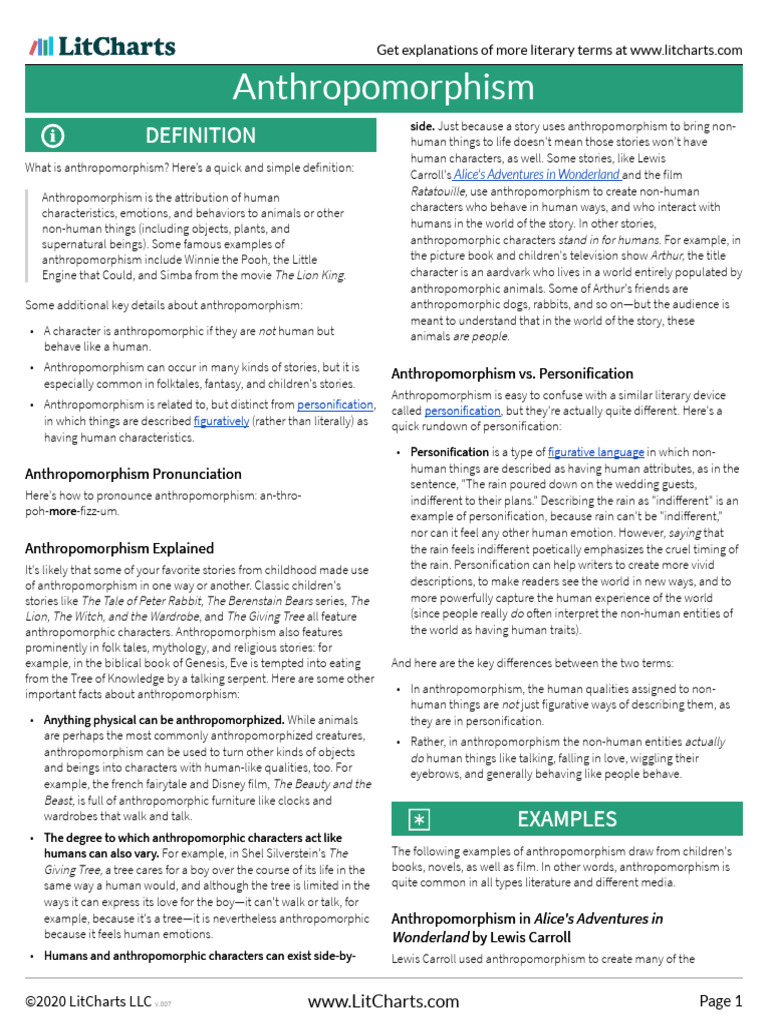
To commence, we shall establish a robust foundation with the definition of anthropomorphism. At its core, it is the practice of assigning human traits, emotions, and intentions to non-human beings. This literary tool serves various purposes, notably in storytelling and pedagogical contexts. Consider classic fables where animals perform with human-like intelligence and morality. Here, anthropomorphism acts as a bridge, connecting human readers with deeper truths about their own lives through the medium of relatable narratives.
As we delve deeper into the subject, it is imperative to familiarize ourselves with vital terms intimately linked to anthropomorphism. One such term is “personification.” While often interchangeably used, there is a subtle distinction; personification is primarily a literary technique that imparts human qualities to abstract ideas or inanimate objects, while anthropomorphism extends those qualities to non-human animals and entities actively engaging in human-like behavior. For instance, think of the children’s cartoon where a wise old turtle teaches young animals about patience. The turtle embodies wisdom and sage-like qualities, a representation of anthropomorphism at its finest.
Another critical term is “zoomorphism,” which refers to the attribution of animal characteristics to humans or the humanizing of animal behaviors. In artistic expressions, such as sculptures or paintings, zoomorphism often appears where human figures may exhibit animalistic traits, revealing the dichotomy of human and animal nature. This interplay invites observers to ponder the shared characteristics between species, voicing a broader commentary on existence itself.
Further examination leads us to the fascinating concept of “behavioral anthropomorphism.” This term describes the tendency to interpret the behavior of animals in human terms. For instance, if a dog is found lying on the couch, it may be viewed as seeking comfort, transposing human motives onto a creature acting on instinct. This inclination can evoke empathy, fostering connections between humans and animals while also securing animal welfare. Yet, it poses an intriguing challenge: how much of our interpretation grows from factual behaviors versus our anthropocentric biases?
Delving deeper, let us explore “cultural anthropomorphism,” a phenomenon where different cultures anthropomorphize figures in unique ways. This concept is particularly evident in mythology and folklore. Take, for instance, the diverse pantheon of gods across cultures, each embodying human flaws and virtues yet retaining divine status. The Greek god Zeus, often portrayed with human emotions of jealousy or affection, serves to teach and reflect upon human nature even as he resides in the heavens. This intersection of cultural narratives and anthropomorphism illustrates how societies often mirror their values and struggles through anthropomorphic representations.
Moreover, we encounter the term “psychological anthropomorphism,” which explores how this concept impacts human psychology and perception. Humans inherently seek connection, and by attributing human-like qualities to non-human entities, they can forge emotional ties with the environment around them. This bond can enhance social cohesion, as seen in conservation efforts where endangered species are often presented with anthropomorphic traits to elicit empathy. However, does this emotional appeal lead to informed environmental decisions, or does it result in oversimplified views of complex ecosystems? This presents a looming challenge for environmentalists and educators alike.
The relevance of anthropomorphism extends into contemporary discussions surrounding artificial intelligence and robotics. As machines increasingly emulate human behaviors, the line blurs between the human-like and the mechanical. Terms such as “mechanical anthropomorphism” and “robotic personification” arise, evaluating how humans perceive and interact with these advancements. Consider the rise of virtual assistants that exhibit conversational qualities. Do we form attachments to these interfaces, and what implications does this have on our social fabric? The playful question remains: when does anthropomorphism cross the threshold into credulity?
In popular culture, anthropomorphism thrives and flourishes, cementing its influence in entertainment and storytelling. Iconic figures such as Mickey Mouse or the anthropomorphic characters in “Zootopia” personify a spectrum of human emotions, aspirations, and societal challenges, ultimately highlighting the universality of the human experience. Through wit and humor, these characters tackle profound themes, ranging from acceptance and identity to resilience. This artful dance between humanity and the animal world serves as a reminder of our shared existence and the lessons we can glean if we allow ourselves to engage with these characterizations critically.
In conclusion, anthropomorphism constitutes a complex array of interpretations and implications that traverse literary, psychological, and cultural realms. From storytelling to environmental advocacy, understanding and exploring the key terms associated with anthropomorphism unravels rich narratives and challenges us to reflect on our connections with the world around us. As we ponder bridges between humanity and nature, we may find that anthropomorphism encourages deeper contemplation and fosters understanding. Thus, the next time you glance at a tree swaying in the breeze, ask yourself: what wisdom might it wish to share?