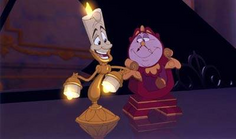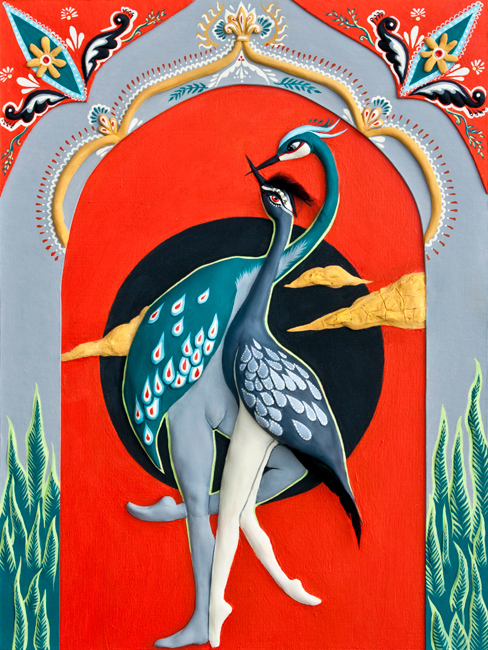
Anthropomorphism—the attribution of human traits, emotions, or intentions to non-human entities—has long been a cornerstone of poetic expression. From ancient myths to modern verse, poets have harnessed this device to explore identity, empathy, and the boundaries between self and other. Yet, beyond its surface charm lies a deeper fascination: the way anthropomorphism allows us to confront our own humanity by projecting it onto the world around us. The best anthropomorphic poems do more than personify animals or objects; they transform them into mirrors, reflecting our joys, fears, and contradictions back at us. This exploration delves into some of the most enduring and thought-provoking anthropomorphic poems, examining how they use the familiar to reveal the unfamiliar.
The Allure of the Animal Kingdom: When Beasts Speak in Verse
Animals have always been ideal vessels for anthropomorphism, their forms both distant and relatable. In poetry, they become eloquent interlocutors, their voices cutting through the silence of nature to articulate truths too complex for human tongues. Consider the fox in William Blake’s The Tyger, not as a mere predator but as a symbol of creation’s duality—both fierce and fragile. Blake’s tiger, with its “furnace” eyes and “dread hand,” embodies the sublime terror of existence, a creature that is at once beautiful and terrifying. Yet, it is the fox in John Clare’s The Badger that lingers most hauntingly. Clare’s badger, a “creature of the night,” is a solitary figure, digging “his home” with “toil unwearied,” its labor mirroring the poet’s own struggles. Here, anthropomorphism transcends mere personification; it becomes a bridge between species, a way to honor the dignity of the non-human world.
Modern poets continue this tradition with renewed urgency. In Mary Oliver’s The Summer Day, a grasshopper is not just an insect but a “teacher of stillness,” its “whirring” wings a reminder of life’s fleeting beauty. Oliver’s work exemplifies how anthropomorphism can elevate the mundane, turning a creature most would overlook into a guide for mindfulness. The poem’s closing question—”Tell me, what is it you plan to do / with your one wild and precious life?”—echoes the grasshopper’s own silent interrogation of existence. These poems do not anthropomorphize animals to make them cute or quaint; they do so to reveal the shared pulse of life, the unspoken dialogue between all sentient beings.

Objects with Agency: The Secret Lives of Inanimate Things
If animals lend poetry their voices, objects provide it with memory and metaphor. Anthropomorphism in this context is less about giving life to the lifeless and more about uncovering the latent narratives within the inanimate. Emily Dickinson’s I felt a Funeral, in my Brain is a masterclass in this technique. The poem’s speaker describes a funeral procession not in a church or a graveyard, but within their own mind, where “Mourners” are “treading—treading” until the “Windows” of the soul “fracture.” Here, the mind itself becomes a house with creaking floors and shuttered windows, its grief embodied in the very architecture of thought. Dickinson’s anthropomorphism is subtle, almost imperceptible; the mind is not a person, but it is treated as one, its suffering rendered tangible through the metaphor of a decaying structure.
On a lighter note, Lewis Carroll’s The Walrus and the Carpenter transforms two seaside figures into cunning capitalists, their gluttony a thinly veiled critique of Victorian society. The walrus, with his “shoes and ships and sealing-wax” speech, is a satirical stand-in for the privileged classes, while the carpenter, with his “oysters” in tow, represents the exploited masses. Carroll’s anthropomorphism is overt, even whimsical, yet it cuts to the heart of economic disparity. The poem’s enduring appeal lies in its ability to make abstract social structures feel as vivid and immediate as a seaside stroll. Objects and animals, when given human traits, become vessels for truths that might otherwise feel too vast or intangible to grasp.
The Mirror of Myth: Gods, Monsters, and Human Flaws
Anthropomorphism reaches its zenith in myth and legend, where deities and monsters are not just personified but fully realized characters, their flaws and virtues magnified to mythic proportions. Ovid’s Metamorphoses is a sprawling tapestry of such transformations, where humans become trees, rivers, or constellations in a cosmic dance of identity and consequence. In Daphne and Apollo, the nymph Daphne’s transformation into a laurel tree is not just a punishment but a liberation—a rejection of Apollo’s advances that allows her to escape the constraints of her mortal form. Ovid’s anthropomorphism here is not merely decorative; it is a commentary on power, desire, and the fluidity of being.
Modern retellings of myth continue to exploit this device. In Anne Carson’s Autobiography of Red, the Greek myth of Geryon is reimagined as a coming-of-age story, with the red monster Geryon as a sensitive, artistic adolescent navigating love and loss. Carson’s anthropomorphism is psychological; Geryon is not just a monster but a reflection of the outsider’s experience, his wings a burden and a gift. The poem’s blend of classical myth and contemporary angst underscores how anthropomorphism can bridge the ancient and the modern, the divine and the mundane. These poems remind us that myths are not relics of a bygone era but living, breathing narratives that shape our understanding of self and society.

Why We Are Drawn to the Humanized Other
The enduring fascination with anthropomorphic poetry is not merely a literary quirk; it is a psychological necessity. By endowing the non-human with human traits, we engage in a form of cognitive play, a way to test the boundaries of empathy and understanding. When a poet writes of a tree that “whispers” or a river that “laments,” they are not just employing a rhetorical device—they are inviting us to see the world as a network of interconnected voices, each with its own story to tell. This act of projection is not naive; it is a recognition of the limits of human language. How else can we describe the inexplicable pull of the ocean or the quiet resilience of a mountain but by giving them a voice?
Moreover, anthropomorphism allows poets to explore taboo subjects with a veneer of safety. A poem about a grieving widow might feel too raw, but a poem about a widowed willow tree, its branches “weeping” into the soil, can convey the same sorrow without the weight of personal tragedy. This distance is not a cop-out; it is a tool. It allows poets to tackle themes of loss, longing, and identity from an oblique angle, making the familiar strange and the strange familiar. In this way, anthropomorphic poetry becomes a form of emotional alchemy, transforming pain into beauty and isolation into connection.
There is also a subversive power to anthropomorphism, particularly in its ability to challenge hierarchies. By giving agency to the inanimate or the animal, poets subvert the human-centric worldview that has long dominated literature and culture. A poem about a sentient teapot or a philosophical octopus is not just whimsical; it is a radical act of reimagining who—or what—deserves a voice. In an era where environmental degradation and artificial intelligence force us to reconsider our relationship with the non-human world, such poems are more than art; they are a call to empathy, a reminder that the line between “us” and “them” is thinner than we think.
The Future of Anthropomorphic Verse: Where Do We Go From Here?
As technology and ecology reshape our understanding of personhood, the tradition of anthropomorphic poetry is poised for reinvention. Poems about sentient algorithms or climate-conscious landscapes are no longer the stuff of science fiction but of contemporary verse. Poets like Aracelis Girmay, in her collection The Black Maria, blend the human and the cosmic, giving voice to stars and storms as if they were kin. This evolution reflects a growing awareness that anthropomorphism need not be confined to the animal or the mythic; it can extend to the digital, the geological, even the cosmic.
The challenge for future poets will be to avoid the pitfalls of anthropomorphism—its tendency to anthropocentrism, its risk of trivializing the non-human by reducing it to a human caricature. The best anthropomorphic poems will be those that use the device not to flatten difference but to illuminate it, to show how the human and the non-human are intertwined in a dance of mutual influence. Whether through the lens of myth, the whisper of the wind, or the hum of a machine, these poems will continue to remind us that to see the world as alive is to see it as sacred—and to see ourselves as part of something greater.
In the end, the allure of anthropomorphic poetry lies in its ability to make the invisible visible, the silent vocal, and the distant intimate. It is a testament to the human imagination’s boundless capacity to find kinship in the most unlikely of places. And perhaps, in a world that often feels fragmented and alienating, that is the most profound magic of all.

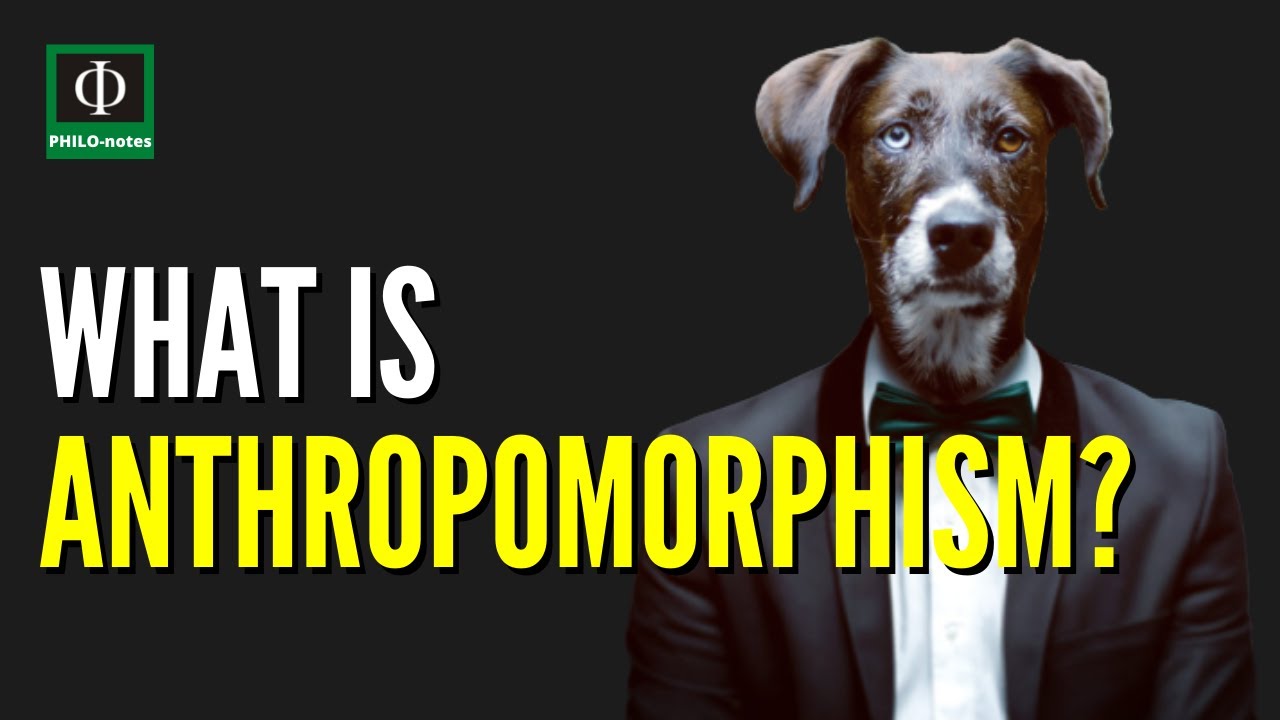
![Case Study: How [Comic Series] Used Anthropomorphism to Stand Out](https://anthropomorphism.org/wp-content/uploads/2026/05/San-Diego-Comic-Con-2-scaled-1.jpg)