There’s a peculiar alchemy in the way humanity has always gazed upon the world—not just as it is, but as it could be. We are, after all, creatures of narrative, forever weaving meaning from the threads of the unfamiliar. Among the most enduring of these threads is the figure of the anthropomorphic hero: a being who straddles the line between human and animal, embodying the raw essence of both worlds. Whether soaring through the skies as a lion with a scholar’s mind or standing resolute as a fox clad in armor, these characters captivate us not merely for their strangeness, but for the revelations they promise. They are mirrors, magnifying glasses, and portals—each one a key to unlocking perspectives we never knew we needed. To explore why we are so enchanted by these hybrid guardians is to embark on a journey through the heart of storytelling itself, where identity blurs, morality flexes, and the boundaries of empathy stretch beyond recognition.
The Allure of the Dual Nature: Why Hybridity Resonates
At the core of our fascination with anthropomorphic heroes lies a paradox: they are both familiar and alien, grounding us in the recognizable contours of human emotion while lifting us into realms where instinct and intellect dance in harmony. This duality is not a flaw—it is a feature. Consider the wolf who leads a pack with strategic brilliance or the owl who dispenses wisdom in riddles. These characters do not merely reflect human traits; they distill them, stripping away the noise of civilization to reveal the primal impulses that still pulse beneath our polished veneers. In doing so, they invite us to confront the duality within ourselves—the civilized diplomat who harbors a wolf’s hunger for justice, the scholar whose mind races like a cheetah in pursuit of truth. Anthropomorphism, then, becomes a form of narrative alchemy, transmuting the abstract into the tangible. It allows us to see our virtues and vices not as abstract concepts, but as living, breathing essences—often embodied in the very creatures we once relegated to the periphery of our imagination.
Moreover, hybrid beings subvert our expectations of what a hero can be. They challenge the rigid binaries that have long governed storytelling: human versus beast, rational versus instinctual, noble versus savage. By collapsing these divides, anthropomorphic heroes redefine heroism itself. A fox may outwit a dragon not through brute force, but through cunning and adaptability—qualities we often undervalue in favor of sheer power. A bear might protect a forest not out of duty, but because the forest is home, and home is worth fighting for. These narratives remind us that heroism is not a monolith; it is a spectrum, as varied as the creatures that populate our dreams.
The Mirror of Instinct: How Animal Traits Illuminate Human Nature
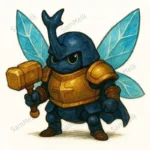
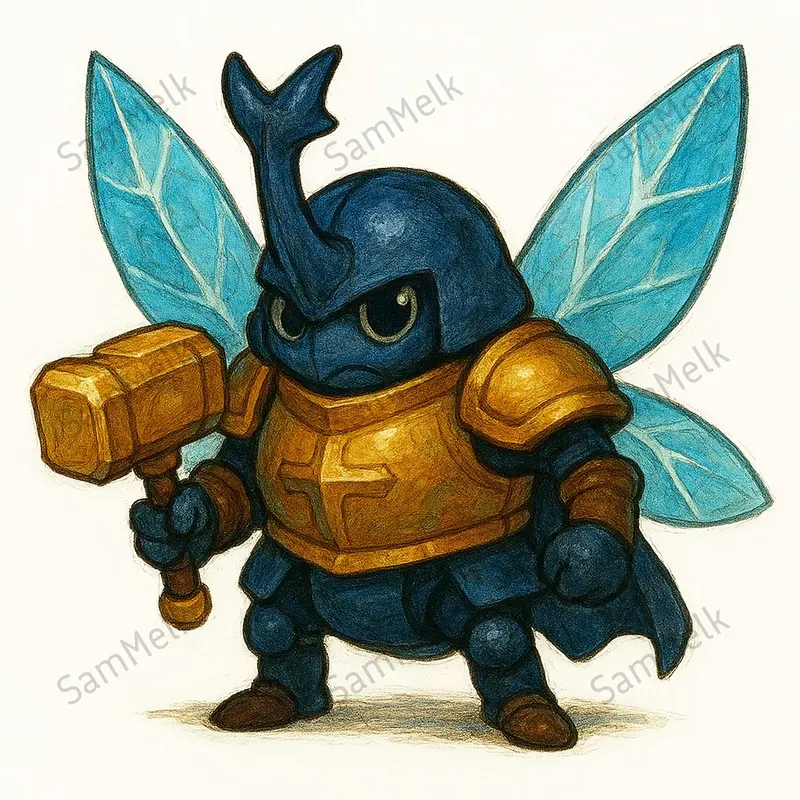
Anthropomorphic heroes serve as living parables, their animal traits acting as prisms through which we examine our own behaviors. A hawk’s unblinking gaze becomes a metaphor for vigilance; a deer’s skittishness, a symbol of vulnerability masked by grace. When a character like a badger wields a hammer with the precision of a blacksmith, we are not just witnessing craftsmanship—we are seeing the embodiment of perseverance, of the slow but unyielding grind toward mastery. These traits are not arbitrary; they are distilled essences of human experience, repackaged in a form that feels both ancient and immediate.
There is something deeply comforting in this reflection. In a world where human nature is often reduced to soundbites and statistics, anthropomorphic heroes offer a return to the tactile, the instinctual. They remind us that beneath the layers of technology and social constructs, we are still animals—driven by survival, guided by intuition, and bound by the rhythms of nature. Yet, they also elevate these instincts, showing us that our animalistic impulses need not be chaotic or destructive. They can be channeled into courage, into loyalty, into the kind of quiet strength that turns a lone wolf into a leader. In this way, these characters do not just reflect who we are—they challenge us to become better versions of ourselves, to harness the wild within us without letting it consume us.
The Power of the Uncanny: Why the Strange Feels Familiar
The anthropomorphic hero occupies a liminal space between the known and the unknown, a realm where the familiar and the alien coexist in uneasy harmony. This is the domain of the uncanny, a psychological landscape where the slightest deviation from the expected sends a shiver down our spines—and yet, somehow, feels right. There is a cognitive dissonance at play here: we recognize the human in the animal, and the animal in the human, and this recognition sparks a kind of cognitive resonance. It is as if our brains, wired to seek patterns and connections, suddenly find a perfect match—a puzzle piece that fits snugly into a space we didn’t even know was empty.
This phenomenon is not merely aesthetic; it is deeply psychological. Studies in cognitive science suggest that our brains are predisposed to anthropomorphize—to attribute human characteristics to non-human entities—because it helps us navigate a complex world. When a character like a tortoise carries the weight of the world on its back, we don’t see a reptile; we see a burdened sage, a symbol of patience and resilience. The anthropomorphic hero, then, is the ultimate anthropomorphized entity: a being that is undeniably other, yet undeniably *us*. This duality creates a cognitive tug-of-war, pulling us between curiosity and recognition, between the thrill of the unknown and the comfort of the familiar. It is this tension that makes anthropomorphic stories so compelling—we are drawn to them because they feel both alien and intimate, like a dream we half-remember upon waking.
Moral Flexibility: Heroes Who Defy Convention
Traditional heroes often adhere to a strict moral code: unwavering virtue, clear-cut victories, and an unshakable sense of right and wrong. Anthropomorphic heroes, however, frequently exist in moral gray areas, where the lines between good and evil are as blurred as the line between human and animal. A wolf might be a noble protector in one tale and a ruthless predator in another. A serpent could be a trickster, a guardian, or a tempter—each role reflecting a different facet of human morality. This moral flexibility is not a flaw; it is a feature that allows these characters to explore the complexities of ethics in a way that feels raw and real.
Consider the fox, a creature often associated with cunning and deception. In folklore, the fox is both villain and hero, a shape-shifter who challenges our notions of trust and betrayal. When a fox hero outsmarts a tyrant, we are not just witnessing a triumph of wit over brute force—we are confronting the idea that morality is not always black and white. The fox’s actions force us to ask: Is deception justified if it leads to a greater good? Can a hero be flawed and still worthy of admiration? These questions linger long after the story ends, prodding us to reconsider our own moral compasses. Anthropomorphic heroes, with their animalistic instincts and human-like emotions, are uniquely positioned to explore these ambiguities. They remind us that heroism is not about perfection; it is about resilience, adaptability, and the courage to make difficult choices.
The Call of the Wild: Escapism with a Purpose
In an era where the boundaries between the natural and the artificial are increasingly porous, anthropomorphic heroes offer a form of escapism that feels both urgent and necessary. They beckon us to a world where the wild is not tamed, where the forest hums with secrets, and where the wind carries the scent of adventure. Yet, this escapism is not mere fantasy; it is a deliberate retreat from the sterile confines of modern life, a return to a world where instinct and intuition still hold sway. These stories do not just entertain—they reawaken something dormant within us, a longing for connection with the natural world and the primal forces that shape it.
There is a quiet rebellion in this. In a society that often prioritizes efficiency over emotion, anthropomorphic heroes champion the virtues of instinct, intuition, and raw emotion. They remind us that there is wisdom in the howl of the wolf at midnight, in the silent vigilance of the owl, in the relentless pursuit of the stag. These characters do not just inhabit the wild; they embody it, and in doing so, they invite us to do the same. They challenge us to listen to the whispers of the wind, to heed the call of the wild within ourselves. This is not escapism for its own sake; it is a reclaiming of parts of ourselves that modernity has tried to suppress. Anthropomorphic heroes, then, are not just characters in a story—they are guides, leading us back to a world where nature and humanity are not separate, but intertwined.
The Future of the Hybrid Hero: Evolving with the Times
As our understanding of identity, nature, and morality continues to evolve, so too does the role of the anthropomorphic hero. No longer confined to the pages of children’s books or the frames of animated films, these characters now stride boldly into genres as diverse as cyberpunk, dystopian fiction, and even hard science fiction. A cybernetic raven might hack into a corporate mainframe, while a genetically engineered wolf could lead a rebellion against a totalitarian regime. These modern iterations of the hybrid hero reflect our changing world, where the boundaries between human and machine, nature and technology, are increasingly blurred. They challenge us to ask: What does it mean to be human in a world where humanity itself is no longer a fixed concept?
Moreover, the anthropomorphic hero is becoming a powerful vehicle for exploring contemporary issues such as environmentalism, social justice, and identity. A story about a herd of elephants fighting to reclaim their ancestral lands resonates deeply in an era of climate crisis and land grabs. A tale of a transgender stag navigating a forest divided by prejudice mirrors the struggles of marginalized communities. These narratives do not just entertain; they provoke, they educate, they inspire. They remind us that the hybrid hero is not a relic of the past, but a harbinger of the future—a figure who will continue to evolve alongside us, reflecting our fears, our hopes, and our endless capacity for reinvention.