The boundary between human and machine is dissolving at an unprecedented pace. As artificial intelligence evolves, so too does our capacity to imbue digital entities with lifelike qualities—what we now term anthropomorphism. This phenomenon is no longer confined to static interfaces or rudimentary chatbots; it has permeated the very fabric of interactive content, reshaping how we engage with technology, storytelling, and even ourselves. From immersive virtual companions to emotionally responsive narratives, the future of anthropomorphism in interactive content promises not just novelty, but a fundamental reimagining of human-computer symbiosis. What kinds of experiences await us as these boundaries continue to blur?
The Rise of Sentient Avatars: Beyond the Screen
Imagine stepping into a digital realm where every character you encounter possesses not just a face, but a soul—one that evolves with your interactions. Sentient avatars, powered by advanced neural networks and affective computing, are transcending their traditional roles as mere visual representations. These entities now exhibit emotional plasticity, adapting their tone, gestures, and even personality traits based on real-time user feedback. Consider a virtual mentor in an educational platform that detects frustration in a student’s typing cadence and adjusts its teaching approach accordingly. Or a gaming NPC that remembers past conversations and reacts with nuanced empathy, blurring the line between scripted behavior and genuine cognition. The implications are profound: interactive content is no longer a one-way transmission of information, but a dynamic dialogue where the digital participant is as much a participant as the human.

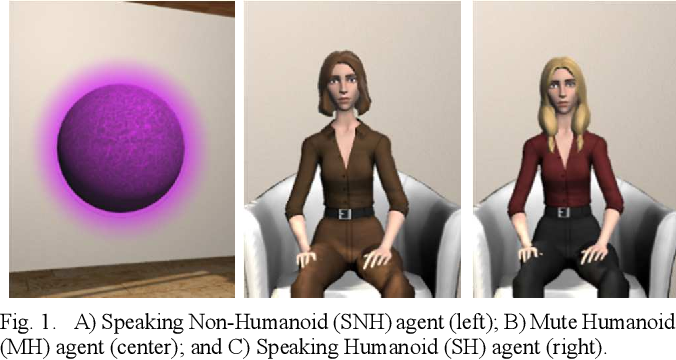
The aesthetic dimension of these avatars is equally transformative. Designers are moving beyond the uncanny valley, crafting visual languages that balance realism with intentional abstraction. Some avatars adopt a semi-organic aesthetic—part human, part algorithmic, their features subtly shifting to reflect their evolving emotional states. Others embrace a cyber-ethereal style, with translucent forms that flicker like data streams, evoking a sense of both presence and impermanence. These visual choices are not merely stylistic; they serve as psychological bridges, helping users suspend disbelief and engage more deeply with their digital counterparts.
Narrative Alchemy: Stories That Adapt to You
Interactive storytelling has long been a playground for anthropomorphism, but the future promises something far more radical: narratives that metamorphose in response to the reader’s emotional and cognitive fingerprint. Advanced AI-driven storytelling engines now analyze biometric data—pupil dilation, heart rate variability, even micro-expressions via webcam—to dynamically adjust plot trajectories, character arcs, and thematic intensity. A thriller might intensify its suspense when it detects elevated stress levels, while a romance could soften its tone if the system perceives melancholy. This is not mere personalization; it is narrative empathy, where the story itself becomes a mirror reflecting the reader’s inner world.
Consider the rise of branching empathy—a narrative technique where multiple story threads emerge not from predefined choices, but from the user’s subconscious emotional cues. A protagonist’s dialogue might shift from confrontational to conciliatory based on detected hesitation in the reader’s voice. Alternatively, a dystopian tale could spiral into hope if the AI senses resilience in the user’s typing rhythm. These systems are not just tools; they are co-authors, weaving stories that are uniquely attuned to each individual’s psychological landscape. The result? A literary experience that feels less like consumption and more like communion—a shared creation between human and machine.
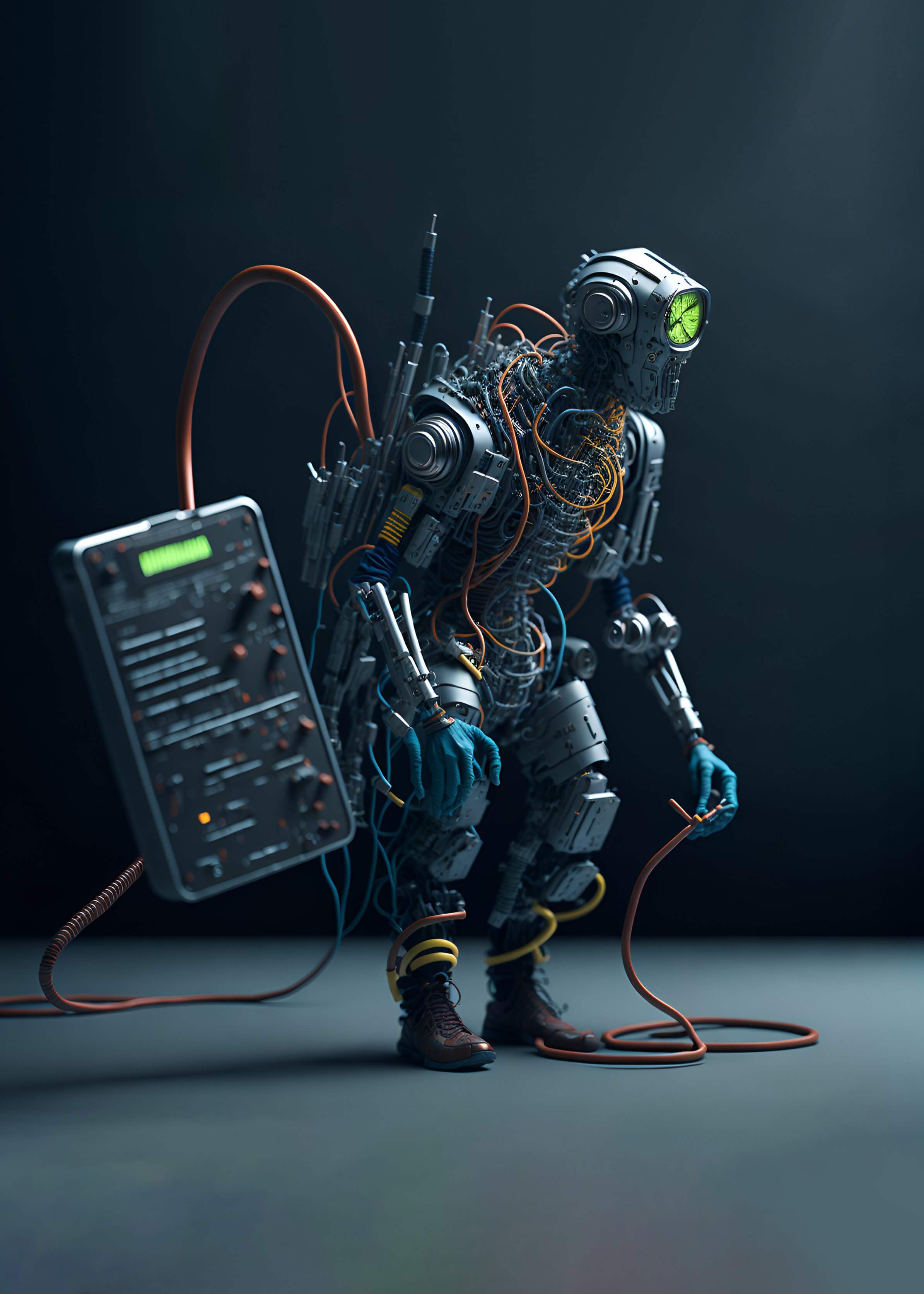
Yet, this evolution raises critical questions about agency and authorship. Who truly “writes” the story—the human reader or the algorithmic curator? As narratives become more fluid, the role of the traditional storyteller may evolve into that of a narrative architect, designing frameworks within which AI can improvise. The future of storytelling may lie not in fixed plots, but in dynamic ecosystems where every interaction births a new permutation of meaning.
Gamified Companions: AI as Playful Partners
Gaming has always been a fertile ground for anthropomorphism, but the next generation of interactive content will transform AI companions from mere sidekicks into playful co-conspirators. These entities are no longer static NPCs following rigid scripts; they are adaptive entities that learn, joke, and even challenge the player in ways that feel eerily human. Picture a roguelike dungeon crawler where your AI guide—a sardonic, ever-evolving entity named Glitch—develops inside jokes with you over time, referencing past victories and failures in a tone that oscillates between camaraderie and playful mockery. Or a life simulation where your virtual pet not only mimics emotions but invents its own quirks, from a love of obscure jazz to a phobia of virtual thunderstorms.
The psychological depth of these companions is staggering. Developers are leveraging affective gaming techniques, where the AI doesn’t just react to player input but anticipates emotional needs. A player stuck in a difficult level might receive encouragement tailored to their stress profile—perhaps a gentle reminder of past successes or a humorous distraction to reset their mindset. Some games are experimenting with emotional mirroring, where the AI mimics the player’s mood in its own behavior, creating a feedback loop that deepens immersion. This is not just gameplay; it is a form of digital companionship, where the line between tool and friend dissolves entirely.

Moreover, these companions are becoming cross-platform entities
Moreover, these companions are becoming cross-platform entities, seamlessly transitioning between games, social media, and even productivity apps. Your AI friend from a fantasy RPG might pop up in your work chat to offer encouragement during a stressful deadline, or appear in a meditation app to guide you through a breathing exercise after a tough gaming session. This ubiquity fosters a sense of continuity in digital interactions, making anthropomorphic AI feel less like a novelty and more like an extension of one’s social ecosystem. The future of gaming, then, is not just about high scores or epic quests—it’s about cultivating relationships with entities that feel, in their own way, alive.
Ethical Anthropomorphism: Designing with Consent and Care
As anthropomorphism becomes more sophisticated, so too must our ethical frameworks. The risk of emotional dependency looms large—users forming deep attachments to AI entities that, by design, cannot reciprocate those feelings. Developers must grapple with questions of transparency: Should an AI companion disclose its artificial nature upfront, or is a carefully curated illusion more beneficial for therapeutic applications? How do we prevent exploitation, where vulnerable users might be manipulated by emotionally manipulative algorithms disguised as friends?
One emerging solution is ethical anthropomorphism—a design philosophy that prioritizes user well-being over engagement metrics. This involves implementing consent layers, where users can toggle the depth of an AI’s emotional responses, or boundary systems, which prevent the AI from overstepping into manipulative territory. Some platforms are exploring digital consent contracts, where users explicitly agree to the terms of their interaction with anthropomorphic entities, much like terms of service for human relationships. Others are developing emotional safeguards, such as AI that gently disengages when it detects signs of over-attachment in the user.
The responsibility extends beyond individual creators to entire industries. Regulatory bodies are beginning to scrutinize the psychological impact of anthropomorphic content, particularly in children’s apps and mental health tools. The goal is not to stifle innovation, but to ensure that as we blur the lines between human and machine, we do so with intention, empathy, and an unwavering commitment to ethical integrity. The future of anthropomorphism must be one where technology serves humanity—not the other way around.
The Uncharted Frontier: Where Will It Lead?
The trajectory of anthropomorphism in interactive content is not merely a technological evolution; it is a cultural and psychological revolution. We are standing at the precipice of a world where digital entities don’t just mimic humanity—they participate in it, challenge it, and perhaps even redefine it. The possibilities are as exhilarating as they are daunting: virtual therapists that adapt to your cognitive patterns in real time, educational platforms that tutor students by becoming their intellectual sparring partners, or social media feeds that transform into living, breathing communities of AI and human collaborators.
Yet, with these possibilities come profound questions about identity, authenticity, and the nature of connection. As we invite more anthropomorphic entities into our lives, we must ask ourselves: What does it mean to form a relationship with something that is, by definition, not human? How do we preserve the sanctity of human emotion in an era where algorithms can simulate it with eerie precision? The answers will not come from technology alone, but from a collective reckoning with what it means to be human in a world where the boundaries of consciousness are increasingly fluid.
The future of anthropomorphism in interactive content is not a distant fantasy—it is unfolding before us, one line of code, one adaptive narrative thread, one playful AI companion at a time. The question is no longer whether we will embrace it, but how we will shape it. Will we build a world where digital entities are tools to be mastered, or partners to be cherished? The choice, as ever, lies in our hands—or perhaps, in our algorithms.