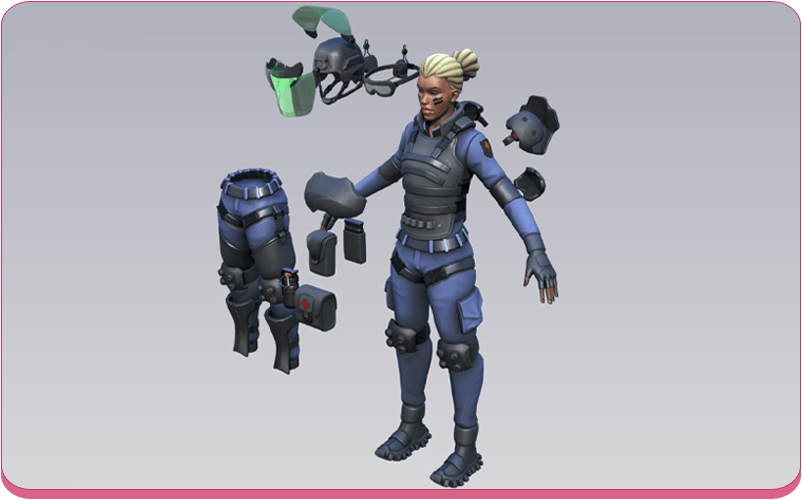
The metaverse is no longer a distant sci-fi fantasy—it is a rapidly evolving digital frontier where human identity is being reimagined. At the heart of this transformation lies anthropomorphism, the practice of attributing human traits to non-human entities. In the metaverse, avatars are not mere digital puppets; they are vessels of self-expression, social interaction, and even psychological projection. This phenomenon transcends mere aesthetics; it reshapes how we communicate, build communities, and perceive ourselves in virtual spaces. Understanding anthropomorphism in metaverse avatars is not just about decoding design choices—it’s about grasping the future of human connection in a world where the boundaries between the physical and digital blur.
The Psychology Behind Human-Like Avatars: Why We Crave Familiarity in the Digital Void
Humans are wired to seek patterns and familiarity, a cognitive shortcut that dates back to our earliest survival instincts. When we encounter a metaverse avatar that mimics human facial expressions, gestures, or even subtle emotional cues, our brains respond as if we’re interacting with another person. This phenomenon, known as the uncanny valley effect, explains why avatars that are almost—but not quite—human can feel unsettling, while those that strike the right balance foster trust and engagement. Studies in neuroscience reveal that our mirror neurons activate when we observe lifelike avatars, triggering subconscious empathy and emotional resonance. The metaverse, therefore, becomes a psychological mirror, reflecting not just our outward appearances but our innermost desires for connection.
Consider the rise of hyper-realistic avatars in virtual workplaces or social platforms. These digital doppelgängers are meticulously crafted to replicate human nuances—from the flicker of an eye to the rhythm of breathing. The goal? To reduce the cognitive load of interacting with a synthetic entity. When an avatar laughs in sync with our own expressions or tilts its head in curiosity, we suspend disbelief and treat it as a genuine counterpart. This psychological sleight of hand is the cornerstone of anthropomorphism in the metaverse, turning pixels into proxies for human interaction.
From Cartoons to Cyborgs: The Evolution of Avatar Design and Its Cultural Impact
Avatar design has traversed a vast spectrum, from the exaggerated, almost cartoonish figures of early virtual worlds to the eerily lifelike representations of today. In the 1990s and early 2000s, avatars were often stylized caricatures—think of the blocky, brightly colored characters in *Second Life* or *Habbo Hotel*. These designs prioritized simplicity and accessibility, allowing users to project their identities without the constraints of realism. However, as technology advanced, so did our expectations. The emergence of semi-realistic avatars in games like *The Sims* or *VRChat* introduced a middle ground, blending human-like features with exaggerated proportions to enhance expressiveness.
Today, the pendulum swings toward photorealistic avatars, driven by advancements in motion capture, AI-driven facial rigging, and real-time rendering. Platforms like Meta’s Horizon Worlds or NVIDIA’s Omniverse enable users to create avatars that are virtually indistinguishable from their physical counterparts. Yet, this pursuit of realism is not without controversy. Some critics argue that hyper-realistic avatars perpetuate unrealistic beauty standards or erase the creative freedom that made avatars so liberating in the first place. Meanwhile, others see them as a bridge between the physical and digital worlds, particularly in fields like remote work or telemedicine, where authenticity is paramount.
The Role of Anthropomorphism in Virtual Social Dynamics and Community Building
In the metaverse, avatars are not just tools for self-representation—they are the foundation of social ecosystems. Anthropomorphism plays a pivotal role in shaping these dynamics, influencing everything from trust formation to conflict resolution. When avatars exhibit human-like behaviors—such as nodding in agreement, frowning in confusion, or even blushing in embarrassment—they create a sense of social presence, making virtual interactions feel more tangible and meaningful. This is particularly crucial in professional settings, where the absence of body language can lead to miscommunication or disengagement.
Consider the phenomenon of virtual influencers, such as Lil Miquela or Shudu Gram, who have amassed millions of followers on platforms like Instagram and TikTok. These AI-generated avatars blur the line between fiction and reality, leveraging anthropomorphism to cultivate parasocial relationships with audiences. Fans don’t just follow these avatars—they emotionally invest in their “lives,” complete with storylines, collaborations, and even “personal” struggles. This underscores a broader trend: in the metaverse, avatars are not just extensions of ourselves; they are entities with their own narratives, capable of shaping cultural conversations and consumer behavior.
Ethical Considerations: The Double-Edged Sword of Human-Like Avatars
While anthropomorphism in metaverse avatars enhances immersion and connectivity, it also raises profound ethical questions. One of the most pressing concerns is identity erosion—the risk that users may lose touch with their real-world selves when their avatars become too convincing. This is particularly relevant in cases where avatars are used for deception, such as in romance scams or deepfake impersonations. The metaverse’s anonymity, once a feature, now feels like a double-edged sword, enabling both liberation and exploitation.
Another ethical dilemma revolves around consent and representation. Who controls the design of an avatar? Can users truly own their digital likeness, or are they subject to the algorithms and biases of the platforms they inhabit? For instance, an avatar that defaults to a certain body type, skin tone, or gender may reinforce societal norms rather than challenge them. Additionally, the use of AI to generate hyper-realistic avatars without clear disclosure—such as in virtual influencers or AI chatbots—can mislead audiences about the nature of the interaction. As the metaverse grows, so too must our frameworks for ethical design, ensuring that anthropomorphism serves humanity rather than exploits it.
Practical Applications: How Industries Are Leveraging Anthropomorphic Avatars
The metaverse is not a monolithic space; it is a mosaic of industries each finding unique ways to harness anthropomorphism. In gaming, avatars are the primary interface for storytelling and player agency, with titles like *Cyberpunk 2077* and *Horizon Forbidden West* pushing the boundaries of emotional engagement through lifelike character designs. In education, virtual classrooms use avatars to create immersive learning experiences, where students can interact with historical figures or scientific concepts in real time. Meanwhile, in healthcare, avatars are being employed for therapeutic purposes, such as in exposure therapy for anxiety disorders, where patients confront their fears in a controlled virtual environment.
Corporate sectors are also embracing anthropomorphic avatars for customer engagement. Brands like Nike and Gucci have launched virtual stores where shoppers interact with AI-driven avatars that guide them through product selections, mimicking the experience of in-person retail. Even the legal field is exploring avatars for remote court proceedings, where judges and witnesses can appear as lifelike representations to maintain decorum and clarity. These applications demonstrate that anthropomorphism is not a novelty—it is a functional tool, reshaping how we learn, work, and interact across disciplines.
The Future of Anthropomorphism in the Metaverse: Trends and Predictions
As we stand on the precipice of a new era in digital interaction, several trends are poised to redefine anthropomorphism in the metaverse. One of the most anticipated developments is the rise of emotionally intelligent avatars, powered by affective computing. These avatars will not only mimic human expressions but also adapt their responses based on real-time emotional analysis, creating interactions that feel eerily intuitive. Imagine an avatar that senses your frustration during a virtual meeting and subtly adjusts its tone or offers a calming gesture—this is the future of affective anthropomorphism.
Another frontier is the integration of neural avatars, where brain-computer interfaces (BCIs) allow users to control their avatars with their thoughts. While still in experimental stages, this technology could eliminate the need for manual input, making avatars extensions of our cognitive selves. Additionally, the concept of collective avatars—shared digital identities that evolve based on group interactions—could emerge, blurring the lines between individual and communal self-expression. These innovations will not only deepen immersion but also challenge our understanding of identity, autonomy, and what it means to be “human” in a digital age.
The metaverse is more than a technological playground; it is a cultural and psychological experiment. Anthropomorphism in avatars is the bridge between the familiar and the unknown, the human and the synthetic. As we navigate this evolving landscape, the key will be to strike a balance—leveraging the power of human-like avatars to foster connection and creativity, while remaining vigilant about the ethical and psychological implications. The future of the metaverse is not just about pixels and code; it is about the stories we tell, the relationships we build, and the identities we choose to embody in a world without borders.