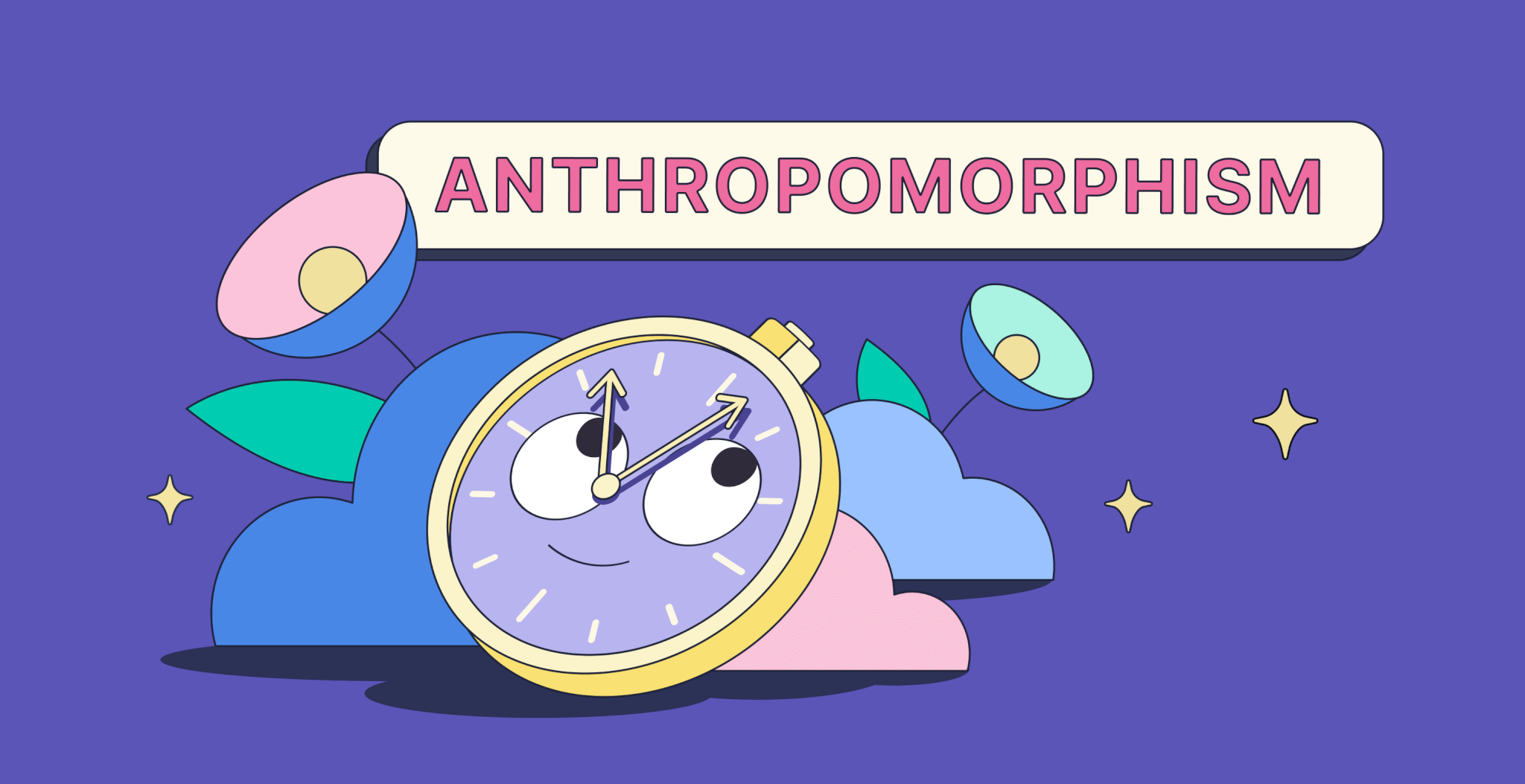
Have you ever chuckled at a cartoon squirrel donning a tiny top hat, or felt a pang of sympathy for a teapot that just wanted to pour itself? These moments, where inanimate objects or animals take on human traits, are not mere whimsy—they’re windows into one of humanity’s oldest narrative tools: anthropomorphism. This phenomenon isn’t just a playful trick of storytelling; it’s a psychological bridge that connects us to the world in ways both profound and instinctive.
The Allure of the Humanized: Why We See Ourselves in Everything
Anthropomorphism is the cognitive act of attributing human characteristics—thoughts, emotions, intentions, or physical traits—to non-human entities. It’s the reason we describe a stubborn mule as “pig-headed,” or marvel at a storm that “rages” like a furious monarch. This tendency isn’t confined to language; it’s a fundamental feature of how our brains process the unfamiliar. Evolutionary psychologists suggest that our ancestors relied on anthropomorphism to predict the behavior of predators, prey, and even weather patterns. Seeing human-like agency in the environment may have been the difference between life and death—a survival mechanism disguised as storytelling.
But anthropomorphism isn’t just a relic of our past. It thrives in modern media, from the sassy sidekick robot in a sci-fi film to the melancholic teapot in a children’s cartoon. This persistence hints at something deeper: our brains are wired to seek patterns, and human traits are the most familiar patterns of all. When we imbue a storm with rage or a river with sorrow, we’re not just being poetic—we’re making the incomprehensible tangible, turning chaos into a narrative we can understand.

The Spectrum of Humanization: From Objects to Deities
Anthropomorphism isn’t a binary switch—it exists on a spectrum, ranging from subtle linguistic flourishes to full-blown personification. At its most restrained, it’s the use of human metaphors: “the wind howled,” “the clock ticked impatiently.” These phrases don’t suggest the wind or clock are literally alive, but they evoke a sense of agency that makes the scene more vivid. On the opposite end of the spectrum are deities and mythological figures, where gods take human form and animals speak in parables. In ancient Egyptian religion, the jackal-headed Anubis wasn’t just a symbol—he was a fully realized entity with human emotions and motives.
Between these extremes lie the characters that populate our favorite stories. Consider the chatty animals of Aesop’s fables, where a fox outwits a crow, or the enchanted household objects in *Beauty and the Beast*. These aren’t just clever metaphors; they’re invitations to suspend disbelief and engage with the world on a childlike, imaginative level. The line between personification and reality blurs, and for a moment, we believe the impossible.
The Psychological Underpinnings: Why We Can’t Resist Giving Life to the Lifeless
Neuroscience offers a compelling explanation for our fascination with anthropomorphism: the brain’s tendency to over-attribute agency. This phenomenon, known as “hyperactive agency detection,” is a byproduct of our evolutionary need to distinguish between friend and foe. Our ancestors who mistook a rustling bush for a predator were more likely to survive than those who assumed it was just the wind. Today, this same mechanism leads us to see faces in clouds or hear whispers in static—a phenomenon called pareidolia.
But anthropomorphism isn’t just about survival; it’s about connection. When we humanize non-human entities, we’re essentially practicing empathy. A study published in the *Journal of Experimental Psychology* found that people who anthropomorphized robots were more likely to treat them with kindness, suggesting that our tendency to see human traits in machines might be a way to bridge the gap between the familiar and the unfamiliar. This explains why we feel protective of a lonely streetlamp in a noir film or cheer for a sentient toaster in a comedy sketch.

Anthropomorphism in Culture: From Myths to Marketing
Anthropomorphism isn’t just a literary device—it’s a cultural cornerstone. Ancient civilizations personified natural forces to explain the unexplainable. The Greeks had Zeus, who hurled thunderbolts from Mount Olympus, while the Norse worshipped Thor, the god of storms. These deities weren’t just symbols; they were narratives that helped societies make sense of the world. Even today, we see this in modern branding: the Michelin Man, the Pillsbury Doughboy, and the M&M’s characters all rely on anthropomorphism to create emotional connections with consumers.
In literature, anthropomorphism serves as a powerful tool for satire and social commentary. George Orwell’s *Animal Farm* uses barnyard animals to critique totalitarianism, while Lewis Carroll’s *Alice in Wonderland* turns playing cards into a tyrannical royal court. These stories resonate because they take complex ideas—power, oppression, identity—and frame them in a way that’s accessible and emotionally resonant. By humanizing animals or objects, authors invite readers to engage with abstract concepts on a personal level.
The Dark Side of Humanization: When Anthropomorphism Misleads
While anthropomorphism can be a source of wonder, it’s not without its pitfalls. When we attribute human traits to non-human entities, we risk distorting reality. Climate change deniers might anthropomorphize the Earth as a “patient” that can “heal itself,” ignoring the fact that ecosystems don’t operate on human timescales or with human intentions. Similarly, corporations often use anthropomorphic mascots to mask unethical practices, turning a profit-driven entity into a “friendly neighbor” that cares about your well-being.
There’s also the ethical dilemma of anthropomorphism in artificial intelligence. As robots and AI systems become more advanced, we risk overestimating their capabilities or imbuing them with emotions they don’t possess. This “uncanny valley” effect—where human-like robots evoke discomfort or revulsion—highlights the dangers of blurring the line between human and machine. When we treat AI as if it has consciousness, we might inadvertently absolve humans of responsibility for its actions.
Beyond the Basics: Advanced Anthropomorphism in Art and Science
Anthropomorphism isn’t limited to storytelling or marketing—it’s a tool used in science and art to bridge gaps between disciplines. In astronomy, planets are often given human names (Mars, Venus) or described with human-like qualities (“the red planet’s angry hue”). In psychology, therapists might use anthropomorphic techniques to help patients explore their emotions by personifying abstract feelings as characters. Even in robotics, engineers design robots with human-like faces to facilitate social interaction, a field known as social robotics.
Artists, too, push the boundaries of anthropomorphism. Salvador Dalí’s melting clocks in *The Persistence of Memory* suggest a world where time itself is fluid and subjective. Meanwhile, contemporary artists like Patricia Piccinini create hyper-realistic sculptures of chimeric creatures, blurring the line between human and animal in ways that challenge our perceptions of identity and ethics. These works force us to confront the consequences of our tendency to humanize the non-human.

Embracing the Magic: How to See the World Anew
Anthropomorphism invites us to see the world through a lens of wonder. It’s a reminder that our brains are not just machines for logic but storytellers that seek meaning in the chaos. Next time you see a grumpy old house or a mischievous gust of wind, pause and consider: what deeper truth is this humanization revealing? Perhaps it’s a reflection of our own emotions, projected onto the world around us. Or maybe it’s a testament to our innate desire to connect, even with the inanimate.
In a time when technology and nature often feel distant and impersonal, anthropomorphism offers a way to reconnect. It’s not about losing ourselves in fantasy but about rediscovering the magic in the mundane. So the next time you anthropomorphize a stubborn door hinge or a grumpy cat, lean into the moment. You’re not just being silly—you’re participating in one of humanity’s oldest and most enduring traditions: the art of seeing ourselves in everything.