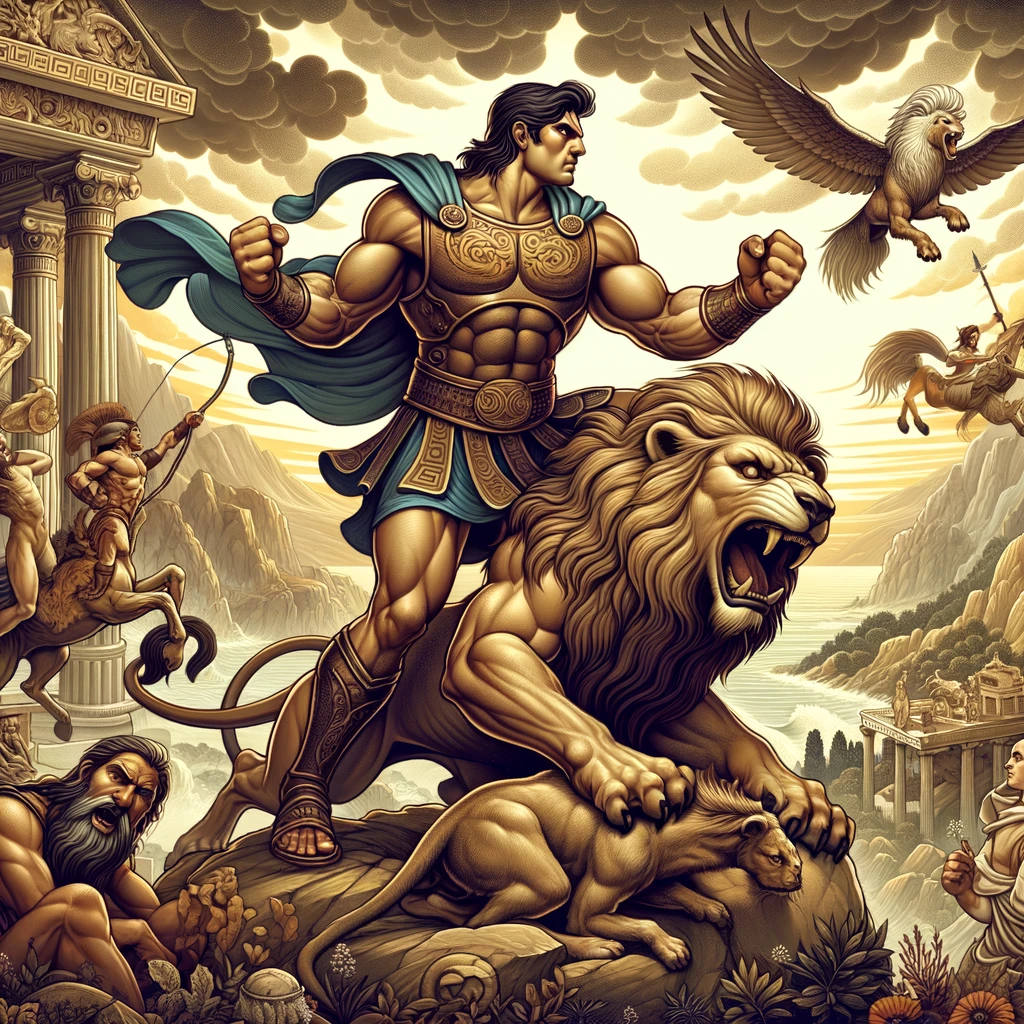
Anthropomorphism—the attribution of human traits, emotions, and intentions to non-human entities—has long been a cornerstone of mythological storytelling. From the thunder-wielding Zeus to the cunning fox spirits of East Asian lore, these narratives do more than entertain; they reveal humanity’s deep-seated need to interpret the world through a familiar lens. The fascination with gods, animals, and their hybrid forms transcends mere allegory, tapping into primal instincts of connection and control. What drives this enduring appeal? Perhaps it lies in the way these figures bridge the gap between the known and the unknown, offering a framework to comprehend forces beyond human grasp. Whether through the majestic griffin, the trickster coyote, or the wise owl, anthropomorphism transforms the abstract into the tangible, the divine into the relatable.
The Allure of Divine Personification: Why Gods Wear Human Faces
Mythologies across cultures frequently depict deities with human emotions, flaws, and ambitions, a phenomenon that underscores a fundamental human desire for relatability. The ancient Greeks, for instance, endowed their pantheon with jealousy, wrath, and love, mirroring the complexities of mortal life. This anthropomorphic lens served a dual purpose: it made the divine accessible while also justifying the capriciousness of natural phenomena. A storm was not merely a meteorological event but the wrath of Thor; a harvest’s failure was not random but the displeasure of Demeter. By humanizing the supernatural, early societies could rationalize the chaos of existence, attributing agency to forces they could not otherwise control. This practice persists today in modern religions and even secular storytelling, where gods and cosmic entities often retain human-like motivations, ensuring their relevance in an ever-changing world.
The psychological underpinnings of this phenomenon are equally compelling. Carl Jung’s concept of the archetype suggests that anthropomorphic deities are manifestations of collective unconscious patterns—universal templates that resonate across civilizations. The nurturing mother figure, the vengeful father, the trickster sibling—these roles recur in myths worldwide, suggesting an innate human need to categorize and personify abstract concepts. When a deity like the Hindu goddess Kali dances atop a corpse, her form embodies the duality of destruction and rebirth, a paradox that mirrors the cyclical nature of life itself. Such representations transform the ineffable into the conceivable, allowing humans to grapple with existential questions through narrative.
Beasts with Souls: The Symbolism of Animal Deities
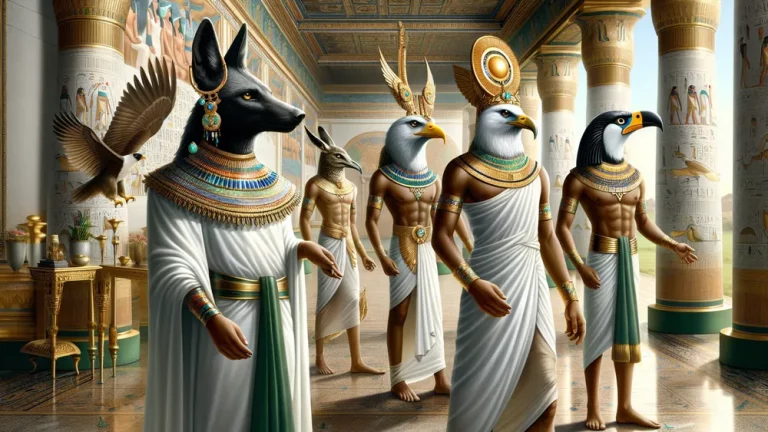
Animals have always occupied a sacred space in mythology, often serving as intermediaries between the human and the divine. The Egyptian jackal-headed Anubis, guide of the dead, exemplifies this role, his animal form emphasizing his connection to the liminal realm of the afterlife. Similarly, the Hindu god Ganesha, with his elephant head, symbolizes wisdom and the removal of obstacles, his non-human features underscoring the idea that enlightenment transcends mere physical form. These animal deities are not mere symbols; they are living embodiments of cultural values, their traits—loyalty, cunning, ferocity—reflected in the societies that worship them.
Yet the symbolism of animal deities extends beyond mere representation. Many cultures view animals as possessing a numen—a spiritual essence or power—that humans lack. The Native American trickster figure, often an animal like the coyote or raven, disrupts order not out of malice but to teach lessons through chaos. This duality—both reverence and subversion—highlights the complex relationship between humans and the natural world. Animals, in their unbridled freedom, become mirrors for human virtues and vices, their behaviors offering moral lessons without the constraints of human morality. The fox, a recurring trickster in global folklore, is both a cunning survivor and a symbol of deception, its dual nature forcing societies to confront their own contradictions.

Hybrids: The Fusion of Human and Beast in Mythic Imagination
Hybrid creatures—those enigmatic blends of human and animal—occupy a unique space in mythology, embodying the tension between civilization and wildness. The centaur, half-man half-horse, represents the struggle between rational thought and primal instinct, a duality that resonates in philosophical traditions from Plato to Nietzsche. Similarly, the mermaid, with her human upper body and fish tail, symbolizes the allure and danger of the unknown depths, a metaphor for the subconscious mind. These hybrids are not mere fantastical inventions; they are psychological and cultural artifacts, reflecting humanity’s ambivalence toward its own nature.
The creation of such beings often serves a narrative function, allowing storytellers to explore themes of transformation and identity. The Greek myth of the Minotaur, a monstrous fusion of man and bull, is a cautionary tale about the consequences of unchecked desire and the dangers of hybridity itself. Yet not all hybrids are monstrous. The sphinx, with her human head and lion’s body, poses riddles that challenge the intellect, suggesting that wisdom is not confined to a single form. This duality—both threat and enigma—highlights the role of hybrids as liminal figures, existing at the threshold of human understanding. They force us to question where one category ends and another begins, a question that echoes in modern debates about transhumanism and artificial intelligence.
The Psychological and Cultural Functions of Anthropomorphism
Anthropomorphism in mythology is not merely a literary device; it is a cognitive tool that aids in comprehension and emotional processing. Studies in developmental psychology suggest that children naturally anthropomorphize objects and animals, attributing intentions and emotions to inanimate things. This tendency persists into adulthood, particularly in times of uncertainty or stress, when the human brain seeks patterns and agency in the world around it. Mythological figures, with their human-like qualities, provide a scaffold for understanding complex ideas—whether the capriciousness of fate or the inevitability of death.
Culturally, anthropomorphism serves as a means of social cohesion and moral instruction. The Norse god Loki, a shape-shifting trickster, embodies the unpredictability of life, teaching that even the most chaotic events serve a purpose. In Japanese folklore, the kitsune (fox spirit) can be a benevolent guide or a malevolent deceiver, reflecting the dual nature of human relationships. These stories, passed down through generations, reinforce communal values and offer frameworks for navigating ethical dilemmas. By personifying abstract concepts like justice, fate, or time, mythology transforms abstract ideals into tangible entities, making them easier to discuss, debate, and internalize.
The endurance of anthropomorphic figures in modern media—from Disney’s talking animals to Marvel’s superhuman deities—attests to their timeless appeal. These characters continue to evolve, adapting to contemporary anxieties about technology, identity, and the environment. Yet their core function remains unchanged: to make the incomprehensible comprehensible, the distant intimate, and the divine human. In an era of rapid change and uncertainty, the old myths remind us that the need to personify the unknown is not a relic of the past but a fundamental aspect of the human experience.