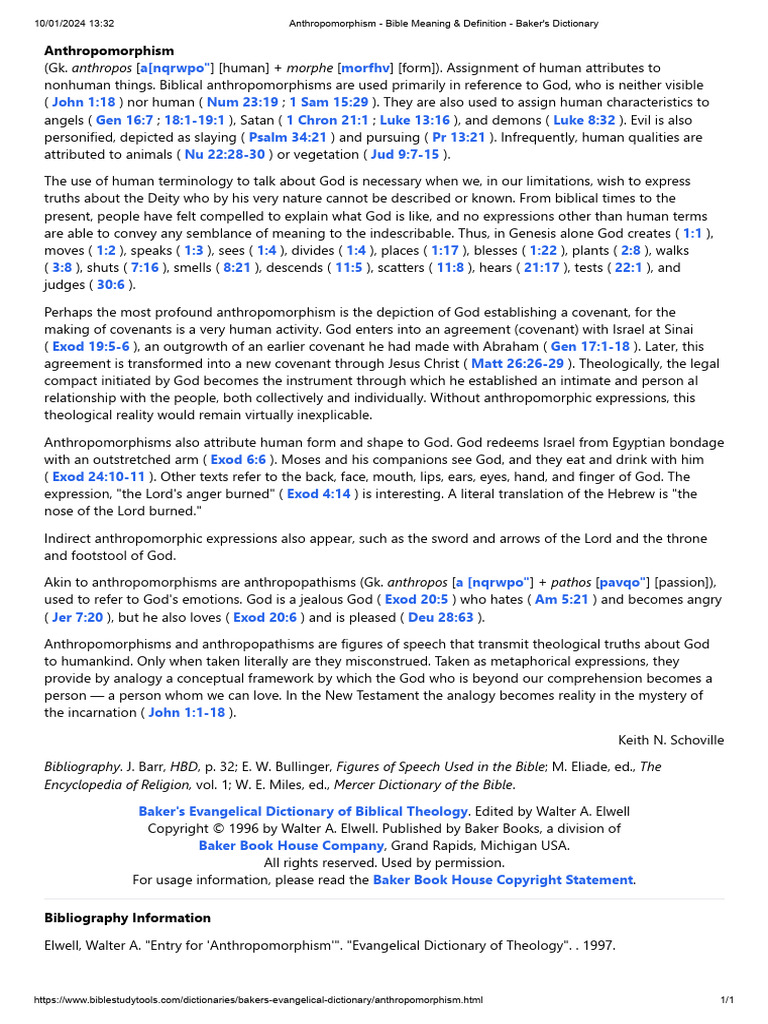
Anthropomorphism, a term derived from the Greek words “anthropos” meaning human and “morphe” meaning form, refers to the attribution of human characteristics and emotions to non-human entities, particularly in the context of divine figures. In the realm of biblical scholarship, anthropomorphism plays a pivotal role in how individuals comprehend the nature of God and His interactions with humanity within the sacred texts. This article endeavors to elucidate the intricate dynamics of anthropomorphism in Scripture, exploring its implications, examples, and theological significance.
From the onset, it is essential to discern the various manifestations of anthropomorphism in the Bible. A plethora of instances illuminates God’s human-like traits, which serve to bridge the gap between the divine and the mortal. One can find a multitude of such descriptive phrases pervading both the Old and New Testaments. For instance, the imagery of God “walking” in the Garden of Eden in Genesis evokes a visceral sense of intimacy, suggesting a relational deity who engages with His creation in a tangible manner.
Moreover, one must consider the anthropomorphic language utilized to ascribe human emotions to God. Instances wherein God “repents,” “grieves,” or “gets angry” offer insight into the divine persona shaped through human experience. Such representations, while not to be interpreted as literal, foster a deeper understanding of divine justice, mercy, and relationality. These emotive expressions enable believers to engage with God on an experiential level, enhancing their spiritual journey and inviting them to reflect on the complexities of their relationship with the divine.
Anthropomorphism is not merely restricted to the portrayal of God; it extended to other aspects of the biblical narrative as well. Throughout the Scriptures, divine qualities are often articulated through human scenarios, thereby making abstract theological concepts accessible to readers. For example, in the book of Psalms, poetic devices illustrate God as a shepherd, a warrior, and a fortress, each metaphor offering profound insights into God’s protective and guiding nature. Such representations resonate deeply with the readers, eliciting a sense of security and reliance on the divine.
Furthermore, there exists a significant theological undertone in the utilization of anthropomorphic language in Scripture. The assertion that God possesses attributes commonly associated with humanity raises intriguing discussions regarding the nature of God. The duality of God’s transcendence and immanence becomes palpable through anthropomorphic depictions. While Scripture proclaims God’s unapproachable nature, these human traits also reveal His willingness to engage with His creation. This dynamic interplay elucidates the mystery of the divine: a God who is both wholly other and intimately involved in the lives of His people.
In addition to its theological significance, anthropomorphism serves a didactic function within the biblical texts. By employing relatable imagery, the authors of the Scriptures create avenues for instruction and reflection. Through anthropomorphic representations, readers can grasp complex themes such as love, justice, and grace. For instance, the parables of Jesus often utilize human experiences and emotions to illustrate profound spiritual truths. The Parable of the Prodigal Son, in which a father embodies attributes of compassion and forgiveness, offers a captivating lens through which to view God’s redemptive nature.
It is crucial to acknowledge that while anthropomorphic language aids comprehension, it also invites critical examination. The tendency to interpret these descriptions literally can lead to theological misconceptions. Thus, discerning readers must approach Scripture with a nuanced understanding of literary devices. This is particularly significant in a contemporary context, where anthropomorphism could inadvertently foster an anthropocentric worldview, overshadowing the divine sovereignty and majesty inherent within God’s being.
In addressing the contemporary relevance of anthropomorphism, one must consider its impact on modern believers. As culture shifts towards a more individualized spirituality, the idea of a God who “walks with us” or “comforts us” can resonate deeply among diverse audiences. The anthropomorphic traits attributed to God can provide reassurance in times of turmoil, inviting individuals to envision a God who empathizes with their struggles and joys. Hence, the anthropomorphic representations, while ancient in origin, retain their potency in a world yearning for connection and understanding.
As one delves further into the depths of anthropomorphism in Scripture, it becomes clear that this literary device transcends mere description; it embodies the complexities of faith and divine-human relationships. The exploration of human-like traits attributed to God opens avenues for personal reflection, communal discourse, and theological inquiry. For believers, grappling with these representations facilitates a robust engagement with Scripture and, inevitably, a deeper understanding of one’s faith journey.
In culmination, anthropomorphism within the biblical narrative serves as a vital lens through which to explore the character of God and His interactions with humanity. By attributing human characteristics to the divine, the Scriptures not only enrich the theological understanding but also foster a more profound relational dynamic between God and His people. As we continue to contemplate these intricacies, may we embrace the richness of anthropomorphic language and its capacity to illuminate the divine mystery that resides within the sacred texts.