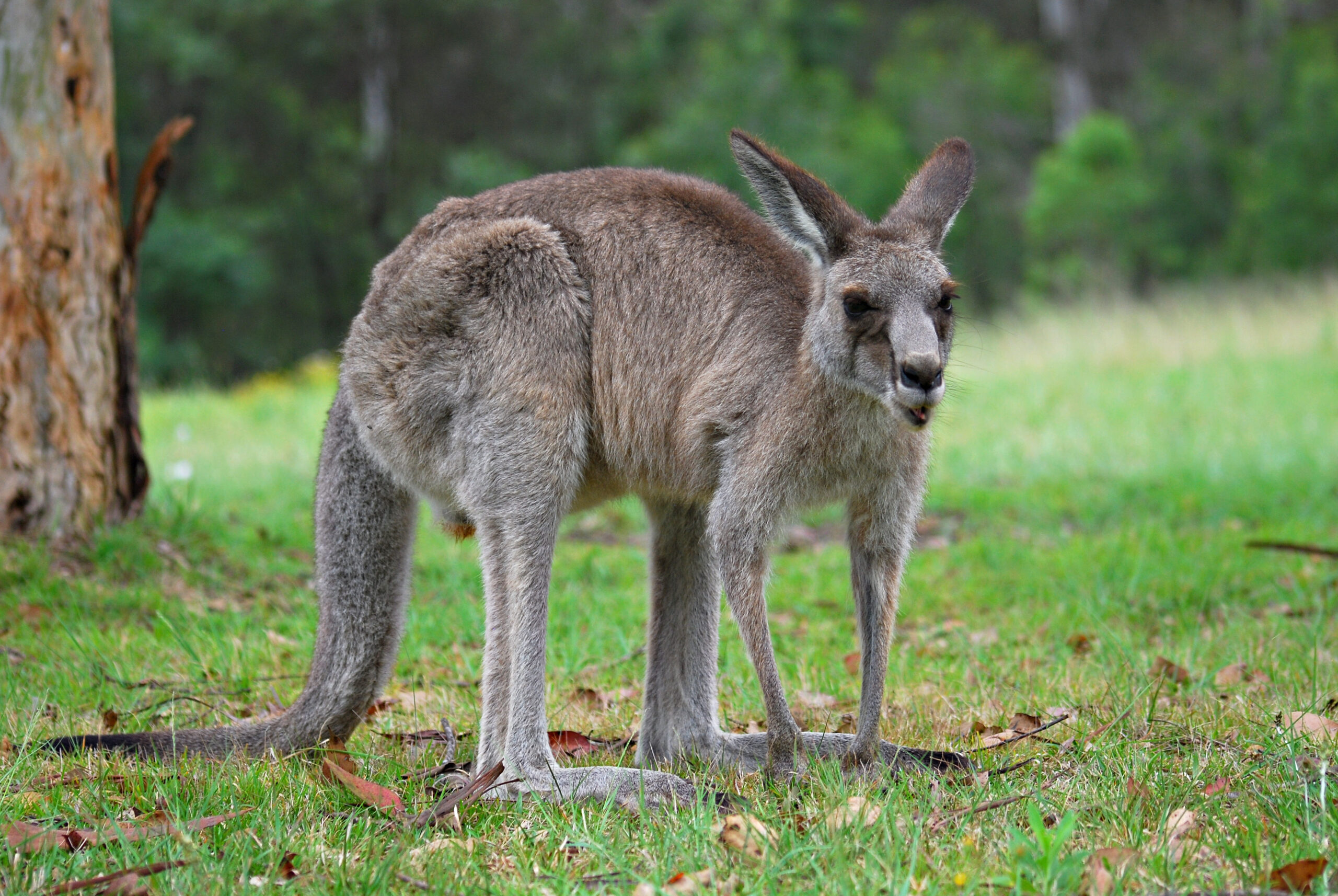
In the animal kingdom, few creatures spark curiosity and fascination quite like the kangaroo. Bearing an unmistakable silhouette characterized by long, powerful limbs and a strong tail, the kangaroo is an emblem of Australian wildlife. An intriguing aspect of this marsupial is its ability to stand on two legs, a posture that invites not just admiration but consideration into why humans are so prone to humanizing animal behaviors and postures. This article embarks on a journey to explore this phenomenon and encapsulate the curious interplay between the animal’s anatomies and the anthropomorphic narratives that arise from them.
At first glance, a kangaroo standing upright appears to challenge traditional notions of animal locomotion. Its posture, reminiscent of human stance, evokes a sense of relatability—an invitation to see aspects of ourselves in this creature. This phenomenon engages our cognitive faculties, prompting us to ask: Why do we impose human characteristics onto non-human beings? The answer lies deeply interwoven across psychological, cultural, and evolutionary threads.
The act of humanization, or anthropomorphism, involves ascribing human traits, emotions, or intentions to non-human entities, whether they be animals, inanimate objects, or even abstract concepts. From beloved children’s animations featuring talking animals to the realm of scientific discourse where animal behavior is often contextualized through emotional frameworks, anthropomorphism permeates our consciousness. But why does this human tendency exist?
Humans possess a unique cognitive apparatus governed by empathy and narrative thought. This cognitive lens enables us to forge emotional connections across species barriers. When we observe a kangaroo in a bipedal stance, the resemblance to our own posture may evoke feelings of camaraderie or kinship. This emotional response can transcend simple entertainment, allowing us to better understand the ecological and evolutionary attributes of such creatures.
Moreover, the humanization of animal postures serves a vital role in education and conservation efforts. By framing wildlife interactions in terms of familiar behaviors, we engender a greater appreciation for these species and advocate for their preservation. Consider the common practice of employing animal figures in educational materials aimed at children; presenting a kangaroo as a ‘friendly giant’ fosters an early bond between the child and the natural world.
Cultural representations also significantly contribute to our propensity to anthropomorphize. Throughout history, animals have appeared in mythology, art, and literature, often personified with human emotions. From Aslan in C.S. Lewis’s *The Chronicles of Narnia* to the enduring charm of Winnie-the-Pooh, the deep-seated tradition of imbuing animal characters with human qualities underscores our collective desire for understanding and connection.
The kangaroo, with its unique locomotion, becomes a perfect subject for this dynamic. With its powerful hind legs, a kangaroo can propel itself miles across the Australian outback, yet when it pauses, standing upright, the viewer is drawn to comprehend this creature’s existence through a human lens. It becomes more than a mere animal; it transforms into a symbol—embodying resilience, adaptability, and spirit.
Additionally, the cultural context surrounding kangaroos shapes human perceptions of them. In Australia, these creatures are woven into the national identity and emblematic of the country’s unique biodiversity. The notion of a kangaroo standing tall in the bush not only symbolizes strength but also evokes pride and a sense of belonging. Such narratives inevitably fuel our fascination and desire to relate.
Another dimension of this discussion pertains to the evolutionary basis of posture. In the grand tapestry of evolution, bipedalism represents a landmark shift in the lineage leading to humans. Seeing a kangaroo mimicking this upright stance serves as a potent reminder of our shared heritage. Such parallels underscore the evolutionary principles that have granted different species the capacity for unique adaptations.
Yet, anthropomorphism is not without its critiques. The scientific community often grapples with the repercussions of attributing human qualities to animals. Critics argue that this can lead to misunderstanding animal behavior and jeopardizing the objective study of wildlife. The challenge lies in striking a delicate balance between fostering empathy towards animals and maintaining an accurate understanding of their behaviors in the wild.
In light of these various perspectives, what emerges is a compelling narrative about our relationship with the animal kingdom. The kangaroo standing upright becomes a canvas upon which human emotions and histories are projected, invoking intrigue and reflection. It prompts us to ponder our ethical responsibilities as stewards of the planet and the implications of our emotional investments in other species.
Ultimately, the act of humanizing animal posture encompasses a blend of history, culture, and an intrinsic longing for connection. The kangaroo’s bipedal stance serves as a powerful reminder of both our similarities and differences. It is a gateway for discussions about evolution, the complexities of animal life, and the ethical dimensions of how we relate to the natural world. This curiosity not only enriches our understanding of the kangaroo but also encourages us to delve deeper into the intricate tapestry of life that binds humans and animals together.
As we continue to explore the myriad ways animals resonate with us, let the kangaroo standing on two legs serve as a poignant emblem of the shared world we inhabit. It encourages us to embrace wonder, empathy, and a commitment to preserving the extraordinary diversity of life that surrounds us.