Anthropomorphism, a literary device that attributes human traits, emotions, and intentions to non-human entities, manifests profoundly in religious texts, particularly the Bible. This stylistic approach allows the divine to be more relatable, offering a lens through which believers can comprehend the ineffable nature of God. Throughout Scripture, instances of anthropomorphism illuminate how God communicates with humanity, often employing a linguistic palette that mirrors human experience. Here, we delve into several notable examples of anthropomorphism encountered within the biblical narrative, demonstrating the multifaceted ways God speaks like us.
One of the most illustrative examples arises from the Genesis creation narrative. In Genesis 1:26, God proclaims, “Let us make man in our image, after our likeness.” This declaration not only indicates a collaborative inception of humanity but also suggests that humans bear a likeness to the divine. The phrase “our image” evokes a communal aspect of God, implying that relational attributes such as love, mercy, and creativity find their roots in the divine. This portrayal encourages believers to fathom their identity as reflections of God’s nature, fostering a sense of dignity and purpose.
Further into the Old Testament, the anthropomorphic language reaches a crescendo in God’s portrayal as a shepherd. In Psalm 23, David likens the Lord to a shepherd who provides, protects, and guides. The verse, “The Lord is my shepherd; I shall not want,” emphasizes God’s intimate care and provision. This metaphor resonates deeply, evoking images of tenderness and guidance. It humanizes the divine by connecting God’s relationship with us to the nurturing and protective qualities of a dedicated shepherd, affirming the protective paternal nature of God.
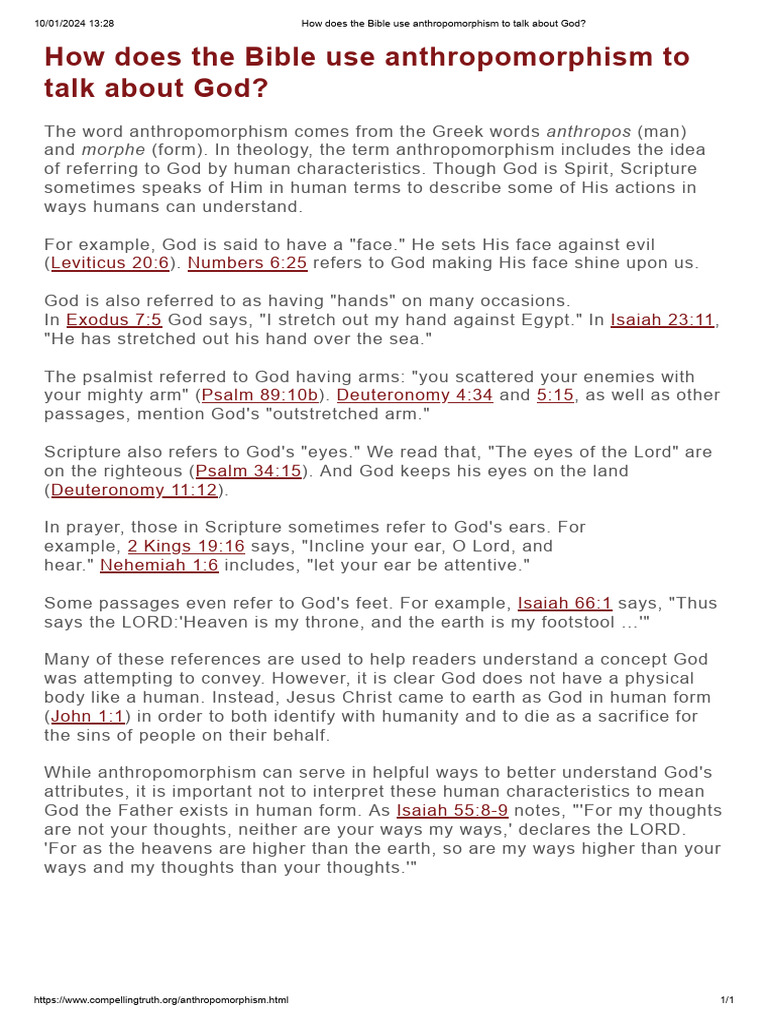
Another poignant example is found in the imagery of God’s hand. In Isaiah 41:10, God reassures His people with the words, “Fear not, for I am with you; be not dismayed, for I am your God; I will strengthen you, I will help you, I will uphold you with my righteous right hand.” Here, the ‘right hand’ symbolizes power and authority, echoing human strength. By embodying strength through a physical metaphor, the text reinforces the idea that believers are not alone in their struggles; rather, God provides tangible support amidst adversity. Such anthropomorphism exemplifies how divine assistance can be perceived through a human lens.
In the New Testament, anthropomorphism continues its vivid expression, especially in the portrayal of Jesus Christ. Jesus often refers to God as “Father,” an intimate familial designation that establishes a personal connection. In Matthew 7:9-11, Jesus illustrates God’s goodness through relatable scenarios of earthly fathers: “Or which one of you, if his son asks him for bread, will give him a stone?” This passage accentuates God’s willingness to provide for the needs of His children, employing the relatable dynamics of human parental relationships to evoke trust and intimacy. Such references cultivate a theological understanding of God as both omnipotent and nurturing, inviting believers to approach Him with confidence.
Additionally, the notion of God’s emotions further enriches the anthropomorphic exploration within Scripture. In Exodus 34:14, God proclaims, “For you shall worship no other god, for the Lord, whose name is Jealous, is a jealous God.” This is a profound expression of divine emotion that indicates God’s longing for loyalty and fidelity from His people. By adopting human feelings, the text bridges the gap between the divine and human realm, portraying God’s passionate commitment to His covenant with humanity. Such anthropomorphism not only affirms God’s love but also highlights the relational aspect at the heart of faith.
Moreover, the prophetic literature often employs anthropomorphic expressions to communicate divine messages. In Jeremiah 29:11, God states, “For I know the plans I have for you, declares the Lord, plans to prosper you and not to harm you, plans to give you hope and a future.” The assurance of plans and intentions showcases a God who is actively involved in the affairs of humanity. This portrayal contrasts the often-abstract notions of divine sovereignty, offering comfort through the familiarity of planning—a common human activity. The expression of foresight and care invites believers to trust in a purposeful and engaged deity.
Furthermore, God’s posture depicted in biblical texts often resonates with human experience. For instance, the imagery of God’s face shining upon believers, as expressed in Numbers 6:25, creates a visual representation of divine favor: “The Lord make His face shine upon you and be gracious to you.” The notion of a shining face evokes warmth and acceptance, suggesting that divine love is as approachable as a smile from a friend. Such anthropomorphic qualities invite a dialogue that transcends the boundaries of the celestial, making God’s presence and affection palpably felt.
In conclusion, the incorporation of anthropomorphism throughout the Bible serves as a powerful conduit for understanding the divine. By utilizing language that conveys human characteristics, emotions, and relationships, Scripture enriches the believer’s perception of God. These vivid portrayals foster intimacy, trust, and a sense of belonging in the intricate tapestry of faith. Ultimately, through anthropomorphism, the abstract concept of God is transformed into a relatable and personal figure, inviting humanity into a deeper communion with the divine.