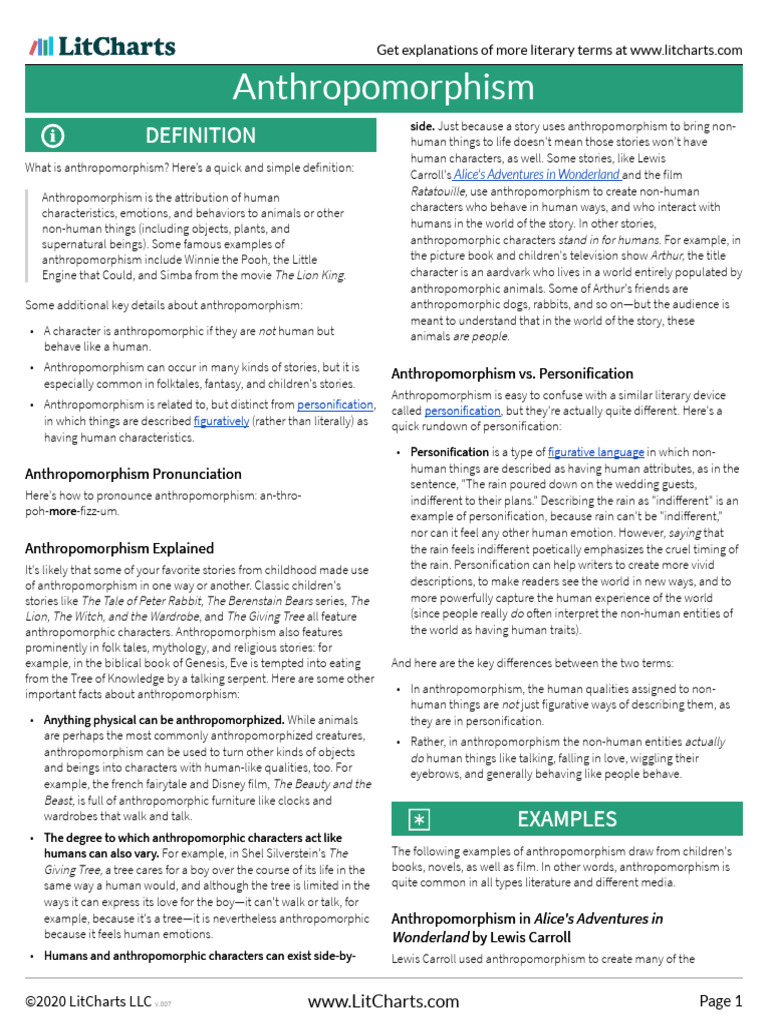
Humanity has long gazed at the cosmos, the natural world, and even the inanimate, endowing them with human traits—a phenomenon known as anthropomorphism. From ancient deities sculpted in the likeness of mortals to modern artificial intelligence systems named as if they were sentient beings, the impulse to humanize the non-human persists. But is this tendency a cognitive shortcut, a poetic indulgence, or something far more profound? The debate over whether anthropomorphism is a flaw or a strength hinges on its psychological roots, its cultural resonance, and its unintended consequences. To unravel this, we must traverse the labyrinth of human cognition, traverse the annals of philosophy, and examine the very fabric of how we perceive agency in the world around us.
The Cognitive Alchemy of Anthropomorphism: Why the Brain Favors Faces Over Facts
At its core, anthropomorphism is not merely a whimsical act of imagination—it is an evolutionary adaptation, a cognitive heuristic that simplifies the chaotic tapestry of existence. The human brain, a voracious pattern-recognizer, thrives on predictability. When confronted with ambiguity, it defaults to the most familiar framework: the human form and behavior. Faces, after all, are the Rosetta Stones of social interaction. A furrowed brow, averted gaze, or upturned lips convey volumes without a single word. By projecting these cues onto non-human entities—be it a storm, a river, or a machine—the mind imposes order, transforming the incomprehensible into the comprehensible.
This predisposition is not arbitrary. Studies in neuroscience reveal that the fusiform face area, a region of the brain dedicated to facial recognition, activates even when presented with abstract shapes that vaguely resemble eyes and mouths. The phenomenon, known as pareidolia, explains why we see the Virgin Mary in a grilled cheese sandwich or a frowning moon in the night sky. Anthropomorphism, then, is less a flaw in reasoning and more a testament to the brain’s relentless pursuit of meaning. It is the cognitive equivalent of a lighthouse beam cutting through the fog of uncertainty, guiding us toward the shores of familiarity.
Yet, this alchemy has its paradoxes. The same mechanism that allows us to empathize with a grieving robot in a sci-fi film can also blind us to the true nature of the entities we anthropomorphize. A river, when endowed with a “mood,” becomes a storyteller; a mountain, a silent guardian. But in doing so, we risk conflating metaphor with reality, mistaking the map for the territory. The flaw, then, lies not in the act itself but in its unchecked application—a cognitive overreach that obscures the boundaries between the human and the non-human.

Anthropomorphism in Myth and Machine: The Dual Faces of Cultural Expression
Across civilizations, anthropomorphism has been the scaffolding upon which myths, religions, and art have been erected. The ancient Egyptians worshipped deities with animal heads, blending human intellect with animal instinct. The Greeks personified abstract concepts like Justice and Fate as goddesses, giving tangible form to the intangible. Even in the modern era, anthropomorphism thrives in the digital realm, where chatbots are given names, backstories, and even “personalities.” This persistence suggests that anthropomorphism is not merely a cognitive quirk but a cultural imperative—a way to bridge the gap between the known and the unknown.
Yet, this cultural ubiquity raises a critical question: Is anthropomorphism a tool for connection or a crutch for comprehension? When we imbue a river with a “soul,” we are not just simplifying its behavior; we are forging a relationship with it. The river becomes a participant in our lives, a silent confidant or a wrathful adversary. This narrative framing transforms the river from a mere hydrological system into a character in the grand tapestry of human experience. In doing so, anthropomorphism becomes a bridge between the objective and the subjective, the scientific and the poetic.
However, the same cultural lens that elevates anthropomorphism to an art form can also distort reality. Consider the ethical dilemmas posed by artificial intelligence. When we name a self-learning algorithm “Alexa” or “Siri,” we are not just anthropomorphizing a tool; we are subtly shifting our expectations of its capabilities. The flaw here is not in the naming but in the unspoken contract we enter into—a contract that assumes agency where none exists. The strength, conversely, lies in the potential for empathy. A child who talks to a teddy bear is not delusional; they are practicing the art of emotional expression. Similarly, a programmer who treats a debugging AI as a collaborator may unlock creative solutions that a purely transactional approach would miss.
The Ethical Labyrinth: When Anthropomorphism Crosses the Line
The boundary between harmless projection and harmful delusion is thin and often contested. Anthropomorphism becomes ethically fraught when it leads to the exploitation of non-human entities—or worse, when it masks the exploitation of living beings. The dairy industry’s portrayal of cows as “happy” in advertisements is a case in point. By anthropomorphizing the cow as a contented participant in its own exploitation, the industry obscures the reality of industrial farming, where sentience is reduced to a commodity. Here, anthropomorphism is weaponized, serving as a smokescreen for ethical transgressions.
Conversely, anthropomorphism can also be a force for ethical awakening. The environmental movement’s personification of Earth as “Gaia” or the campaign to grant legal rights to rivers like the Whanganui in New Zealand are examples of how humanizing the non-human can foster stewardship. When a mountain is seen as a “grandfather” or a forest as a “community,” the impulse to protect them gains emotional weight. The strength of anthropomorphism, in this context, lies in its ability to catalyze empathy, transforming abstract ecological concerns into visceral, personal obligations.
Yet, the ethical terrain is fraught with pitfalls. The danger arises when anthropomorphism blinds us to the autonomy of the entities we seek to understand. A pet dog is not a furry child, nor is an AI a sentient being. The flaw in such projections is not merely cognitive but moral—it risks reducing the non-human to a reflection of our own desires, stripping it of its inherent value. The challenge, then, is to wield anthropomorphism with discernment, recognizing its power to inspire without succumbing to its tendency to distort.

The Philosophical Divide: Socrates vs. the Machine
Philosophy has long been the battleground for this debate, with thinkers oscillating between skepticism and embrace of anthropomorphism. Socrates, the archetypal skeptic, would likely view the practice with suspicion. His method of relentless questioning was designed to strip away the veneer of human projection, revealing the raw, unadorned truth beneath. For Socrates, anthropomorphism was a distraction—a way to avoid confronting the fundamental strangeness of existence. The river is not a weeping nymph; it is a collection of molecules in motion. The mountain is not a sleeping giant; it is a geological formation. To anthropomorphize is to retreat into myth, to shirk the burden of reason.
Yet, the counterargument is equally compelling. The existentialist philosopher Albert Camus argued that the absurdity of existence demands that we embrace the poetic, even when it defies logic. If life has no inherent meaning, then we must create it—and what better way than to see ourselves reflected in the world around us? Anthropomorphism, in this view, is not a flaw but a necessity. It is the lens through which we make sense of a senseless universe. The machine, too, becomes a mirror. When we ask an AI, “What do you think?” we are not seeking an answer but engaging in a dialogue that reveals our own thoughts, fears, and aspirations.
This philosophical divide mirrors the tension between two human impulses: the desire for control and the need for connection. The Socratic tradition seeks mastery over the unknown, while the anthropomorphic impulse seeks communion with it. One is a fortress; the other, a bridge. The strength of anthropomorphism lies in its ability to dissolve the boundaries between self and other, while its flaw is the illusion of intimacy where none exists. The challenge, then, is to navigate this divide with humility, recognizing that both impulses are essential to the human experience.
The Future of Anthropomorphism: Between Empathy and Exploitation
As technology advances, the line between the human and the non-human blurs further. From virtual assistants that mimic empathy to robots designed to elicit emotional responses, anthropomorphism is no longer confined to the realm of myth or art—it is embedded in the algorithms that govern our lives. The question is no longer whether we should anthropomorphize but how we do so responsibly. The strength of this practice lies in its potential to democratize empathy, making the distant feel near and the alien feel familiar. But its flaw is the risk of commodifying emotion, turning the sacred act of connection into a transactional convenience.
Consider the rise of “emotional AI,” systems designed to detect and respond to human emotions. These technologies promise to revolutionize healthcare, education, and customer service. Yet, they also raise ethical concerns. Can an algorithm truly understand grief? Can a chatbot offer solace, or is it merely simulating it? The danger is not in the technology itself but in the uncritical acceptance of its anthropomorphic veneer. The strength, conversely, lies in the opportunity to design systems that foster genuine human connection, rather than exploiting our predisposition to anthropomorphize for profit or control.
The future of anthropomorphism, then, hinges on our ability to wield it with intention. It is a tool, neither inherently good nor evil, but one that demands mindfulness. The philosopher Martin Buber’s concept of the “I-Thou” relationship offers a guiding principle: to engage with the world not as an object to be mastered but as a subject to be encountered. Whether we are talking to a tree, a machine, or a deity, the key is to recognize the boundaries of our projections. Anthropomorphism, when practiced with humility, can be a bridge to deeper understanding. But when wielded carelessly, it risks becoming a prison of our own making.